

Shopping for a CPU cooler in South Africa means navigating a flood of acronyms, ratings, and specifications that aren't always explained clearly on product listings. Whether you're browsing for a budget air tower or evaluating a 360mm AIO liquid cooler, understanding the key terminology before you buy prevents costly mismatches with your CPU and case. This guide demystifies the jargon so you can buy with confidence.
Quick Answer
The most important CPU cooler specifications for SA buyers are TDP rating (should match or exceed your CPU's rated TDP), socket compatibility (must match your motherboard's CPU socket), and cooler height clearance (must fit within your PC case's maximum CPU cooler height). For most desktop builds, a quality air cooler in the R500–R1,500 range handles everything short of flagship CPUs under sustained workloads.
🌡️ Key Cooler Terms Explained
TDP (Thermal Design Power): The wattage your cooler is rated to dissipate continuously. A cooler rated for 200W TDP can handle a CPU that produces up to 200W of heat under load. Always match or exceed your CPU's TDP rating - especially important for SA gamers running CPUs at stock with extended gaming sessions in warm rooms. TIM (Thermal Interface Material): The paste or pad between your CPU's heat spreader and the cooler's base plate. Quality TIM dramatically affects thermal performance - most aftermarket coolers include adequate TIM, but premium pastes (applied correctly) can reduce temps by 3–7°C versus stock application. RPM & PWM: RPM (revolutions per minute) measures fan speed. PWM (Pulse Width Modulation) is the control method that allows your motherboard to dynamically adjust fan speed based on temperature - quieter under light load, faster under gaming stress. Always choose PWM fans over DC-controlled fans for smart thermal management. CFM & Static Pressure: CFM (cubic feet per minute) measures airflow volume - relevant for case fans moving air across open space. Static pressure measures a fan's ability to push air through resistance (like heatsink fins or radiators) - critical for radiator-mounted AIO fans and dense tower heatsink configurations.
🔧 AIO vs Air Cooler: What the Specs Mean in Practice
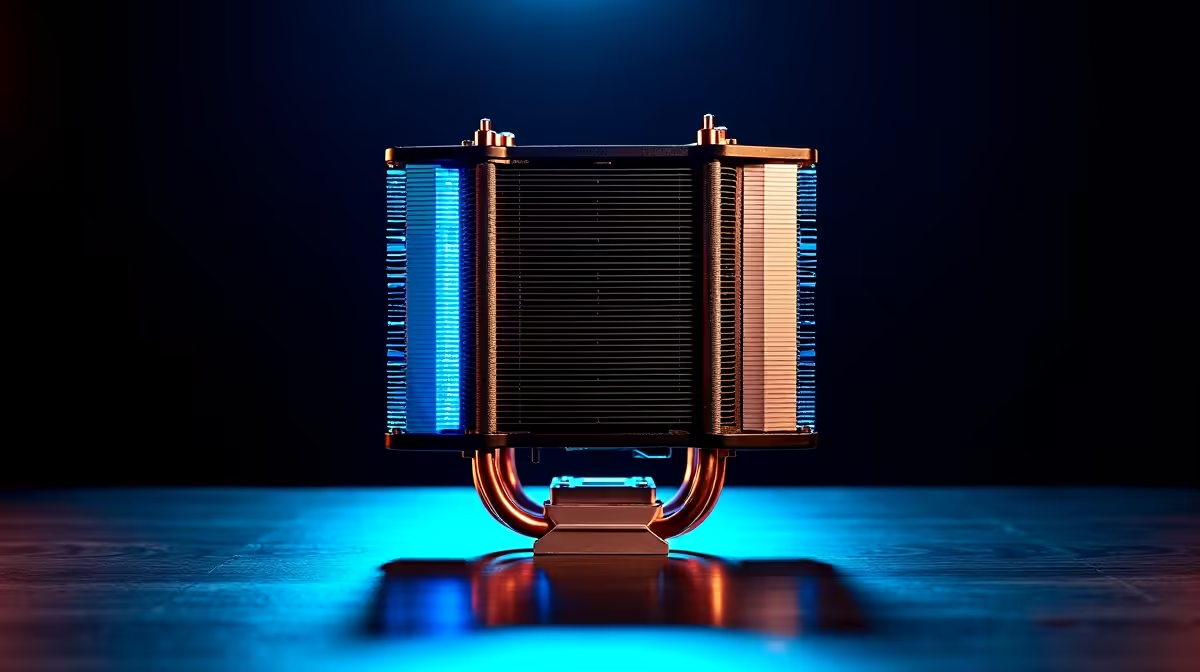
AIO (All-In-One Liquid Cooler): A sealed loop consisting of a pump block (mounted on the CPU), tubing, and a radiator with fans. Sized by radiator: 120mm (single fan), 240mm (dual fan), 280mm, 360mm (triple fan). Larger radiators dissipate heat more efficiently and allow fans to run slower for quieter operation. AIOs excel at cooling high-TDP CPUs in compact cases where tall air towers won't fit. The trade-off: more components that can potentially fail (pump, fittings, tubing), and generally higher cost than equivalent air coolers. Air cooler classifications: Low-profile coolers (under 60mm height) for slim cases, single-tower designs for mainstream builds, dual-tower designs (like D15-style coolers) for maximum air-cooled thermal performance. Dual-tower air coolers with quality fans often outperform 240mm AIOs in real-world noise-normalized benchmarks. For CPU cooler options in SA, Evetech stocks a range from budget air towers to premium 360mm AIOs.
📐 Clearance & Compatibility: What to Check Before Buying
Socket compatibility is non-negotiable - verify your cooler supports your exact CPU socket (AM5, AM4, LGA1700, LGA1851, etc.) before purchasing. Many coolers require separate mounting hardware per socket, sometimes included in the box, sometimes sold separately. RAM clearance is frequently overlooked: tall air coolers with wide heatsink fins can block the first one or two RAM slots on some motherboards. Check the cooler's RAM clearance specification and compare to your RAM module height. Case clearance defines the maximum CPU cooler height your case can accommodate - this figure is listed in your case's specifications. Exceeding it means the side panel won't close. For RAM modules and compatible motherboards, verify clearance compatibility when assembling your full build.
❓ Frequently Asked Questions
What does "noise-normalized" mean in cooler reviews? Noise-normalized comparisons set all tested coolers to the same noise output level (e.g., 35 dBA) and then measure which cooler achieves lower temperatures at that fixed noise level. This is the fairest comparison method - it separates thermal performance from simply running fans at maximum speed.
Is a 360mm AIO always better than a top air cooler? Not necessarily. High-end dual-tower air coolers often match or exceed 240mm AIOs in thermal performance at equivalent noise levels, and they do so at lower cost with fewer failure points. A 360mm AIO does outperform air coolers in most scenarios, particularly for sustained workloads in compact cases where air cooler height is restricted.
What does "direct touch heatpipes" mean? Direct contact or direct touch heatpipes skip the copper base plate and have the heatpipes make direct contact with the CPU's heat spreader. This improves thermal transfer efficiency in theory, but quality of execution varies between manufacturers - high-quality full copper base coolers can match or exceed direct touch designs.
Evetech stocks Graphics Card Deals and Evetech Best Sellers — shop online with fast delivery across South Africa.
Ready to Find Your Perfect Match? Shop Evetech's full CPU cooler range for your next build











