

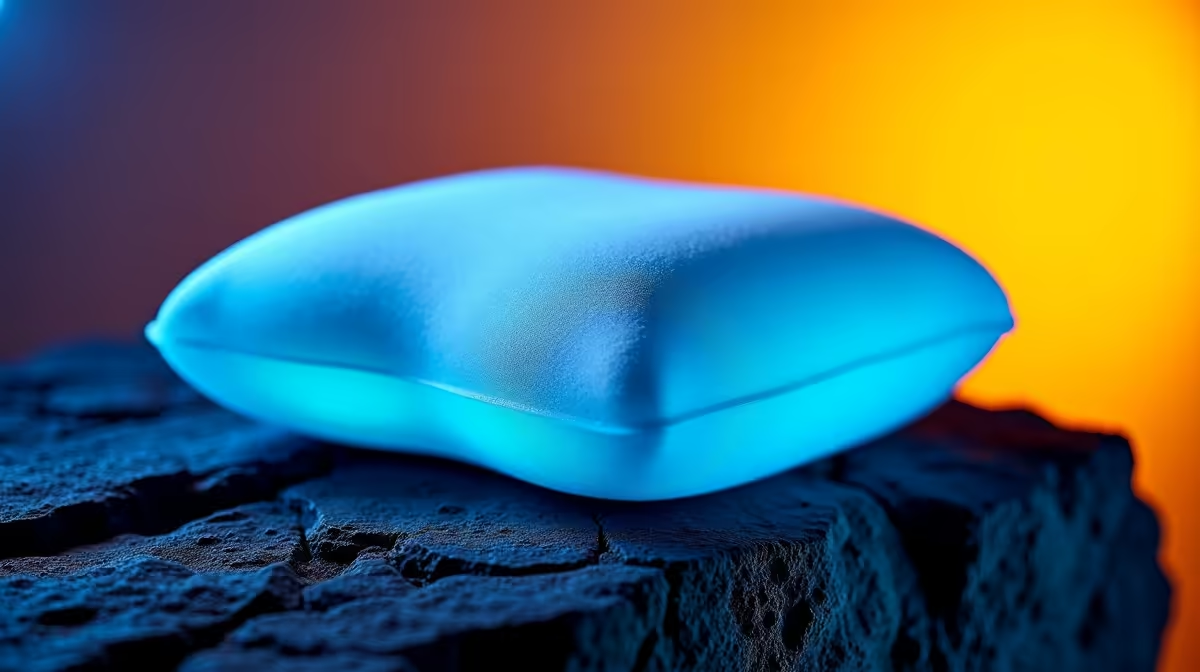
Staring down a 3-hour ranked grind during a sweltering South African summer? You've probably seen "cooling gel memory foam" touted as the ultimate solution to sweaty gaming sessions. But is it a high-tech marvel that keeps you frosty, or just clever marketing? Before you invest in a new throne, let's bust some of the biggest cooling gel memory foam myths in South Africa and find out what really keeps you comfortable when the pressure is on. 🤔
The Science Behind the Chill: What is Cooling Gel?
First, let's get one thing straight: cooling gel memory foam isn't a mini air-conditioner. At its core, it's traditional viscoelastic memory foam—the stuff that contours to your body—infused with tiny gel particles or beads.
The primary job of this gel is to act as a thermal conductor. Think of it like a heat sink for your CPU, but for your body. It absorbs your body heat and pulls it away from the surface, slowing down the rate at which the chair gets warm. It feels cool to the touch initially because it's absorbing your heat, not because it's generating cold. This is a crucial distinction that debunks many of the wildest claims.
Myth #1: It Provides Constant, Active Cooling 🧊
This is the most common misconception. Cooling gel memory foam offers passive cooling. It excels at delaying heat build-up, giving you a longer period of comfort before the foam reaches thermal equilibrium with your body. But after a long session, the gel will be saturated with heat and the cooling effect will diminish.
The real benefit isn't about staying ice-cold for hours; it's about avoiding that swampy, trapped-heat feeling that traditional memory foam can cause. For marathon gaming sessions, finding the right gaming chair is about managing heat, not eliminating it entirely.
Myth #2: All Cooling Gel Foams Are the Same
Not a chance. The effectiveness of cooling gel technology varies wildly depending on a few key factors:
- Gel Infusion vs. Layered Gel: Some chairs have gel beads mixed into the foam, while others have a distinct top layer of gel. A dedicated layer is often more effective at initial heat absorption.
- Foam Density & Quality: Higher-density foam provides better support and longevity, and the quality of the gel infusion plays a huge role. Cheaper foams may use less effective gel particles.
- Fabric Breathability: A chair wrapped in thick, non-breathable PU leather will trap heat, regardless of the foam underneath. A fabric or hybrid cover will always perform better for airflow.
This is why you'll often notice a significant difference in thermal performance as you explore more premium gaming chairs, which invest more in material science.
Pro Ergonomics Tip 🔧
Don't just focus on the foam! The chair's fabric is your first line of defence against heat. Breathable fabric or perforated PU leather can make a bigger difference to long-term comfort than the type of gel used.
Myth #3: It's the Only Feature That Matters for Hot Weather
Believing that cooling gel is the single solution to gaming comfort is one of the biggest cooling gel memory foam myths out there. In reality, it's just one piece of a much larger puzzle.
Proper ergonomic support, adjustable armrests, and lumbar support are far more critical for preventing fatigue and pain. A chair that keeps you cool but ruins your posture is a poor investment. Even on a tighter budget, focusing on a solid ergonomic frame is essential. Luckily, there are plenty of great options under R4000 that prioritise foundational support over flashy features. So, is cooling gel a myth? No. It's a real technology that helps manage heat. But it's not magic. 🚀
Ready to Find Your Perfect Throne? Now that you know the facts, you can choose a chair that truly fits your needs and budget. Check out our latest gaming chair deals and find the perfect command centre for your rig.











