

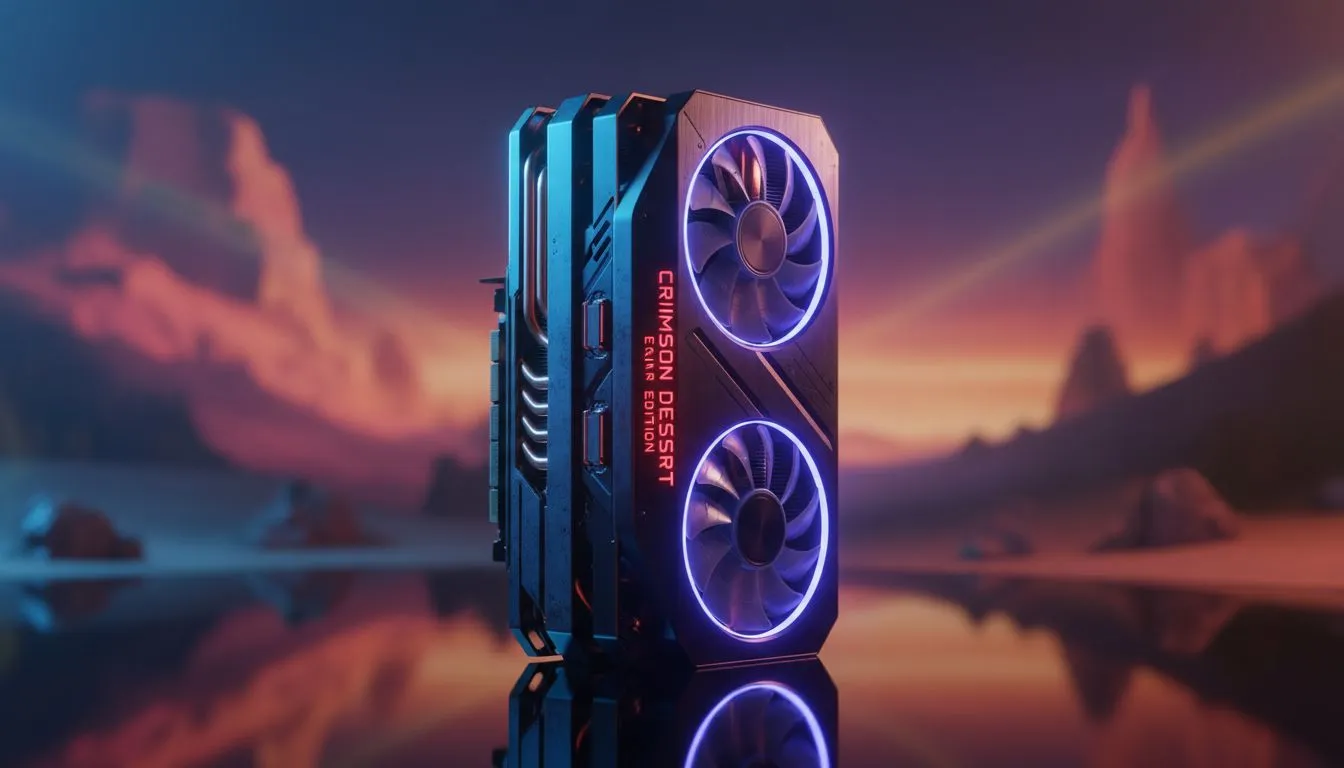
The Visual Revolution of Pywel
South African gamers are eagerly awaiting the journey through Pywel. Crimson Desert Ray Tracing: Global Illumination vs Shadows is the technical debate of the season. Will you prioritise the realistic bounce of light or the depth of pitch-black forests? Every frame matters when the sun sets over the horizon. Let's explore how these technologies define your next-gen experience... and which GPU keeps your frame rates stable ⚡.
Global Illumination: Lighting the Path
Global Illumination (GI) is the secret sauce of modern realism. It simulates how light bounces off surfaces to illuminate other objects. In a world as vibrant as Crimson Desert, this means the red of a sunset will naturally bleed onto the stone walls of a castle. It creates a cohesive look that static lighting simply cannot match. To experience this level of fidelity, you will need a powerful set of nvidia-ati-graphics-cards to handle the heavy computational load.
Without ray-traced GI, scenes can often look flat... especially in shaded areas. With it enabled, every crevice and corner feels like it belongs in the world. The colour accuracy is stunning, making the diverse biomes of Pywel feel truly immersive.
Performance Optimization ⚡
Use DLSS or FSR to regain frames lost to ray tracing. Crimson Desert is demanding, so upscaling is your best friend for 1440p or 4K gaming.
Ray Traced Shadows: Defining the Depth
While GI handles the light, ray-traced shadows handle the dark. Traditional shadow maps often look jagged or unnaturally sharp. Ray tracing allows for "contact hardening"... where shadows are sharp near the object and soften as they stretch away. This is vital for the dense forests and rocky outcrops found in the game. Many players prefer the reliability of MSI graphics cards to maintain the thermal headroom needed for these intense effects.
Shadows provide the "weight" to the world. They ground the characters and monsters in the environment. If you are looking for excellent value per frame, the latest AMD Radeon graphics cards offer impressive rasterisation and growing ray tracing capabilities for South African builds 🚀.
Balancing Performance and Fidelity
Running both Global Illumination and Shadows at maximum settings is a tall order. Even top-tier rigs might struggle at native 4K. If you are a budget-conscious gamer, exploring Intel Arc graphics cards can be a great entry point into ray tracing technology. For those who use their machines for more than just gaming... such as rendering or 3D design... high-end workstation graphics cards provide the VRAM necessary to handle complex lighting models without breaking a sweat ✨.
Ultimately, the choice between GI and Shadows depends on your preference. GI offers a more "cinematic" feel, while Shadows offer more "physical" depth. In the harsh lands of Pywel, having both is the ultimate goal for any enthusiast.
Ready to Find Your Perfect Match? The Crimson Desert Ray Tracing: Global Illumination vs Shadows debate is complex, but for maximum power, choice, and value in South Africa, Evetech has you covered. Explore our massive range of graphics card specials and find the perfect machine to conquer your world.











