Choosing a new CPU in South Africa feels like a high-stakes game. You're balancing price, performance, and a dizzying array of specs. But have you ever noticed that some of Intel's most powerful processors are missing a key feature… integrated graphics? The debate of discrete GPU vs integrated graphics is crucial, and understanding why top-tier chips skip the iGPU is key to building a smarter, more powerful rig for your budget. Let's dive in. 🧠
Understanding the Core Showdown: Discrete GPU vs Integrated Graphics
Before we get into the "why," let's quickly cover the "what." Every computer needs a way to draw images on your screen. This job falls to a Graphics Processing Unit, or GPU.
- Integrated Graphics (iGPU): This is a basic GPU built directly into the processor. It's cost-effective and power-efficient, sharing your computer's main system memory (RAM). It’s perfect for everyday tasks like browsing the web, streaming videos, and running office software. You'll find them in many mainstream Intel CPUs, making them great all-in-one solutions.
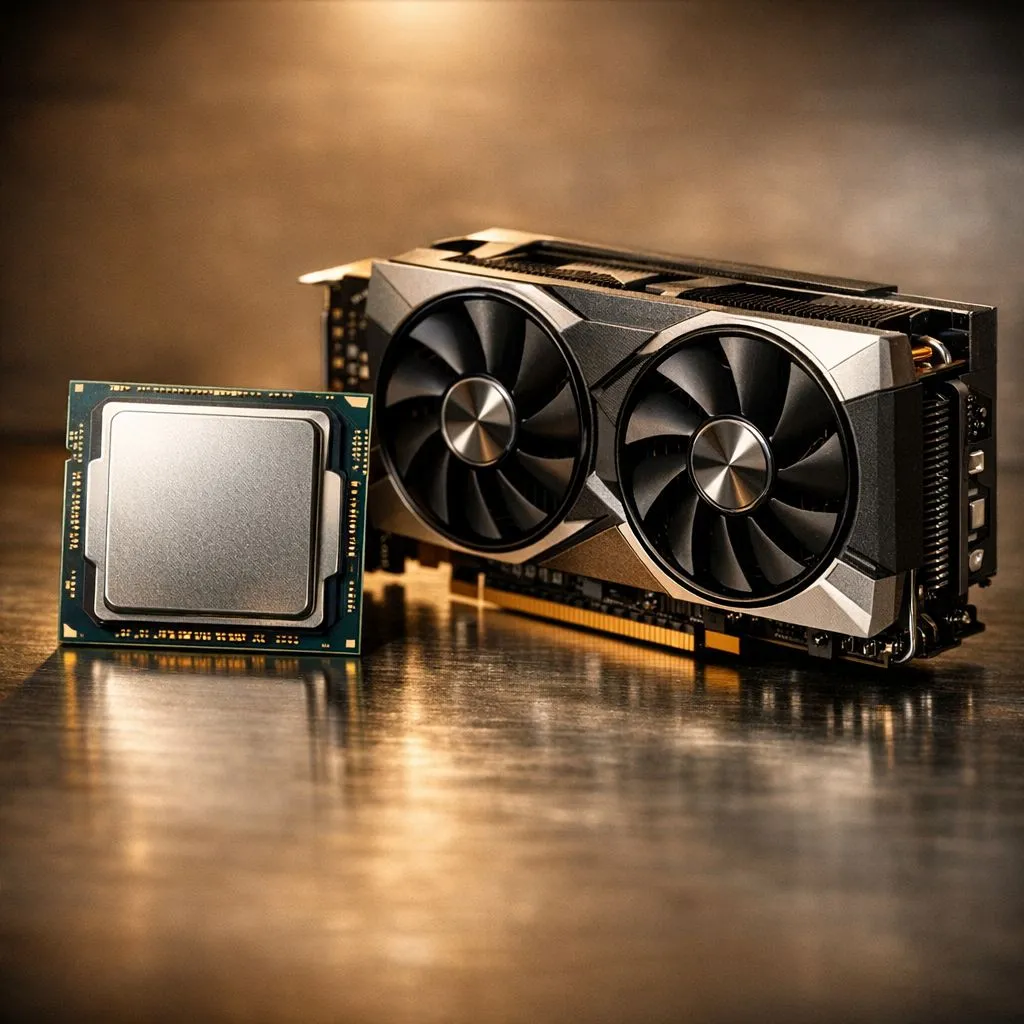
- Discrete Graphics (dGPU): This is a separate, powerful graphics card that plugs into your motherboard. Think of NVIDIA's GeForce RTX series or AMD's Radeon RX series. It has its own dedicated, high-speed memory (VRAM) and is designed for one thing: performance. For high-framerate gaming, 4K video editing, or 3D rendering, a discrete GPU isn't just nice to have… it's essential.
The core difference in the discrete GPU vs integrated graphics battle comes down to power and purpose. One is a daily driver; the other is a high-performance racing engine.
The "F" Factor: Why Top-Tier Intel CPUs Ditch the iGPU
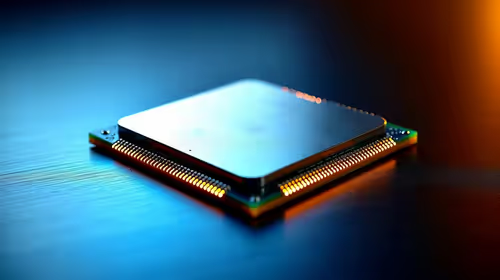
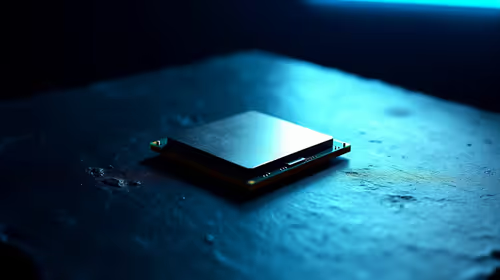
So, why would a premium, expensive CPU come without a feature that cheaper models have? Look at Intel's product names. If you see a "K" at the end (like in Core i9-14900K), it means the CPU is unlocked for overclocking. If you see an "F" (like in Core i9-14900KF), it means it lacks integrated graphics.
There are three key reasons for this strategy:
- They Know Their Audience: Anyone buying a top-of-the-line processor is almost guaranteed to be pairing it with a powerful discrete graphics card. For a serious gamer or content creator, the iGPU would sit unused, taking up valuable space on the chip.
- Thermals and Silicon Real Estate: By removing the iGPU, manufacturers free up physical space on the CPU die. This space can be used for more cache or better power delivery pathways to the performance cores. It also reduces the chip's overall heat output, which can lead to better, more stable boost clocks. ⚡ This allows Intel to offer incredibly powerful options like their 14-Core processors that are finely tuned for pure performance.
- A Small Price Advantage: Manufacturing chips without the graphics component can slightly lower the cost. This saving, even if it's just a few hundred ZAR, is passed on to you. It makes high-end performance a little more accessible for builders who know they're bringing their own GPU to the party.
Pro Builder's Tip 🔧
Always pair an 'F' series Intel CPU with a discrete graphics card, as it won't produce a video signal on its own! This is a common first-time builder mistake. An iGPU, on the other hand, is a lifesaver for troubleshooting if your main GPU fails, letting you use your PC while you sort out a repair or replacement.
How Does Team Red Handle Integrated Graphics?
This isn't just an Intel strategy. For years, AMD's most popular high-performance desktop CPUs also came without integrated graphics. The philosophy was the same: the target market for these chips would be using a discrete GPU anyway.
While their latest generation of desktop CPUs now includes a very basic iGPU, it's primarily there for video output and troubleshooting, not for gaming. The expectation remains that for any real graphical work, you'll be using a dedicated card. The entire AMD CPU lineup is built with this performance-first mindset.
Ultimately, whether you're looking at high-performance tiers like the AMD Ryzen 7 series or Intel's "F" series, the message is clear: for enthusiasts, the integrated GPU is optional. The real power comes from the synergy between a top-tier CPU and a mighty discrete GPU. 🚀
Ready to Build Your Ultimate Rig? The discrete GPU vs integrated graphics debate is all about matching hardware to your goals. Whether you're Team Blue or Team Red, building a performance beast means getting the right processor at its heart. Browse our massive range of CPUs and find the perfect core for your new PC.