

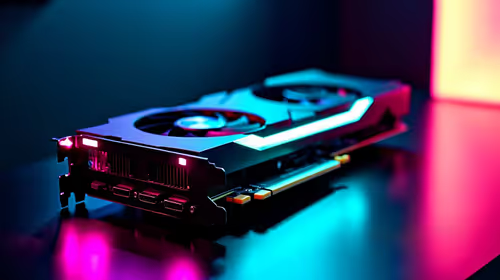
EA FC 26 Max Settings on RTX 5090: Complete Guide
EA FC 26 Max Settings on RTX 5090. Tested & verified settings for best FPS and visual quality on SA hardware budgets.
Read moreConfused by dual wireless gaming mouse connectivity? Learn how 2.4GHz vs Bluetooth affects latency, range, and battery life so you can pick the best option for gaming 🎮🔌.
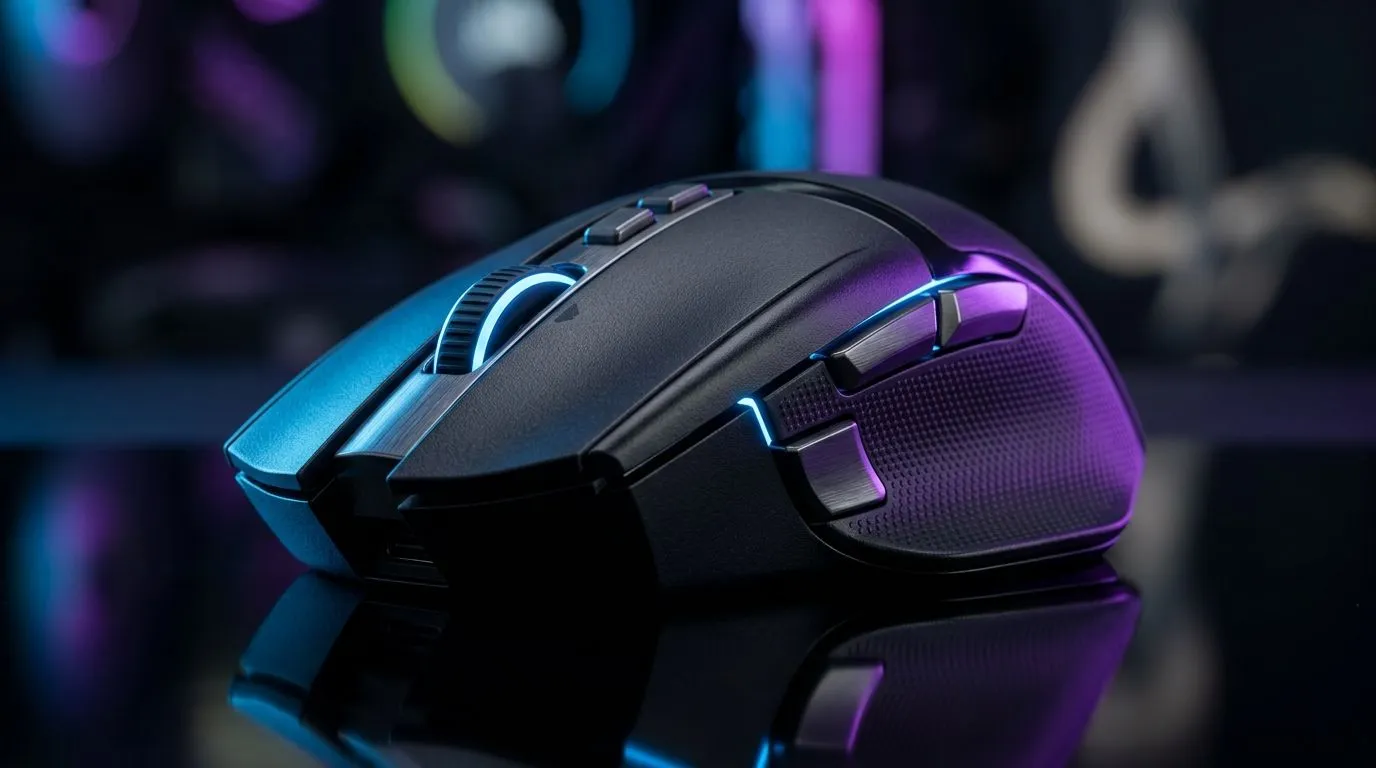
Shopping for a gaming mouse in South Africa should feel like a clear upgrade, not guesswork. Will your inputs stay crisp when the Wi‑Fi gets busy? Or will latency spike mid-match? 🎮 The answer often comes down to one choice: dual wireless gaming mouse connectivity using 2.4GHz vs Bluetooth. Pick wrong and you’ll feel it in fast flicks and tracking. Pick right and your aim stays locked… even during load shedding hours and crowded networks.
2.4GHz “wireless” (usually via a USB receiver) is designed for low delay. In practice, it tends to deliver more consistent response, especially in busy RF environments (think routers, neighbours, and crowded USB setups). Bluetooth can be excellent for everyday use, but gaming is where small delays and connection behaviour matter most.
Here’s the gamer-friendly way to think about it:
If you want to start broad, browse Evetech’s wireless options here: wireless gaming mice. For people building a specific setup, you’ll also want the right accessories and receivers. If that’s you, check mouse accessories.
Battery life depends on the sensor, polling rate, and lighting (if the mouse has RGB). Generally, 2.4GHz can be very efficient, but Bluetooth’s advantage is device versatility, not always raw battery endurance.
A quick micro-habit that saves frustration: keep a charging cable within reach for ranked nights. If you hate charging interruptions, consider models with strong wireless efficiency and sane standby behaviour (and if you’re fed up with wireless entirely, wired is still a solid “set and forget”). For comparison browsing, see wired gaming mice.
Your desk setup in SA matters. If your PC is far from the router or you have thick walls, 2.4GHz can stay more stable than you’d expect from Bluetooth. If you use a laptop at home and also at work, Bluetooth pairing can feel effortless.
A simple decision rule:
If you’re buying for value, start with curated picks and current promos, then narrow down. These gaming mouse deals are a good place to spot models that balance sensor quality with connection type.
On Windows, pair the mouse to 2.4GHz for gaming, then switch to Bluetooth for general use. If your mouse supports it, create separate DPI and button profiles so your work shortcuts stay consistent when you move between devices.
Before you commit long-term, do a fast “feel test”:
Want to understand the hardware side and sensor categories too? Start with the gaming mouse components and categories page, then pick a mouse based on your preferred grip and connection style.
In the end, both technologies have a place. But for South African gamers who care about consistency, 2.4GHz usually wins for competitive play. Bluetooth shines when you value multi-device freedom. And dual connectivity? That’s how you stop compromising.
Ready to Find Your Perfect Match? The Mac vs Windows debate is complex, but for maximum power, choice, and value in South Africa, Windows is hard to beat. Explore our massive range of laptop specials and find the perfect machine to conquer your world.
For most competitive play, 2.4GHz usually wins for responsiveness and lower latency; Bluetooth can work well for general use and multitasking.
Bluetooth often has higher latency than 2.4GHz on gaming mice, especially without low-latency support. 2.4GHz typically feels more immediate.
2.4GHz links generally provide more consistent range for a dongle-based mouse, while Bluetooth range can vary with device and environment.
It can, but it depends on your mouse and settings. Many dual-mode mice optimize power differently per connection type.
Yes. Many models let you run 2.4GHz on your PC and Bluetooth on a phone or tablet, often with quick device switching.
Use the mouse mode button or pairing steps described in the manual, then select the correct Bluetooth device on your target system.
Common causes include crowded Bluetooth environments, distance, or power-saving modes. Try moving closer, removing interference, and re-pairing.
EA FC 26 Max Settings on RTX 5090. Tested & verified settings for best FPS and visual quality on SA hardware budgets.
Read more
RX 7800 XT The Witcher 4 Low Settings at 1440p. Real-world benchmark data, FPS numbers & performance analysis. What SA gamers can actually expect.
RTX 5070 GTA 6 High Settings at 1440p: FPS Results. Real-world benchmark data, FPS numbers & performance analysis. What SA gamers can actually expect.
Does RTX 5070 Run Hot in South African Climate Detailed answer with SA data, expert analysis & practical recommendations for local buyers.
How Long Will the RX 7900 XTX Last for Gaming Detailed answer with SA data, expert analysis & practical recommendations for local buyers.
Every spec on PCIe 5.0 explained in plain English. What matters for gaming and creator work in 2026, what's marketing fluff, and how each number translates to real-world performance.
Every spec on bios explained in plain English. What matters for gaming and creator work in 2026, what's marketing fluff, and how each number translates to real-world performance.
Every spec on gaming setups explained in plain English. What matters for gaming and creator work in 2026, what's marketing fluff, and how each number translates to real-world performance.
Every spec on cooling systems explained in plain English. What matters for gaming and creator work in 2026, what's marketing fluff, and how each number translates to real-world performance.
Every spec on 10tb enough storage explained in plain English. What matters for gaming and creator work in 2026, what's marketing fluff, and how each number translates to real-world performance.
External HDD vs External SSD: real-world performance, SA pricing, power draw and which one delivers better value for your build. The clear answer — without the fluff.
What to prioritise when shopping for external hard drive in South Africa: the specs that matter, Rand value tiers, and the trade-offs between budget and flagship picks in 2026.
Desktop External HDDs vs Portable Drives: real-world performance, SA pricing, power draw and which one delivers better value for your build. The clear answer — without the fluff.