Remember that sound? That chaotic, screeching symphony of a 56k modem connecting to the internet... It was the soundtrack to the dawn of digital life for many of us. Today, that sound is a relic. The demands on our home networking in South Africa have exploded. We need lightning-fast, stable connections for competitive gaming, 4K streaming, and the work-from-home grind.
This is the story of our journey from dial-up to fibre, and how to make sure your home setup isn't stuck in the past. 🚀
The Early Days: The Screech of the Dial-Up Modem
For a generation of South African tech enthusiasts, the internet experience began with a telephone line. You’d plug your PC into the wall, run a dial-up utility, and listen to that iconic handshake. A 56kbps connection was the peak! Downloading a single MP3 could take an hour, and online gaming was a laggy, frustrating dream. If someone picked up the phone... your connection was gone. It was a simple time, but one we're glad to have moved on from.
ADSL Arrives: The "Always-On" Revolution
ADSL felt like pure magic when it landed. Suddenly, our internet was "always on," and it didn't hog the phone line. Speeds of 1Mbps, then 4Mbps, and eventually up to 40Mbps changed how we used the web. This was the era where a solid home network started to matter. It marked the first time many households invested in a quality wireless router, turning a single connection into a shared resource for the whole family. Streaming grainy YouTube videos and playing World of Warcraft with manageable latency became a reality.
The Modern Network: Wi-Fi, Walls, and Weak Spots
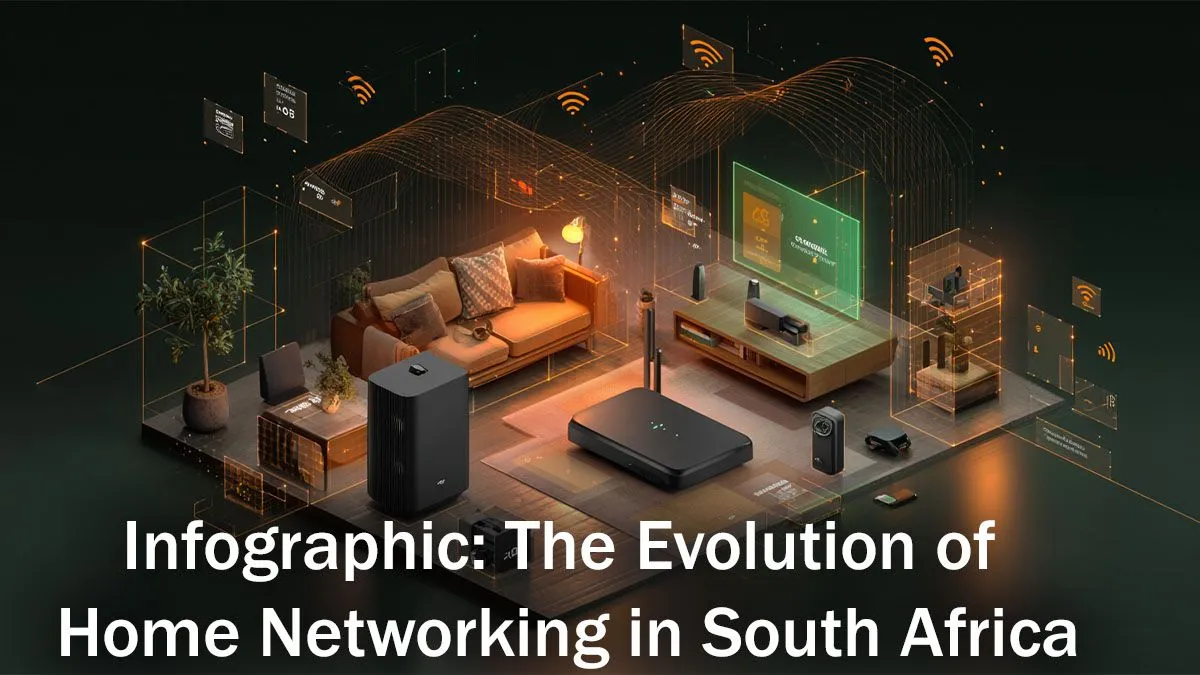
Today, fibre and high-speed LTE/5G are common, but they expose a new problem: the bottleneck is often inside your own home. A fast internet connection is useless if your Wi-Fi can't deliver it to your devices. South African homes, often built with thick brick walls, are notorious for creating Wi-Fi dead zones. 😩
This is where your internal hardware becomes critical. A powerful router is the heart of your network, but for larger homes or stubborn spots (like the braai area or the upstairs bedroom), Wi-Fi range extenders are essential for pushing a strong signal everywhere. And for that beastly gaming desktop that's too far from the router for an Ethernet cable? A decent wireless adapter is the perfect solution.
Wi-Fi 6 is a Must for Gamers ⚡
If you're buying a new router, make sure it's at least Wi-Fi 6 (802.11ax). It's not just about top speed; it's designed to handle many devices at once without congestion. This means your game's latency stays low even when others are streaming Netflix or on a video call in the same house. It's a huge stability improvement for any modern South African home network.
Fibre Optic: The Gold Standard for SA Gamers
Fibre is the current king of connectivity, offering insane speeds and, most importantly for gamers, incredibly low latency (or ping). With fibre, the delay between your action and the server's response is minimal, giving you a real competitive edge.
But here’s the catch: connecting a 500Mbps fibre line to a five-year-old router is like putting budget tyres on a Ferrari. You're paying for performance you simply can't access. To truly unlock the potential of your fibre connection, you need to consider upgrading your wireless networking gear to match.
Ready to Banish Lag for Good?
A fast fibre line is essential, but it's useless without the right gear to back it up. Don't let your old router bottleneck your gaming and streaming experience. Explore our complete range of networking hardware and give your home the speed it deserves.