

Staring at a battery icon that’s barely moving? We’ve all been there, especially when loadshedding is looming. You grab a cable, plug it in, and… nothing. The truth is, not all chargers are created equal, and that cheap cable you bought in a pinch might be the real culprit. This guide will help you spot the genuine speedsters from the slowpokes, ensuring your devices get juiced up fast every single time. ⚡
Why Your Old Cable is Sabotaging Your Charge Speed
Ever wondered why your new smartphone takes forever to charge with an old cable? It's not just about the power brick; the cable itself is a crucial piece of the puzzle. A proper fast charging cable is designed with thicker internal copper wires (measured in gauge) to handle higher electrical currents safely and efficiently.
Cheaper, non-certified cables often use thin, low-quality wiring that physically cannot carry the power needed for rapid charging. They create a bottleneck, throttling the power flow from your wall adapter to your device. Think of it like trying to fill a swimming pool with a drinking straw. Upgrading to one of the many modern comprehensive cable solutions available can make a world of difference.
Spotting a Genuine Fast Charging Cable: The Telltale Signs
You don't need to be an electrical engineer to identify a high-performance cable. A few key indicators can tell you everything you need to know before you buy.
Check the Specs: Watts (W) and Amps (A)
The most reliable way to identify a fast charging cable is to check the specifications on the packaging or product description. Look for two key numbers:
- Wattage (W): This tells you the maximum power the cable can deliver. For modern smartphones, look for at least 20W. For laptops or tablets, you'll want 60W to 100W or even higher.
- Amperage (A): This indicates the current the cable can handle. A higher number, like 3A or 5A, is a clear sign of a fast charging cable.
Don't Forget the Power Brick! 🧱
Your fast charging cable is only half the team. Make sure your wall adapter (the 'brick') can output the wattage your device needs. A 100W cable plugged into a 20W brick will only ever deliver 20W of power.
Build Quality You Can See and Feel
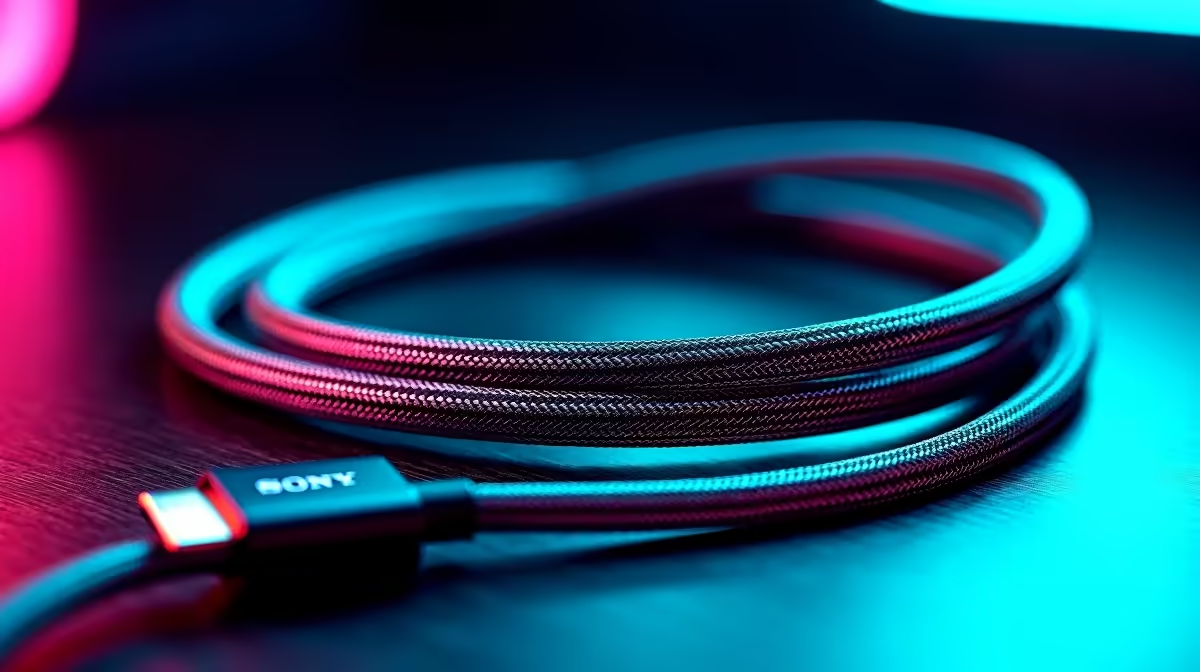
A well-made cable often performs better. Look for features like a braided nylon exterior and reinforced connectors where the cable meets the plug. These aren't just for looks; they protect the delicate internal wires from fraying and damage, ensuring a longer lifespan. Brands like Promate often focus on these durable, tangle-free designs that stand up to daily use. ✅
Common Pitfalls and Cables to Avoid
Navigating the world of cables can be tricky, but avoiding a few common mistakes will save you time and money. Be wary of cables that are ridiculously cheap or lack any branding or certification marks. These can be inefficient at best and a fire hazard at worst.
Even trusted brands like HP design specific cables for optimal power delivery with their devices, highlighting the importance of using certified and appropriate gear. A poor-quality cable not only charges slowly but can also damage your device's battery over time. It's simply not worth the risk for a few Rands saved. For reliable everyday performance, options from GIZZU provide a great balance of speed, durability, and value.
Ready for a Real Speed Boost? 🚀 Don't let a slow cable be your bottleneck during the next loadshedding stage. Explore our full range of high-speed cables at Evetech and get the power you paid for.











