You’ve just dropped thousands of Randelas on a new GPU, expecting flawless 144Hz gameplay. But in the heat of the moment, your frames drop and the game stutters. What’s going on? For many South African gamers, the culprit isn’t the new card… it’s an older CPU holding it back. This performance problem is known as a CPU bottleneck. We’ve gathered your most common questions to help you diagnose and fix it for good. Let’s dive in. 🔧
Your CPU Bottleneck Questions… Answered
Q: What exactly is a CPU bottleneck?
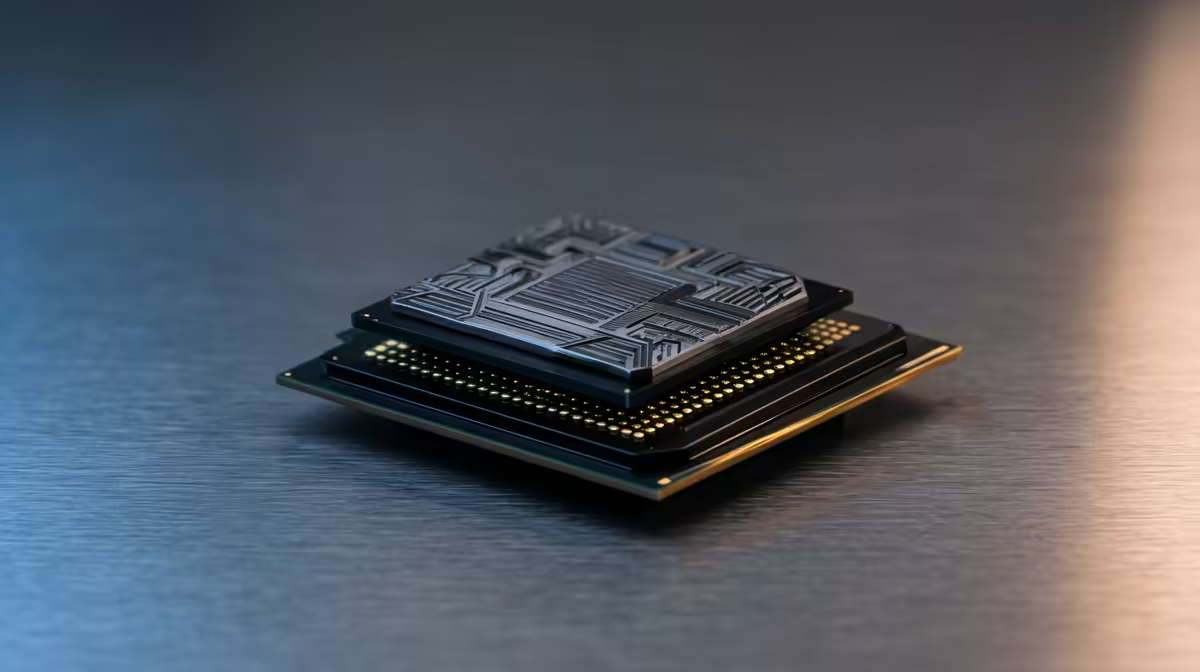
A: A CPU bottleneck happens when your processor can't prepare data fast enough for your graphics card. Imagine your GPU is a high-performance race car, but your CPU is the pit crew. If the crew is too slow to refuel and change tyres, the car’s speed doesn't matter. Your powerful GPU ends up waiting for instructions, which causes stuttering and lower-than-expected frame rates.
Q: How can I tell for sure if my CPU is the problem?
A: The best way is to monitor your hardware while gaming. Use a tool like MSI Afterburner to display your CPU and GPU usage on-screen. If your CPU usage is consistently at or near 100% while your GPU usage is significantly lower (e.g., 60-70%), you have a clear CPU bottleneck. Your processor is maxed out and can't keep up.
Q: Is it ever good to have a bottleneck?
A: Yes, ideally you want a GPU bottleneck. This sounds bad, but it simply means your graphics card is the component working its hardest, running at 99-100% usage to produce the maximum number of frames possible at your chosen settings. This indicates your system is well-optimised for visual quality, and your CPU is not holding you back.
Q: Can I fix a minor bottleneck without spending any money?
A: Absolutely. First, close unnecessary background applications like web browsers or streaming apps before you play. Second, check your in-game settings. Lowering options that are heavy on the CPU, like shadow quality, object detail, and population density, can free up processor resources and smooth out your gameplay significantly.
Q: Which CPU brand is better for gaming right now… Intel or AMD?
A: Both brands offer fantastic options, and the "best" choice often depends on your budget and specific needs. Historically, many gamers have preferred the raw single-core speed offered by the latest Intel CPUs for achieving the highest possible frame rates in competitive titles. However, the current lineup of AMD CPUs provides incredible multi-core performance and value, with their X3D chips being top contenders for gaming.
Q: When is it officially time to upgrade my processor?
A: If you’ve tried all the software fixes and your powerful, modern GPU is still being held back by an old CPU (e.g., a 4-core processor from five or more years ago), an upgrade is the only real solution. Investing in a new processor is the key to unlocking the full performance of the hardware you already paid for, creating a balanced and powerful system. 🚀
Don't Forget Your RAM Speed!
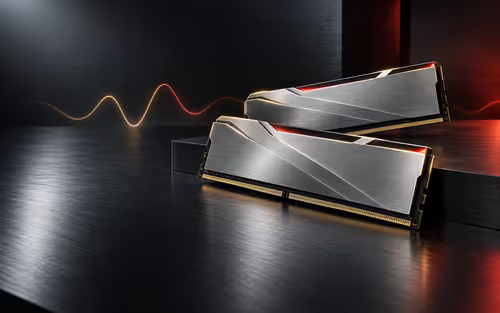
A common performance oversight is running your RAM at its default slow speed. Go into your motherboard's BIOS and enable the XMP (for Intel) or EXPO (for AMD) profile. This simple, one-click setting ensures your memory runs at its advertised speed, giving your CPU faster access to data and boosting overall performance.
Key Takeaways
- A CPU bottleneck occurs when your processor can't keep up with your graphics card, causing stutters and low FPS.
- The best way to diagnose a bottleneck is to check if CPU usage is near 100% while GPU usage is low during gaming.
- You can reduce a minor bottleneck for free by closing background apps and lowering CPU-intensive game settings.
- For a major bottleneck, upgrading your CPU is the most effective way to unlock your PC's true potential.
Ready to Build a Balanced Rig?
Don’t let an old processor sabotage your gaming experience. A balanced PC is the key to smooth, high-frame-rate glory. Explore our full range of CPU processors and find the perfect match for your GPU today.