

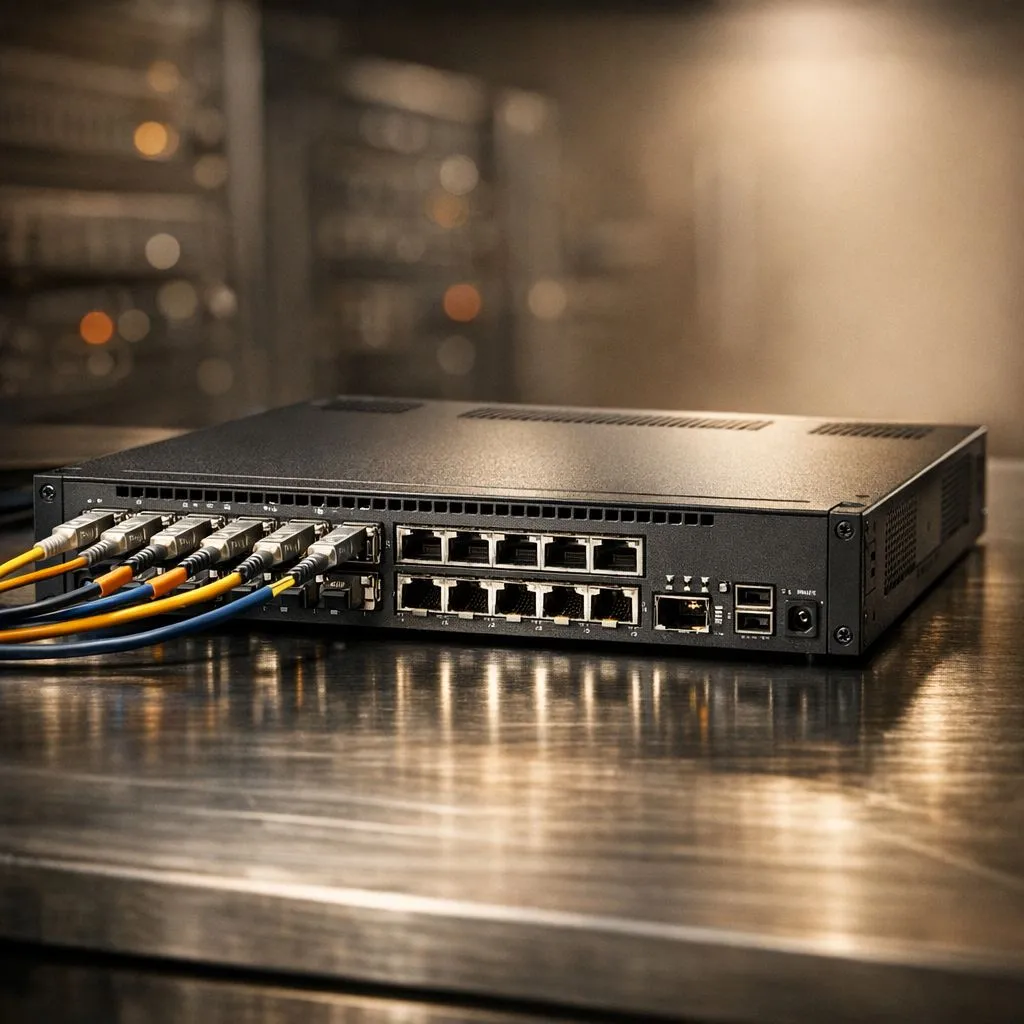
Flow Control in High-Speed Networks: Key Mechanisms & Impact
Ever felt that sudden lag spike in the middle of a clutch Valorant round? It is usually not just your ISP. Often, it is a traffic jam in your own home network. Understanding flow control in high-speed networks is the secret to a buttery-smooth experience. Whether you are downloading a 100GB patch or streaming 4K, managing data flow is what keeps your ping low and your gaming performance high. ⚡
Why Flow Control in High-Speed Networks Matters
At its core, flow control is a set of rules that prevents a fast sender from overwhelming a slow receiver. Imagine trying to pour a bucket of water into a narrow funnel. If you pour too quickly, you get a mess. In networking, that "mess" is dropped packets and massive latency.
When you buy network adapters for your rig, you are investing in hardware that can negotiate these speeds. Without proper flow control, your high-speed fibre line would constantly choke your PC's internal buffer... leading to the dreaded "rubber-banding" effect in online games.
Essential Mechanisms: Stop-and-Wait vs. Sliding Window
There are two primary ways networks handle this traffic. The first is "Stop-and-Wait". The sender sends one packet and waits for a "thumbs up" from the receiver before sending the next. It is reliable but incredibly slow for modern South African fibre speeds.
The second, more modern approach is the "Sliding Window" protocol. This allows multiple packets to be sent at once before an acknowledgement is needed. High-performance TP-Link network adapters use these advanced mechanisms to ensure data keeps moving even when the network gets busy. It is like having multiple lanes on the N1 highway instead of just one.
Optimisation Pro Tip ⚡
Ensure you are using at least a Cat6 Ethernet cable for your high-speed setup. While Cat5e works, Cat6 has better shielding and lower crosstalk. This reduces the work your network card has to do for error correction, allowing flow control mechanisms to operate at peak efficiency without unnecessary retransmissions.
The Impact on Your Local Gaming Experience
In South Africa, where we often play on international servers with higher base latency, local network efficiency is vital. If your internal flow control in high-speed networks is poorly managed, you add "bufferbloat" to your existing ping.
Using reliable hardware from Cudy network solutions ensures that your hardware-level flow control (like 802.3x) is handled correctly. This protocol sends a "PAUSE" frame to the sender when the buffer is nearly full. It is a split-second delay that prevents data loss... which is much faster than having to resend the entire data packet from scratch. 🚀
Upgrading for Stability
If you are still using the built-in Wi-Fi on an older motherboard, you might be missing out. A dedicated PCIe network card can handle complex flow control tasks much better than a generic onboard chip. With prices starting under R300 for entry-level gigabit cards, it is one of the most cost-effective ways to stabilise your connection. 🔧
Ready to Eliminate Network Bottlenecks? Don't let poor flow control ruin your killstreak or slow down your productivity. For the best stability and speed in South Africa, a dedicated network card is a must-have. Explore our massive range of network adapters and find the perfect hardware to keep your data flowing smoothly.











