If you are chasing higher frame rates in South Africa, you have likely seen the magic of AI-powered frames. But there is a catch that every competitive gamer fears. Does frame generation input lag actually ruin the experience? While your FPS counter might look amazing, the "feel" of your mouse movements can sometimes tell a different story. Let us dive into whether that extra smoothness is worth the potential delay.
Understanding Frame Generation and Latency
Frame generation works by inserting an AI-synthesised frame between two traditionally rendered ones. To do this, the GPU needs to look at the current frame and the next one in the queue. This process creates a tiny buffer. This buffer is where the concern about frame generation input lag begins. Because the system waits for the next frame to calculate the "fake" one, a small amount of latency is introduced.
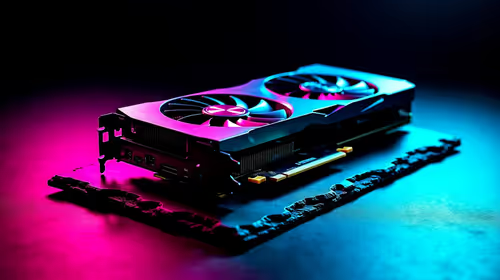
For most casual gamers, this delay is nearly imperceptible. However, if you are playing fast-paced shooters in a local tournament, every millisecond counts. This is why choosing the right hardware is vital. When you browse the latest NVIDIA and ATI graphics cards, you will notice that modern architectures are designed to mitigate these exact issues.
How Modern Tech Fights Input Lag
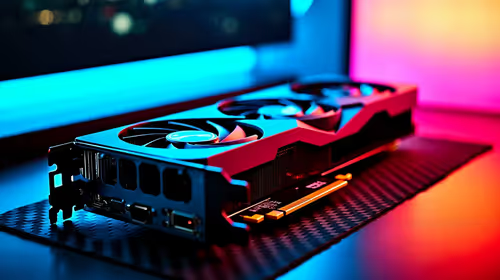
The good news is that hardware manufacturers are not ignoring the latency problem. NVIDIA uses Reflex technology to synchronise the CPU and GPU... effectively bypassing the usual render queue. This significantly reduces the impact of frame generation input lag. If you are looking for a premium build, high-end MSI graphics cards often feature cooling and clock speeds that help maintain these low-latency benefits during intense gaming sessions.
AMD has its own solution called Anti-Lag+. This technology works alongside FSR 3 to ensure that the extra frames do not make your mouse feel like it is moving through mud. You can find great deals on AMD Radeon graphics cards starting from around R6,000 that support these advanced features.
The Role of High Refresh Rates
Your monitor plays a massive role in how you perceive latency. If you are using frame generation on a 60Hz screen, the lag will be much more noticeable. On a 144Hz or 240Hz display, the added delay is often masked by the sheer speed of the refresh rate. Even Intel Arc graphics cards are now entering the fray... offering competitive frame interpolation methods for budget-conscious South African builders.
Is Frame Generation Right for You? ⚡
If you are a professional editor or designer, you might wonder if this tech applies to your work. Generally, frame generation is a gaming-centric feature. For creative professionals, workstation graphics cards focus on raw accuracy and stability rather than AI-generated "fake" frames.
Gaming Pro Tip 🔧
Always enable NVIDIA Reflex or AMD Anti-Lag when using frame generation. These settings are designed to counteract the latency penalty. Also, try to ensure your base frame rate is at least 60 FPS before turning on frame generation for the most responsive feel.
The Final Verdict on Latency
So, does frame generation add latency? Yes, technically it does. But with modern optimisations... the trade-off is often worth it for the incredible visual fluidity you get in return. As long as you have a modern GPU and a high-refresh monitor, you can enjoy the best of both worlds without feeling held back by lag. 🚀
Ready to Boost Your FPS?
Frame generation is a total game-changer when paired with the right hardware. Whether you want the latest DLSS 3 features or high-value AMD performance, we have the stock you need. Explore our massive range of graphics card specials and upgrade your South African gaming rig today.