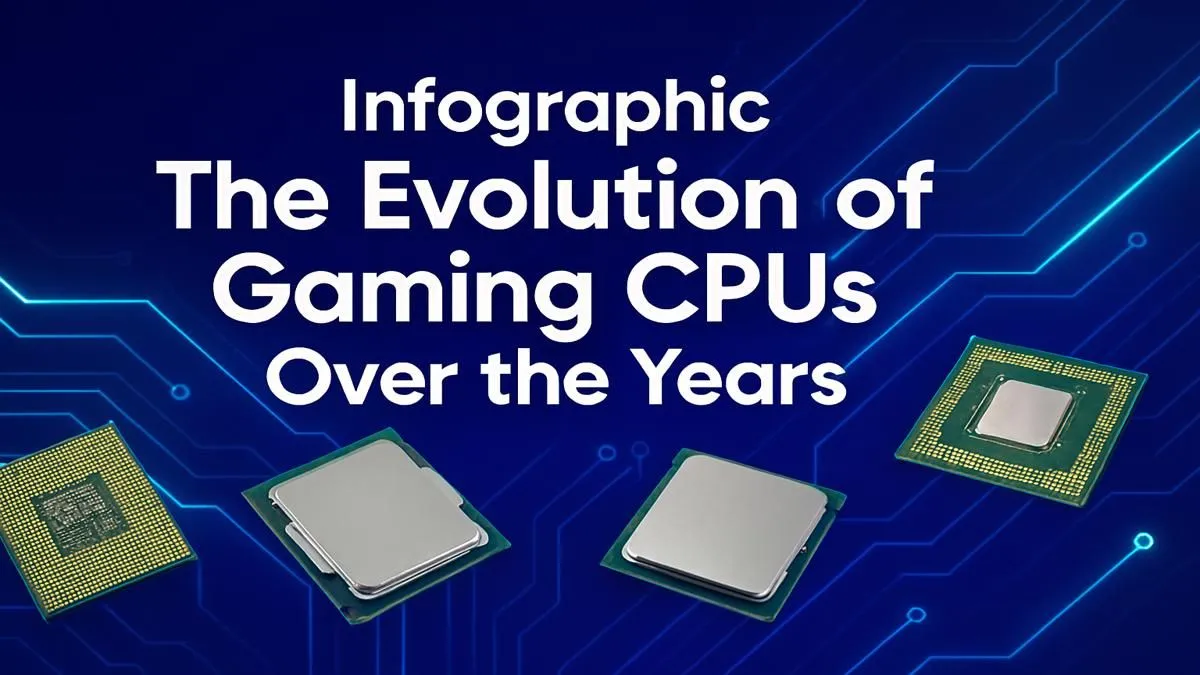
Remember the days of dial-up tones and praying your Pentium III wouldn't melt running Counter-Strike 1.6? The heart of your rig, the CPU, has been on a wild ride since then. From sluggish single-core chips to the multi-threaded beasts of today, the gaming CPU evolution is a story of fierce competition and incredible innovation. Let's take a visual journey through the key moments that shaped the games we play and the PCs we build. 🚀
The Early Days: The Gigahertz Race
In the early 2000s, the battle for gaming supremacy was simple: higher clock speeds. It was a straight-up drag race between Intel's Pentium 4 and AMD's Athlon XP. The marketing was all about breaking the next gigahertz barrier, a metric that seemed like the only thing that mattered.
This single-minded focus on raw frequency defined the first era of 3D gaming. While it pushed performance forward, it also created processors that ran incredibly hot and consumed a lot of power. This era laid the groundwork for everything to come, forcing engineers to think smarter, not just faster. For anyone building a PC today, understanding this history makes choosing from the vast range of modern CPU processors a much more informed decision.
The Multi-Core Revolution: A New Battlefield
The relentless pursuit of clock speed eventually hit a wall... a thermal wall. The solution? Put more than one processor "core" onto a single chip. This was the most significant turning point in the evolution of gaming CPUs. Suddenly, PCs could handle multiple tasks smoothly, and games could be designed with more complex physics and AI.
This shift was spearheaded by iconic chips like the Intel Core 2 Duo and later, the quad-core Q6600, which became a legendary overclocker. For years, the formula for a great gaming PC was one of these revolutionary Intel gaming CPUs, a solid graphics card, and you were set. This era proved that more, smarter cores were better than one overworked core. ✨
Check Your Socket! 🔧
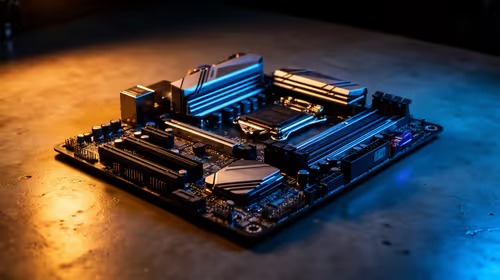
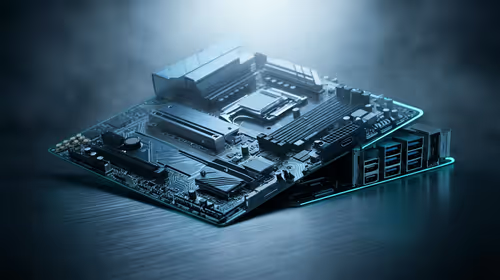
Before you upgrade your CPU, always double-check your motherboard's socket type (e.g., AM5 for modern AMD, LGA 1700 for recent Intel) and chipset compatibility. A quick visit to your motherboard manufacturer's website can save you a lot of ZAR and a major headache. A BIOS update is often required for newer CPUs on an older board!
The Ryzen Disruption and the Core Count Wars
For a while, progress felt incremental. Then, in 2017, AMD re-entered the high-performance scene with its Ryzen architecture. This wasn't just a new chip; it was a total disruption. By offering more cores and threads at competitive prices, Ryzen sparked a "core war" that has massively benefited PC gamers in South Africa and beyond.
Intel responded, and suddenly 6, 8, and even 16-core processors became mainstream for gaming rigs. Modern games, from Cyberpunk 2077 to Baldur's Gate 3, are now heavily optimised to use these extra threads, leading to smoother frame rates and richer worlds. This intense competition means gamers now get incredible performance for their money from the latest AMD CPUs.