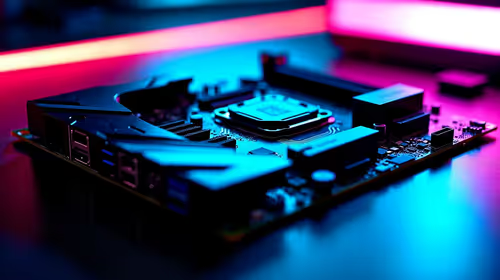
You’ve dropped serious ZAR on your beast of a gaming rig. That glowing RGB case houses a powerful processor, the very brain of your setup. But while you’re focused on frame rates and clock speeds, are you thinking about your gaming CPU security? It’s not just about viruses anymore; modern threats can target your hardware directly, turning your high-performance machine into a sluggish, vulnerable liability. Let's lock it down. 🚀
Why CPU Security is Not Just for IT Pros
In the past, we worried about dodgy downloads and phishing emails. While those are still real dangers, the security landscape has evolved. Vulnerabilities like Spectre and Meltdown proved that threats can target the physical architecture of your processor itself. For a gamer, this isn't just a theoretical problem.
A compromised CPU can lead to:
- Performance Throttling: Malicious processes can steal precious CPU cycles, causing stuttering, lag, and lower frame rates in your favourite titles.
- System Instability: Unexplained crashes and blue screens can become common, ruining a competitive match or corrupting a game save.
- Data Theft: Your login details for Steam, Discord, or even your banking apps could be at risk.
Protecting your rig means ensuring the core of your system is secure. It's as fundamental as choosing the right CPU in the first place.
Practical Steps to Harden Your Gaming Rig
Good gaming CPU security isn’t about buying expensive software; it’s about building smart habits and keeping your system's defences up to date. Here’s how to start.
Keep Your Foundation Solid: BIOS/UEFI Updates 🔧
Your motherboard’s BIOS (or the more modern UEFI) is the first thing that runs when you power on your PC. It contains critical low-level code, including "microcode" for your CPU. Manufacturers release updates to this microcode to patch newly discovered hardware vulnerabilities.
Forgetting to update your BIOS is like leaving the front door of your house unlocked. Both modern Intel processors and the latest AMD Ryzen CPUs regularly receive these crucial security patches via motherboard manufacturers.
BIOS Update Pro Tip ⚡
Always download BIOS updates directly from your motherboard manufacturer's official website (e.g., ASUS, MSI, Gigabyte). Never use a third-party tool. During the update, ensure your PC is connected to a reliable power source—a power cut mid-update can be catastrophic!
The Operating System Shield
Your operating system (like Windows 11) acts as the main guard for your hardware. When Microsoft or the Linux community releases a security patch, install it promptly. These updates often contain kernel-level fixes that directly address and mitigate processor flaws, making it much harder for malicious code to exploit them. Don't postpone those "Update and Restart" notifications!
Smart Software Habits ✨
The best defence is a good offence. Be critical about what you install on your high-performance rig.
- Source Legitimately: Pirated games and software are notorious for bundling malware, ransomware, or crypto-miners that will cripple your CPU's performance. Stick to trusted platforms like Steam, Epic Games, and GOG.
- Use Reputable Antivirus: Windows Defender has become incredibly robust, but a quality third-party antimalware program can add another layer of protection.
By combining hardware-level updates with smart software practices, you create a robust defence that ensures your processor's power is used for one thing only: an incredible gaming experience.
Ready to Fortify Your Rig's Core?
Strong gaming CPU security starts with modern hardware. If your processor is getting a bit long in the tooth, an upgrade is the ultimate defence. Explore our massive range of PC components and find the perfect, secure heart for your machine.