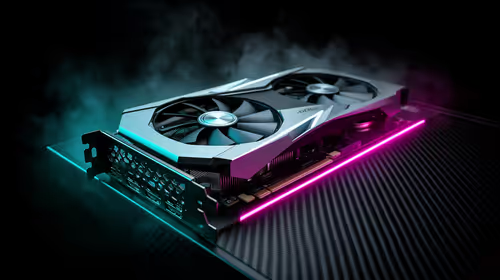
So, you’ve finally done it. After weeks of watching reviews and saving up your hard-earned Randelas, you’ve ordered a shiny new graphics card. The excitement is real! But what happens if it arrives and... it’s not right? Maybe it’s dead on arrival, or it just doesn’t perform as expected. Suddenly, that excitement turns to anxiety. Don’t panic. Understanding the GPU return policy in South Africa is your best defence, ensuring your massive investment is protected.
Your Rights: The Consumer Protection Act (CPA) and GPUs
Before we dive into store-specific policies, let's talk about your fundamental rights. In South Africa, the Consumer Protection Act (CPA) is your best friend. It’s designed to protect you from dodgy deals and faulty goods. When it comes to a high-value item like a graphics card, the CPA gives you a crucial safety net.
The most important part is the six-month implied warranty. This means that if your GPU is faulty, unsafe, or not fit for its intended purpose within six months of purchase, you have the right to return it for a repair, replacement, or refund. This covers things like unexpected artifacts, crashing, or a complete failure to power on. It’s a powerful piece of legislation that reputable retailers like Evetech respect and build their policies around. Knowing this is the first step to a confident purchase.
Common Scenarios for a Graphics Card Return
Navigating a return can feel complicated, but most situations fall into one of three categories. Understanding which one you're in will make the process much smoother.
Scenario 1: Dead on Arrival (DOA) DOA is the nightmare scenario: you unbox your card, install it, and... nothing. No signal, no fan spin, just silence. The good news is that this is the most straightforward type of return. Under the CPA, a product that is faulty from the get-go is a clear-cut case for a return. Most retailers will quickly offer a replacement or a full refund once they've verified the fault. This is why it's vital to test your new component as soon as you get it.
Pro Tip: Your Unboxing is Your Evidence 📸
Always record a video of you unboxing and installing your new GPU. It might feel a bit extra, but if you find any physical damage or if the card is DOA, that video becomes undeniable proof. It helps the retailer process your claim faster and protects you from any suggestion that the damage happened on your end. Keep all original packaging, including the anti-static bag, in pristine condition.
Scenario 2: Buyer's Remorse or Incompatibility
This one is a bit trickier. Let's say you bought an RTX 4070, but after a week, you wish you'd stretched for the 4070 Ti. Or maybe you discover your power supply isn't quite up to the task. This isn't a fault with the product; it's a change of heart or a planning oversight.
Legally, a retailer isn't obligated to accept a return for buyer's remorse if the product has been opened and used. However, many stores have their own goodwill policies. They might accept the return but charge a handling or restocking fee, as the product can no longer be sold as new. Always check the specific retailer's policy before you buy, especially if you're unsure about compatibility with your existing components and essential graphics card accessories.
Scenario 3: It Fails Down the Line (Warranty Claim)
What if your card works perfectly for four months and then suddenly starts causing issues? This falls outside the immediate return window but is still covered by the CPA's six-month implied warranty and, beyond that, the manufacturer's warranty (which is often 1-3 years).
This process is a warranty claim, not a simple return. You'll need to contact the retailer, who will facilitate the claim with the manufacturer or their local distributor. The card will be tested, and if a fault is confirmed, it will be repaired or replaced. Whether you need a beastly card for gaming or one of the more specialised professional workstation graphics cards, the warranty process is a key part of the product's value.
How to Avoid a Return in the First Place 🚀
The best return is the one you never have to make. A little bit of homework can save you a world of hassle.
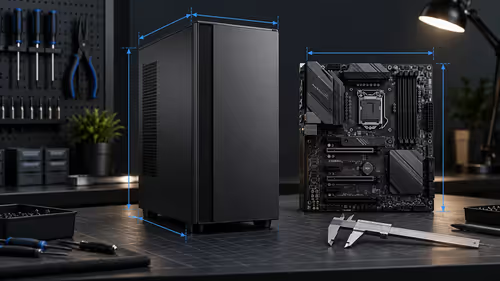
- Check Your Specs: Does your case have enough physical space? Is your Power Supply Unit (PSU) powerful enough and does it have the right connectors? Double-check the requirements on the product page before you click "buy".
- Read and Watch Reviews: See how the card performs in the real world. Look at benchmarks for the games you actually play. This helps manage performance expectations.
- Choose Your Brand Wisely: Whether you're looking at the latest NVIDIA GeForce graphics cards, the excellent value of AMD Radeon options, or even newer players like Intel Arc, each has its strengths. Researching driver stability and software features is just as important as raw power.
Ultimately, the best way to protect yourself is to buy from a trusted, established South African retailer. They understand the local GPU return policy landscape, comply with the CPA, and have streamlined processes to help you if something goes wrong. When you browse a wide range of GPUs, you're not just buying a product; you're buying peace of mind and local support.
Ready for a Hassle-Free Upgrade?
Understanding the GPU return policy in South Africa gives you the confidence to invest in your rig. With the right knowledge and a trusted supplier, you're all set for glory. Explore our incredible graphics card deals and find the perfect GPU to power your passion.