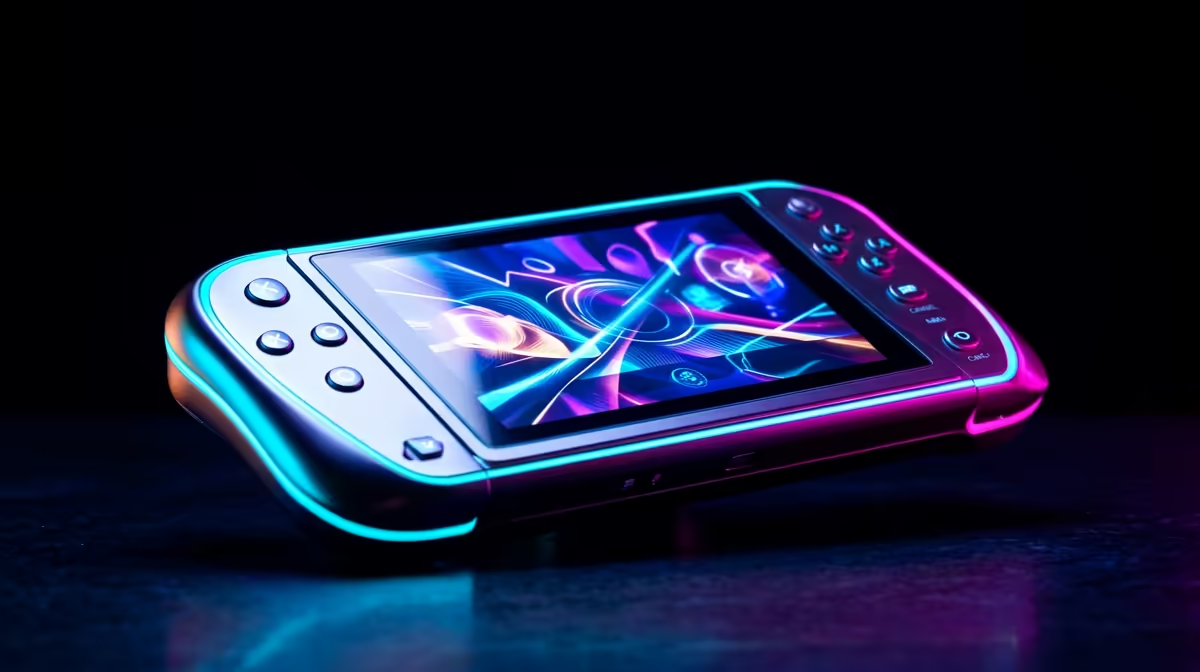
Remember when PC gaming meant being chained to a desk? Those days are fading fast. With powerhouses like the Steam Deck and ROG Ally landing in South Africa, a revolution is underway. But this isn't just about playing Baldur's Gate 3 on the go... it's fundamentally reshaping the world of handheld PC game development, forcing creators to think smaller, smarter, and more efficiently than ever before. So, how are they doing it? 🚀
A Fresh Blueprint for Gaming on the Go
For years, PC games were built for the monitor. Now, developers are embracing a "handheld-first" or "handheld-aware" mindset. This isn't just about shrinking graphics; it's a complete rethink of the user experience (UX). The biggest challenge in handheld PC game development is making complex games playable on a 7-inch screen.
This means:
- Readable UI: Text that's crisp on a 27-inch 4K monitor can become an unreadable smudge on a small display. Developers are now implementing dynamic UI scaling and offering font size options, ensuring you can actually read quest logs and item descriptions without squinting.
- Controller-First Navigation: While you can use the touchscreen, the primary input is joysticks and buttons. Menus must be designed for quick, intuitive D-pad or analogue stick navigation, not a mouse pointer.
- Performance Scaling: A game has to run smoothly on a low-wattage APU but also look stunning on a high-end desktop rig. This requires building robust graphics settings that scale gracefully across a huge range of hardware.
Optimising for Power and Portability
Creating a great experience on a portable device goes beyond the visuals. The technical backend presents unique hurdles for developers targeting handheld PCs. The entire process of handheld PC game development is a balancing act between performance and battery life.
A key focus is the CPU/GPU combo, or APU. Developers must meticulously optimise their code to squeeze every drop of performance from these efficient chips without draining the battery in an hour. This is where technologies like AMD's FidelityFX™ Super Resolution (FSR) and Intel's XeSS become essential tools, allowing games to run at a lower internal resolution and cleverly upscale the image for a sharp look with a massive performance boost.
Storage is another critical factor. With game sizes ballooning past 100GB, the limited internal space on these devices fills up quickly. Smart asset streaming and compression are vital, but for players, the solution is often an upgrade. Having a snappy, high-capacity NVMe SSD not only provides more space but dramatically cuts down on those frustrating loading screens, a crucial element for pick-up-and-play sessions.
Developer Tip: Smart Input Handling 🔧
When developing for handheld PCs, always check for the active input method. Don't just assume a controller is being used. A good implementation detects whether the last input came from a joystick, button, or touchscreen, and dynamically swaps button prompts and UI elements to match. This creates a seamless experience for the player.
Big Sound for Small Screens 🎧
When your visual real estate is limited, audio becomes exponentially more important. On a massive monitor, you can spot an enemy in your periphery. On a handheld, a subtle audio cue might be your only warning.
Top-tier sound design helps build worlds, convey critical information, and create immersion that a small screen alone can't provide. Positional audio is a must-have, helping you pinpoint threats or objectives without cluttering the HUD. This is why playing with a quality gaming headset can transform the handheld experience, turning a good game into an unforgettable one by fully immersing you in the action, whether you're on your couch or on the move.
More Than Just a Handheld: The Hybrid Future
Perhaps the most exciting aspect of this new hardware category is its dual nature. These devices aren't just portable consoles; they are fully-fledged PCs. With a simple dock, they can connect to a monitor, keyboard, and mouse, transforming into a capable desktop setup.
This hybrid functionality presents a fascinating challenge for game developers. A game's UI, controls, and performance profile must work flawlessly in both scenarios. It needs to be a great portable game and a great desktop game. This ecosystem is supported by a host of peripherals that enhance both modes of play. Having the right gaming accessories, like a portable dock or an ergonomic controller, can make all the difference.
Ultimately, the rise of handheld PC gaming is a testament to the flexibility of the PC platform. It's a space where innovation thrives, supported by an incredible variety of components and other tech essentials that empower both creators and players. This trend isn't just a gimmick; it's a significant evolution in how we make and play games. ✨
Ready to Power the Next Wave of Gaming?
Whether you're a developer optimising your next indie hit or a gamer craving uncompromising performance on the go, the hardware matters. From lightning-fast storage to immersive audio, the right gear makes all the difference. Explore our massive range of PC components and build your perfect gaming setup today.