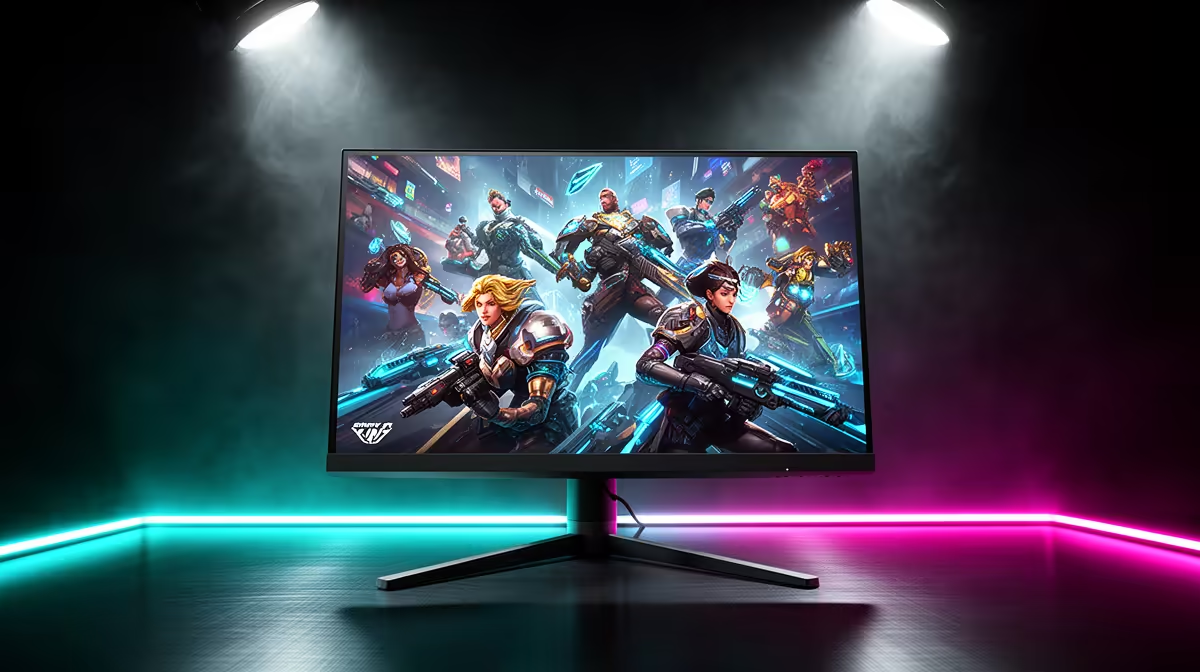
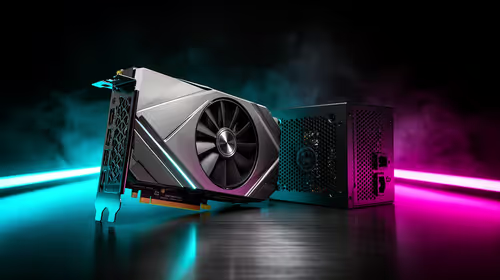
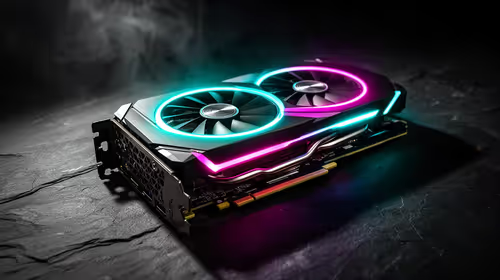
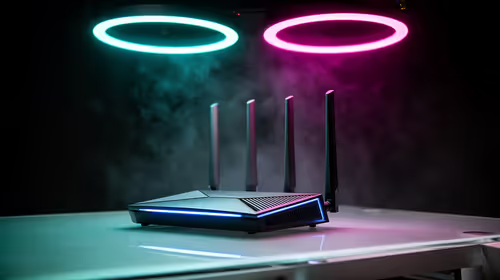
For competitive esports, the HDMI 2.1 versus HDMI 2.0 debate is less about spec-sheet bragging rights and more about the lowest possible input-to-photon delay.
Quick Answer
Go HDMI 2.1 when the price gap is small and your platform is new, because HDMI 2.1 carries 48 Gbps for 4K 120 Hz with VRR. Otherwise HDMI 2.0 is the smarter spend for competitive esports, with parts typically landing around R3,500 to R16,000.
Why HDMI 2.0 is still a smart buy
HDMI 2.0 tops out near 4K 60 Hz or 1440p 144 Hz, which keeps it firmly in the value seat. If your current parts are healthy, the money saved by choosing HDMI 2.0 is better aimed at the component that limits you most right now.
Heat, fit and platform checks
Before you commit, confirm your board, cooling and case actually support the HDMI version you want. SA ambient temps run warm, so airflow and proper mounting matter; a throttled part is no faster than the cheaper one it replaced.
Where your Rands do the most work
For a competitive esports machine in the R3,500 to R16,000 bracket, the order that moves the needle is usually GPU, then display, then memory, then this HDMI version choice. Spend top-down and you rarely regret it.
FAQ
Which one helps competitive esports most on a tight budget?
HDMI 2.0. HDMI 2.0 tops out near 4K 60 Hz or 1440p 144 Hz, leaving more of your budget for the parts that visibly improve fast-paced shooters and MOBAs where reaction time wins rounds.
Can I move to HDMI 2.1 later without rebuilding?
Often yes, if your motherboard already supports it. Buy a platform with the right slots now and you keep the door open without paying for HDMI 2.1 today.
Does HDMI 2.1 make a difference for the lowest possible input-to-photon delay?
A measurable one in the right scenario, yes. Whether it is a felt difference depends on the rest of your hardware keeping pace.
Match the spec to how you actually play
Confirm your motherboard supports the HDMI version you want before checkout, then size the part to your competitive esports budget.