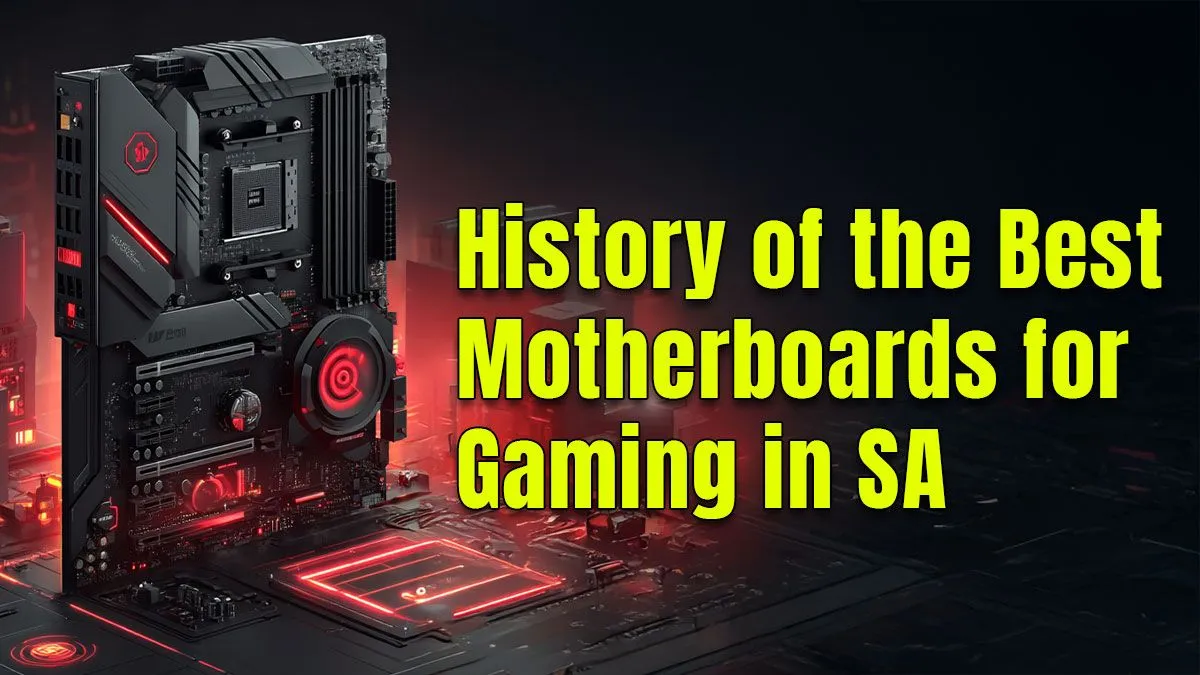
Remember the beige PC tower humming under your desk? The one that took ages to boot up Doom? While we obsessed over graphics cards and RAM, the real hero was working silently in the background: the motherboard. It’s the central nervous system of your rig, and its story is a thrilling ride. Let's trace the incredible history of gaming motherboards and see how they paved the way for the powerhouse PCs we build today.
The Beige Box Era: Foundations of Fun 🔧
Back in the 90s, motherboards were… well, boring. They were green, functional, and devoid of the flashy heatsinks and RGB we see now. The focus was on standardisation. The introduction of the ATX form factor was a huge leap, organising the layout for better airflow and easier upgrades.
For gamers, the most exciting development was the AGP (Accelerated Graphics Port) slot. This dedicated lane for your graphics card was a massive step up from the old PCI slots, unlocking new levels of 3D performance and making titles like Quake II a visual spectacle.
The Enthusiast Uprising: Overclocking and PCI Express
The 2000s kicked things into high gear. This was the decade the evolution of performance in motherboards truly began. Manufacturers realised gamers and tech enthusiasts weren't just buying off-the-shelf PCs; they were building their own. Chipsets like NVIDIA's nForce2 became legendary for their stability and overclocking potential. The BIOS, once a cryptic blue screen, started including user-friendly tools to push CPUs and RAM to their limits.
Then came PCI Express (PCIe). This new standard blew AGP out of the water with its superior bandwidth, paving the way for the monstrously powerful GPUs we use today. The market exploded, and for the first time, builders had a massive choice of cheap Intel and AMD based motherboards designed specifically for performance.
The Modern Battlefield: Specialisation and Speed ✨
Today's gaming motherboard is a technological marvel. The history of gaming motherboards has culminated in highly specialised platforms that cater to specific needs. We've moved beyond just raw speed to focus on the entire user experience.
Intel vs. AMD: A Tale of Two Platforms
The platform wars are fiercer than ever. The launch of AMD's Ryzen processors forced everyone to innovate, leading to an incredible arms race. Modern AMD motherboards are known for their broad CPU compatibility across generations and strong multi-core performance features. On the other side, a dedicated ecosystem of powerful Intel motherboards is built to squeeze every drop of single-core gaming performance from their processors.
Key Innovations of the Modern Era
- M.2 NVMe Slots: These tiny slots connect SSDs directly to the PCIe bus, delivering storage speeds that make SATA SSDs look like dial-up. No more loading screens… almost.
- Robust VRMs: Voltage Regulator Modules are crucial for delivering clean, stable power to today's multi-core CPUs, especially when overclocking. Better VRMs mean better performance and stability.
- Integrated I/O: High-speed Wi-Fi, 2.5G LAN, and a smorgasbord of USB ports are now standard, turning the motherboard into a true connectivity hub.
- Aesthetics and RGB: Love it or hate it, RGB lighting and stylish heatsinks are here to stay, allowing gamers to personalise their rigs like never before. 🚀
Choosing Your Chipset ⚡
When buying a new motherboard, the chipset is key. For Intel, a 'Z' series chipset (like Z790) unlocks overclocking for 'K' series CPUs. For AMD, 'X' and 'B' series chipsets (like X670 or B650) both support overclocking, but the 'X' series typically offers more connectivity and PCIe lanes. Match your chipset to your CPU and your needs!
The Future is Fast
So, what's next for the humble motherboard? We're on the cusp of PCIe 5.0 becoming mainstream for GPUs and SSDs, with PCIe 6.0 already on the horizon. Expect even faster networking, more intelligent power delivery systems, and deeper integration with software to optimise performance on the fly. The evolution of gaming motherboards is far from over.
Ready to Build Your Legacy?
The history of gaming motherboards is a story of constant innovation. Now, it's your turn to harness that power. Whether you're planning your first build or upgrading a trusted rig, the perfect foundation awaits. Explore our massive range of motherboards and find the component that will define your next gaming chapter.