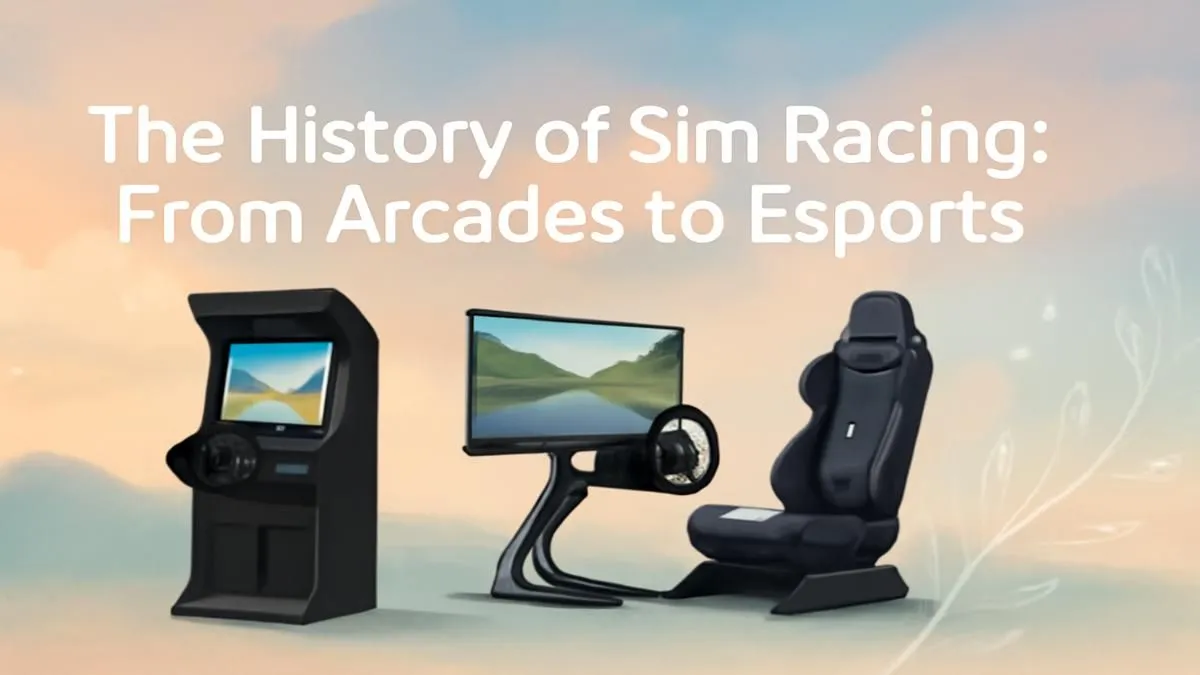
Remember pumping R2 coins into a Daytona USA machine at the local arcade? The chunky steering wheel, the roar of the engine... for a moment, it felt real. The journey from those pixelated classics to today's hyper-realistic esports rigs is one of the most exciting stories in gaming. The history of sim racing isn't just about better graphics; it's a tale of passion, engineering, and the relentless pursuit of virtual perfection.
The Arcade Origins: The Coin-Op Grand Prix
Long before you could build a rig in your bedroom, the racetrack lived in noisy, neon-lit arcades. The evolution of sim racing began here, with electromechanical games in the 70s like Atari's Gran Trak 10, which featured a steering wheel, shifter, and pedals. It was revolutionary for its time. 🕹️
The real shift came with 3D graphics. Sega's Virtua Racing and Daytona USA in the early 90s brought a sense of speed and place that was mind-blowing. These cabinets, with their force-feedback wheels and booming speakers, laid the foundational fantasy: to put you, the player, in the driver's seat.
The PC Revolution: Bringing the Track Home
The true pursuit of realism, however, happened on the personal computer. The late 90s and early 2000s were a golden age that shaped the history of sim racing as we know it. Titles like Grand Prix Legends (1998) modelled notoriously difficult 1967 F1 cars with unforgiving physics. It was brutally hard but proved that a market existed for authentic simulation over arcade fun.
This era gave birth to legendary platforms like rFactor and Live for Speed, which focused on realistic physics engines and, crucially, modding support. Suddenly, communities could create their own cars and tracks, leading to an explosion of niche racing disciplines. The dream of having a professional-grade racing experience at home was becoming a reality.
The Evolution of Sim Racing Hardware
Software was only half the story. To feel the car, you needed the right gear. The journey went from basic keyboard controls to flimsy joysticks, but the real leap was the advent of force feedback. Getting your hands on a quality wheel from Thrustmaster meant you could finally feel the tyres losing grip or the bump of a kerb through your hands.
This quest for immersion didn't stop at the wheel. A proper set of pedals provided better throttle and brake control, and soon, dedicated racers realised a desk chair just wouldn't cut it. Getting strapped into a proper cockpit from Playseat completed the experience, correctly positioning the driver and ensuring their setup was rock-solid for intense races.
First Rig Tip 🔧
When setting up your first wheel, don't just clamp it to your desk and go. Take 15 minutes to calibrate it in your game's settings. Pay special attention to the 'Field of View' (FOV). A correct FOV makes judging distances and apexes much more intuitive, making you faster and more consistent.
From Hobby to High-Stakes Esports
Today, the line between virtual and reality is blurrier than ever. The evolution of sim racing has culminated in a globally recognised esport. Platforms like iRacing and Assetto Corsa Competizione host championships with massive prize pools, broadcast to hundreds of thousands of viewers. 🏆
Top-tier sim racers are professional athletes, and even real-world F1 drivers like Max Verstappen and Lando Norris use simulators for practice and compete in virtual events. What started with a coin in an arcade slot has become a legitimate pathway to motorsport, proving that the passion for racing excellence is just as strong in the digital world.
Ready to Join the Grid?
The history of sim racing is incredible, but the future is yours to drive. Whether you're a beginner or a seasoned pro, building the right rig is your first step towards the podium. Explore our huge range of sim racing gear and start your own racing story today.