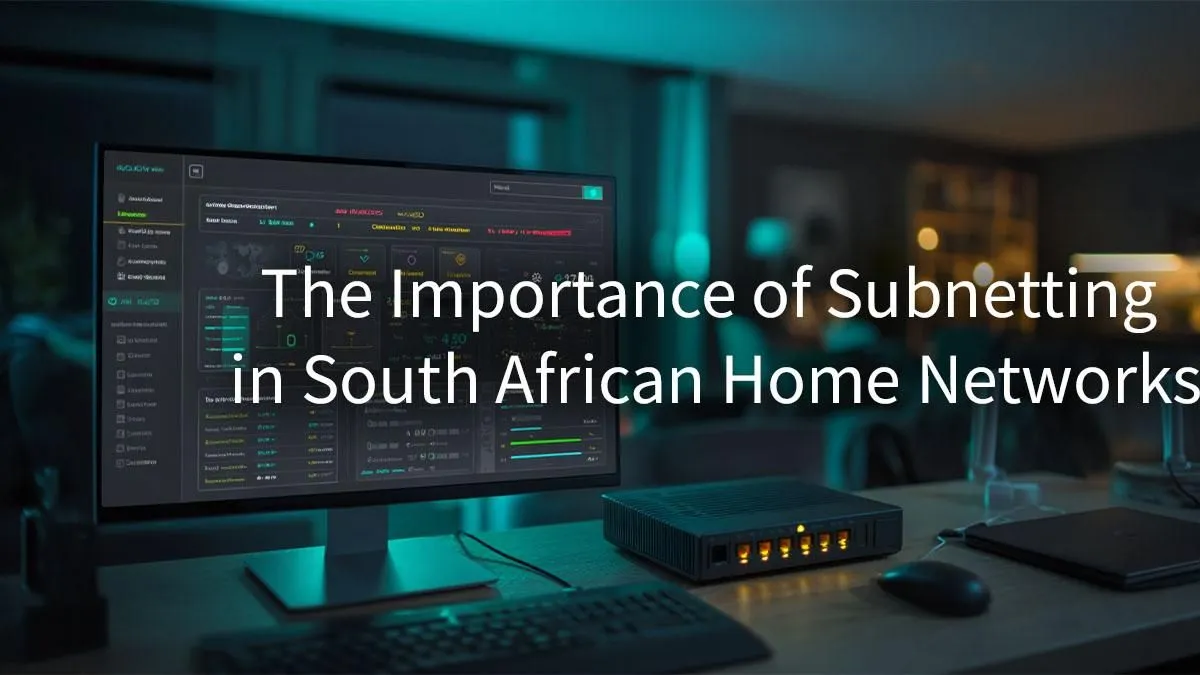
Is your game lagging because someone started streaming Showmax in the next room? Does your smart home feel... a little too vulnerable? For many South African tech enthusiasts, the standard home network just isn't cutting it anymore. It's time to talk about a pro-level solution that can seriously upgrade your digital life: home network subnetting. It sounds complex, but it's the key to unlocking next-level security and performance for your home setup.
So, What Exactly is Home Network Subnetting?
Think of your home network as one big open-plan house. Everyone and every device... your gaming PC, your smart TV, your phone, and your visitors' devices... are all in the same room, sharing the same space and resources.
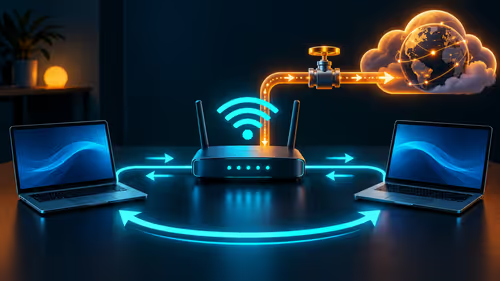
Home network subnetting in South Africa is the digital equivalent of building walls to create separate, dedicated rooms. You're taking your single network (like 192.168.0.x) and dividing it into multiple smaller, isolated networks (subnets). Each subnet acts independently, giving you incredible control over your digital traffic. The benefits are huge: better performance, tighter security, and much easier management. 🔧
Why a Gamer in SA Should Care About Subnetting
This isn't just for corporate IT departments. For a typical South African home with fibre internet and a dozen connected devices, subnetting solves real-world problems.
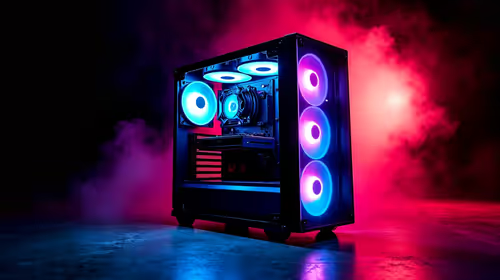
Isolate Your Gaming Traffic for Lower Ping
This is the big one. By creating a dedicated subnet just for your gaming PC or console, you protect it from bandwidth hogs. When your family starts a 4K Netflix marathon, their traffic stays in their "room," leaving your gaming connection pristine and responsive. This requires a solid foundation, starting with one of the powerful wireless routers capable of handling this kind of traffic management.
Lock Down Your Smart Home 🔒
Smart lights, security cameras, and other Internet of Things (IoT) devices are convenient but are often security risks. Placing them on a separate "insecure" subnet means that even if a hacker compromises your smart fridge, they can't access your main PC with your banking details or Steam account. It's a simple, powerful security upgrade. If your smart devices are far from your router, a set of wireless range extenders can ensure your new subnets reach every corner of the house.
Create a Secure Guest & Kids Network
Have friends over? Put them on a guest subnet with internet access but no access to your personal files or devices. You can do the same for your kids' devices, applying stricter content filters or time limits through your router without affecting the main network.
Network Detective Tip 🕵️
Unsure what's connected to your network? Use a free tool like the 'Fing' app on your phone. It scans your Wi-Fi and lists every device by name and IP address. This is a crucial first step before you start organising devices into subnets, helping you identify everything from your PC to that smart toaster.
Getting Started with Home Network Subnetting
While a full tutorial is beyond one article, the process generally involves logging into your router's admin panel and looking for settings like "VLAN" (Virtual LAN) or "Guest Network." More advanced setups involve changing your network's "subnet mask" from the default 255.255.255.0.
The key is having capable hardware. Your ISP-provided router might not cut it. You need a device that explicitly supports these features. For desktop PCs that you want to place on a specific subnet but are too far for an Ethernet cable, a high-quality wireless adapter is essential for a stable connection.
The Verdict: Is Subnetting for You? 🚀
Let's be clear: home network subnetting requires a bit of technical curiosity. It's not a one-click fix. But if you're a gamer tired of lag spikes, a parent wanting more control, or simply a tech enthusiast who values security, the benefits are immense. It transforms a chaotic network into an organised, efficient, and secure system.
Taking control of your digital world starts with the right foundation. Investing in robust wireless networking gear is the first and most important step toward building a home network that works for you, not against you.
Ready to Build a Smarter, Faster Network?
Subnetting is a powerful tool, but it starts with the right hardware. From high-speed routers to signal-boosting extenders, having a solid foundation is non-negotiable. Explore our complete range of wireless networking gear and build the powerful, secure home network you deserve.