

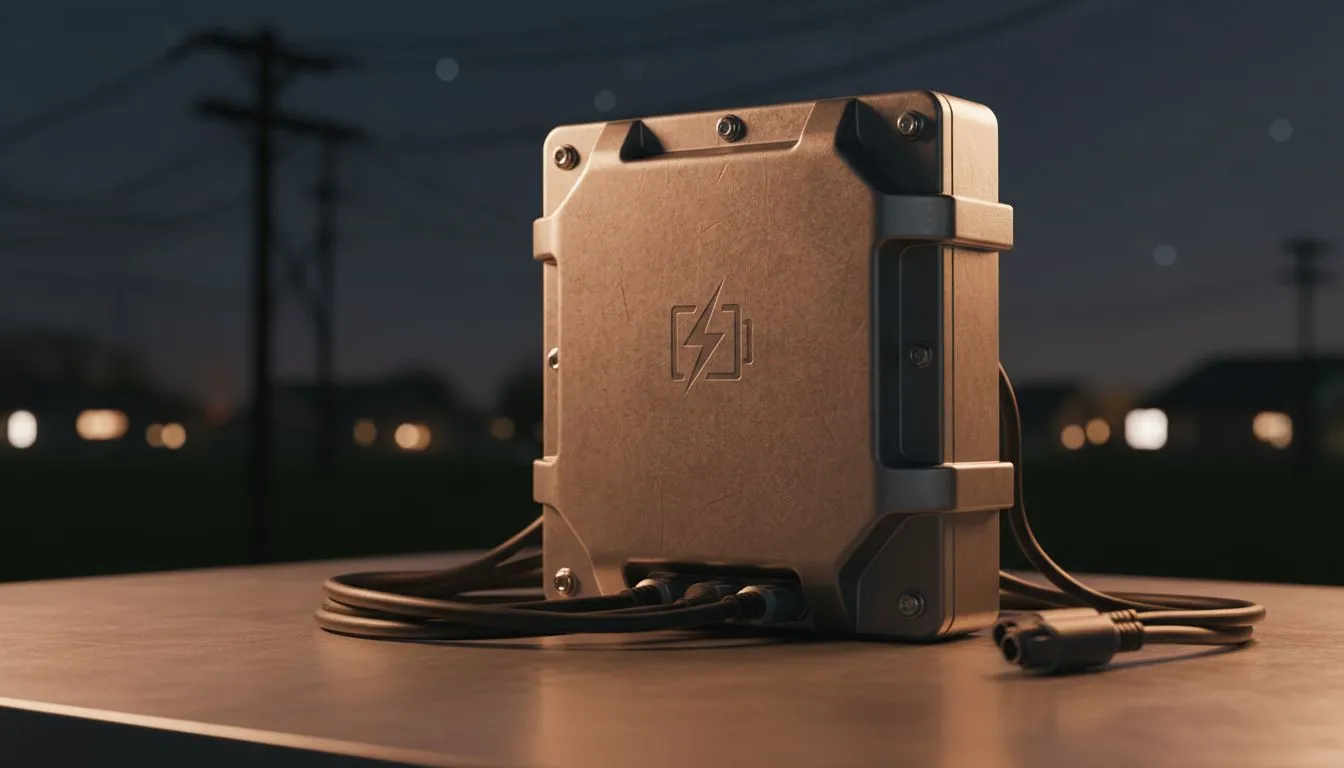
Keeping your outdoor WiFi alive when the grid goes dark
There is nothing quite as frustrating as sitting on your patio during a Stage 6 blackout only to realise your signal has vanished. Keeping your outdoor WiFi during loadshedding is not just a luxury... it is a necessity for staying sane. Whether you are gaming on a laptop or streaming music by the braai, a reliable connection makes all the difference when the lights go out. ⚡
Reliable tips for powering your network core
The first step to maintaining a signal is ensuring your primary gateway stays powered. Most South African homes rely on fibre or LTE... both of which require a powered ONT and router. You should invest in a dedicated Mini-UPS designed for networking gear. When you buy wireless routers from a reputable source, check the voltage requirements. Most units run on 9V or 12V... matching this to your UPS ensures hours of uninterrupted uptime during those long Eskom slots.
Power Backup Tip ⚡
Always check the Ampere (A) rating on your router's power brick before connecting it to a Mini-UPS. If the UPS output is too low, the router might reboot constantly under heavy load. A 12V 2A output is usually the sweet spot for high-performance gaming routers.
Extending your reach into the garden
Outdoor spaces often suffer from thick brick walls that degrade signal quality. To combat this, you need to push that signal further than a standard indoor unit can manage. High-quality wireless range extenders are perfect for bridging the gap between your lounge and the entertainment area. Place the extender near a window or an external door to minimize physical interference. This setup ensures that your outdoor WiFi during loadshedding remains strong enough for high-definition streaming or lag-free mobile gaming. 🔧
Optimising device connectivity for better stability
Even with a strong broadcast signal, your receiving device needs to be up to the task. If you are using a desktop PC in a garden shed or a laptop with a weak internal card, the connection will drop. You can buy wireless adapters that feature high-gain antennas to significantly improve reception. These USB or PCIe cards are designed to catch signals that smaller, built-in chips might miss. It is a small investment, often under R500, that provides a massive boost in reliability.
Building a resilient networking ecosystem
Ultimately, a robust home network is about more than just one piece of hardware. It is about a holistic approach to wireless networking that accounts for power cuts and physical obstacles. Consider using weather-proof enclosures if you plan to mount any gear permanently outside. By combining a solid power backup with strategically placed extenders, you can enjoy a seamless digital experience regardless of the current loadshedding stage. 🚀
Ready to Stay Connected? Don't let the next power cut interrupt your online life. Whether you need a stronger signal or a backup power solution, we have the gear to keep you online. Explore our full range of networking solutions and take control of your home connectivity today.











