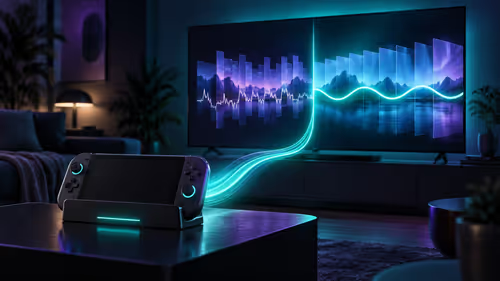
Imagine playing Cyberpunk 2077 in bed without a roaring fan or scorching chassis. That’s the sleek promise of the Logitech G Cloud. But in Mzansi, where latency and an unexpected outage are constant battles, is our infrastructure actually ready for a device that relies 100% on the internet? Let’s investigate if South African Fibre can handle the heat... or if you’re better off with local hardware.
The Cloud Gaming Reality in SA 🇿🇦
The Logitech G Cloud is a fascinating piece of tech. It’s essentially an Android tablet fused with a controller, designed specifically to stream games via Xbox Cloud Gaming or NVIDIA GeForce Now. The screen is beautiful, the battery life is massive (12+ hours), and it's lightweight.
However, the "Cloud" in the name is the sticking point. For this device to work, your internet connection needs to be flawless. We aren't just talking about download speeds; we are talking about stability and ping.
Bandwidth vs. Latency
Most SA gamers have decent Fibre speeds now—50Mbps or 100Mbps is common. But for cloud gaming, latency is king. Since services like Xbox Cloud Gaming don't have local Azure servers in South Africa yet, your inputs have to travel to Europe and back.
This creates "input lag." You press 'jump', and your character reacts half a second later. For turn-based strategy games, it's fine. For Call of Duty or Fortnite? It’s unplayable.
Optimise Your Connection ⚡
If you are determined to try cloud gaming, never use the 2.4GHz Wi-Fi band. It is too crowded and slow. Always force your device onto the 5GHz band of your router, or better yet, sit in the same room as the router to minimise packet loss.
When the Internet Goes Dark
The other elephant in the room is reliability. If a sub-station trips or your ISP has downtime, the Logitech G Cloud becomes a paperweight. It has very limited power to run native Android games, but it cannot run PC titles without a connection.
This is why many South African enthusiasts prefer devices that pack their own processing punch. The market for handheld gaming consoles has exploded recently, offering devices that run Windows locally. No internet? No problem.
The Heavy Hitters: Native Power 🚀
If you want the handheld form factor but refuse to rely on distant servers, you have incredible options available locally.
The Windows Warriors
Leading the charge is ASUS with the ROG Ally. It runs Windows 11 natively, meaning you can install Steam, Epic, and Game Pass titles directly onto the SSD. You get high frame rates regardless of your Wi-Fi status.
For those who want a massive screen and detachable controllers, Lenovo offers the Legion Go. It features a stunning 8.8-inch QHD+ display that makes visual novels and RPGs pop, all powered by the robust AMD Z1 Extreme chip.
The New Challenger
Not to be outdone, MSI has entered the ring with the Claw. Utilising Intel’s new Core Ultra processors, it brings a different flavour of performance and ergonomics to the table, proving that competition in the handheld space is fierce.
Verdict: Is Fibre Ready?
Technically, yes... but geographically, no. Until major streaming services place servers in Johannesburg or Cape Town, the Logitech G Cloud remains a niche product for casual titles. For the true AAA experience in South Africa, local hardware is still the undisputed champion. ✨
Power in Your Hands
Don't let lag dictate your gameplay. Whether you want the versatility of the Legion Go or the raw power of the ROG Ally, we have the portable rig for you. Browse our full range of Handheld Consoles and take your gaming anywhere, offline or online.