

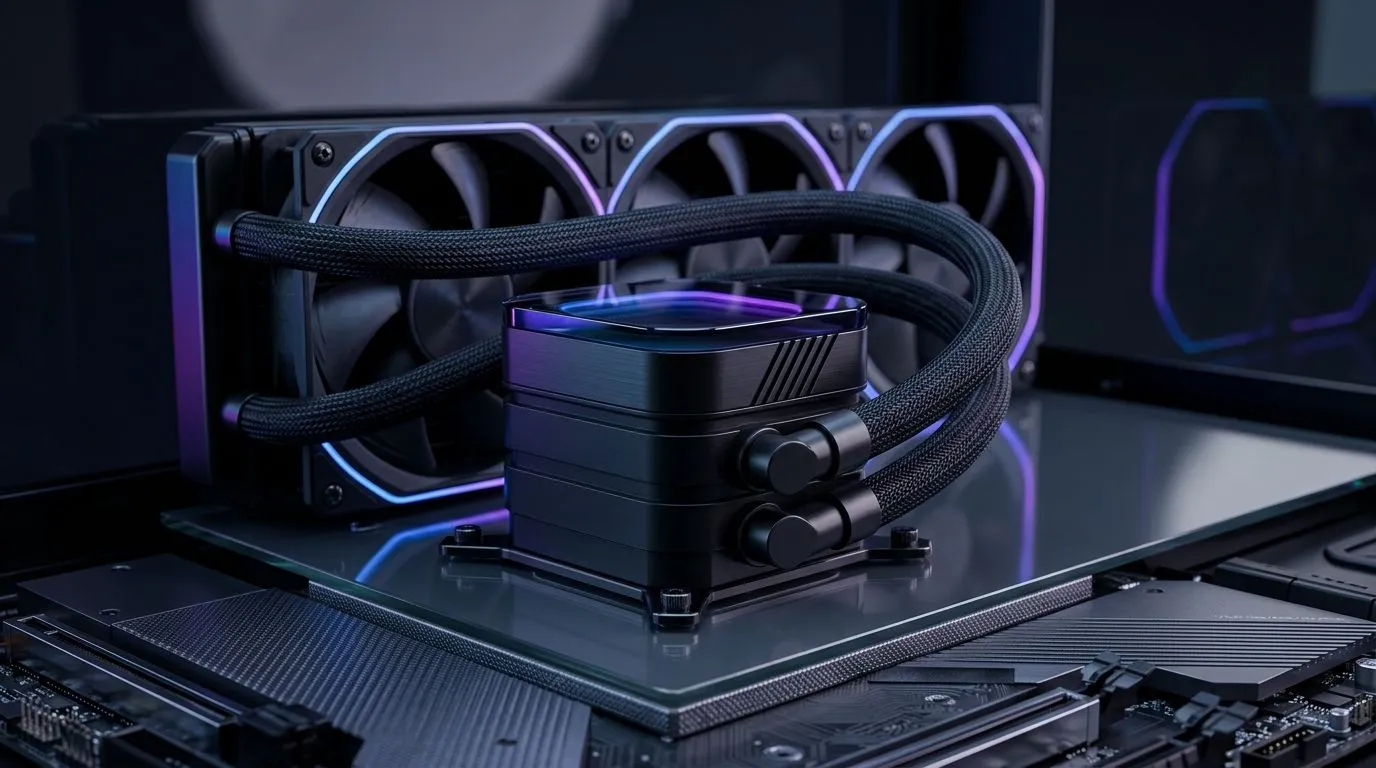
Why Low-Noise Pump Design in AIO Liquid Coolers Matters
If you build PCs in Cape Town or Jozi, you know a high-pitched pump whine kills immersion faster than a lag spike. Low-noise pump design in AIO liquid coolers is about comfort and performance—steady flow, low vibration, and predictable acoustics keep your system calm during long sessions. Here’s a focused guide to what actually reduces noise and how to choose parts that match South African builds. 🔧✨
Key pump design features that cut noise
The core of quiet cooling is mechanical: ceramic bearings, magnetic levitation, and balanced impellers reduce vibration and rotational noise. Manufacturers differ on how they prioritise flow over acoustics. Pairing a low-noise pump with quality fans matters—browse Evetech’s general case fans to match airflow profiles and tone down system volume. https://www.evetech.co.za/PC-Components/case-fans-97.aspx
Noise often comes from resonance rather than raw dB. Soft mounting the pump and using decoupling grommets reduces chassis-transmitted vibrations. For RGB builds, consider lighting variants that use the same frame design; an RGB hub won’t change pump acoustics, but consistent fan blades help harmonise sound. See RGB fan options here. https://www.evetech.co.za/PC-Components/case-fans-97.aspx?attributes-lightingeffects=RGB
How radiator and fan choices influence pump acoustics
A well-sized radiator lowers pump pressure demand. If your radiator supports larger fans, you can run them slower for the same thermal result and that lowers overall system noise. For Corsair fans that pair well with many AIOs, check Evetech’s Corsair selection to find models tuned for static pressure. https://www.evetech.co.za/PC-Components/case-fans-97.aspx?brands=CORSAIR
Some builders prefer Deepcool blades for a quieter mid-range profile; they offer good balance between airflow and noise. Compare Deepcool fans to see what matches your radiator thickness and fan curve. https://www.evetech.co.za/PC-Components/case-fans-97.aspx?brands=Deepcool
If you’re pushing compact ITX builds, 120mm vs 140mm choice matters. 120mm fans are common on 240mm AIOs; they spin faster at a given airflow. See 120mm listings for options. https://www.evetech.co.za/PC-Components/case-fans-97.aspx?attributes-size=120mm
For larger radiators, 140mm fans provide the same cooling at lower RPM. Consider 140mm blades to help pump noise feel less obvious. https://www.evetech.co.za/PC-Components/case-fans-97.aspx?attributes-size=140mm
Practical tuning and installation tips
Start with pump speed at vendor-recommended settings and tune the fan curve in your BIOS or motherboard software. Vibration pads under the pump and slightly loosening mounting pressure can help—just keep contact even. If you want minimal visual clutter, quiet builds often pair pumps with non-lit fans; explore the no-lighting options to keep looks and acoustics aligned. https://www.evetech.co.za/PC-Components/case-fans-97.aspx?attributes-lightingeffects=None 🚀
Quiet-Build Pro Tip ⚡
When testing, run a consistent CPU load like a 10-minute Cinebench session and record perceived noise. Tweak pump and fan curves in small steps; 50 RPM can be the difference between audible whine and barely-there hum.
Final thoughts for smart South African buyers
Low-noise pump design in AIO liquid coolers is a system-level choice. Prioritise pump build quality, pair with the right fans and radiator size, and tune curves for local power conditions and case acoustics. Small tweaks deliver a big comfort boost for late-night gaming or streaming.
Ready to Find Your Perfect Match? The Mac vs Windows debate is complex, but for maximum power, choice, and value in South Africa, Windows is hard to beat. Explore our massive range of laptop specials and find the perfect machine to conquer your world.











