

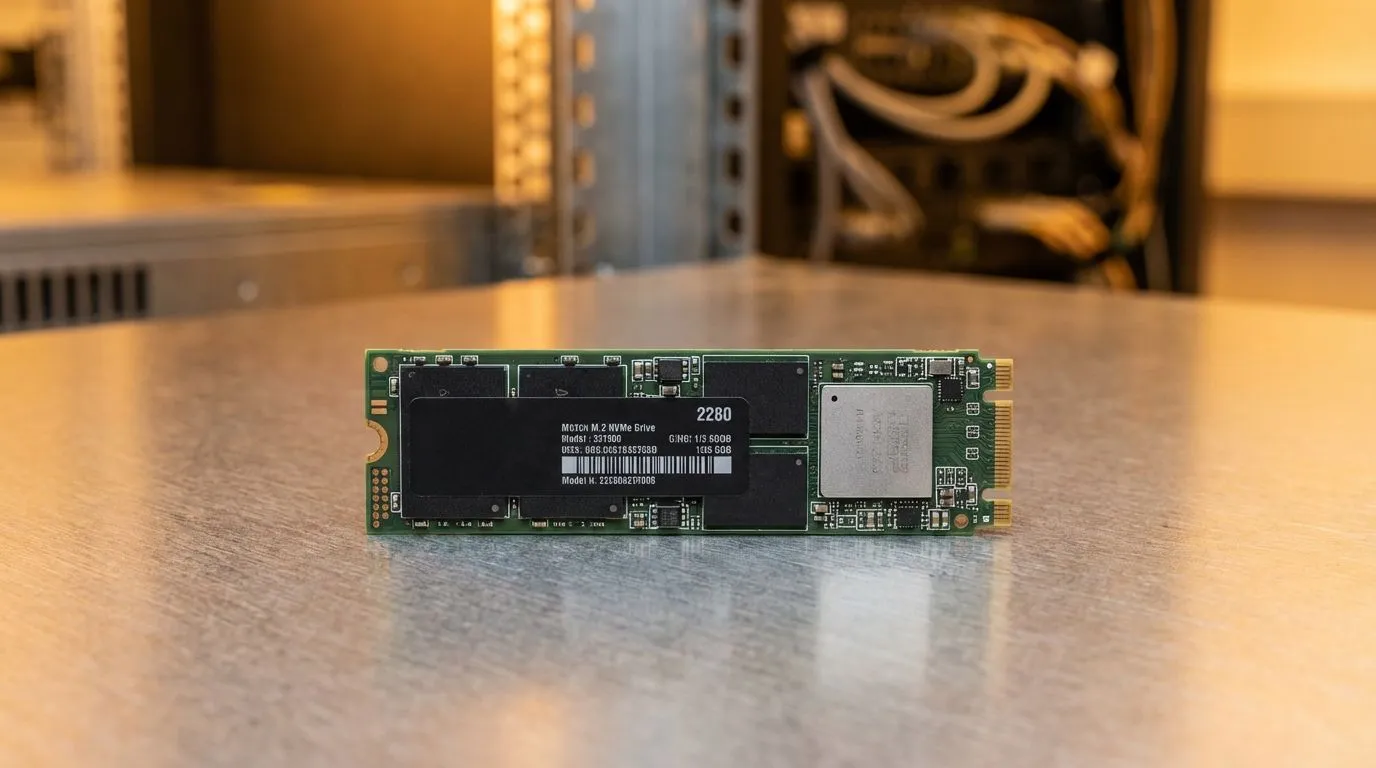
Staring at a spec sheet for a new NAS and wondering why everyone keeps mentioning 2280? You aren't alone. In South Africa, where we take our home media servers and small business backups seriously, understanding the M2 2280 NVMe SSD form factor is vital. It is the gold standard for modern storage... and for good reason. Let’s look at why this specific size dominates the market. 🚀
Decoding the M2 2280 NVMe SSD Form Factor
When you browse for new solid state drives, the term "2280" refers strictly to physical dimensions. The first two digits (22) represent the width in millimetres, while the last two (80) represent the length. This is the most common size for consumer and prosumer drives.
In the context of a Network Attached Storage (NAS) device, the M2 2280 NVMe SSD form factor: what 2280 means for NAS is essentially a guarantee of compatibility. Most modern NAS enclosures from brands like QNAP or Synology feature dedicated M.2 slots specifically designed for this 80mm length. Choosing PCI Express (NVMe) storage ensures your NAS can handle high-speed data caching or even lightning-fast primary storage pools.
NAS Caching Tip ⚡
If you are using your NAS for heavy 4K video editing or running multiple virtual machines, use two M.2 2280 drives in RAID 1. This creates a "Read Write" cache that protects your data if one SSD fails, significantly boosting your IOPS without risking your primary hard drive array.
Why the 2280 Size Matters for NAS
Why did the industry settle on 80mm? It provides enough surface area to mount high-capacity NAND flash chips and a controller without becoming too bulky. This surface area is also critical for heat dissipation. NAS units are often tucked away in cupboards or small offices where airflow might be limited.
Reliability is the name of the game here. Trusted brands like Western Digital and Kingston offer 2280 drives specifically rated for high endurance. Since a NAS often runs 24/7, you want a drive that can handle constant read and write cycles. Even ADATA provides excellent value options that fit perfectly into these standard slots, offering a massive performance uplift over traditional mechanical drives. ✨
Performance and Future-Proofing
If you are chasing the absolute bleeding edge of speed for a high-end workstation NAS, you might look toward Gen 5 (NVMe) options. While most current NAS CPUs might not fully saturate Gen 5 speeds yet, these drives are backwards compatible and offer incredible longevity for your investment.
However, not everyone needs internal storage. If you need to move large files between your NAS and your editing rig quickly, an external SSD is a great companion. Many of these portable units actually house a 2280 drive inside a rugged shell. When looking for portability, checking the External form factor specifications ensures you get a device that is compact enough for your laptop bag but fast enough for your workflow. 🔧
Ultimately, the M2 2280 NVMe SSD form factor: what 2280 means for NAS is simple... it is the industry standard that balances size, heat management, and capacity. Whether you are building a Plex server in Joburg or a backup rig for your Cape Town creative studio, sticking to the 2280 standard is the safest bet for a hassle-free upgrade.
Ready to Find Your Perfect Match? The M.2 landscape is vast, but finding the right drive for your NAS or PC doesn't have to be difficult. Explore our massive range of SSD specials and find the perfect high-speed storage solution to supercharge your system today.











