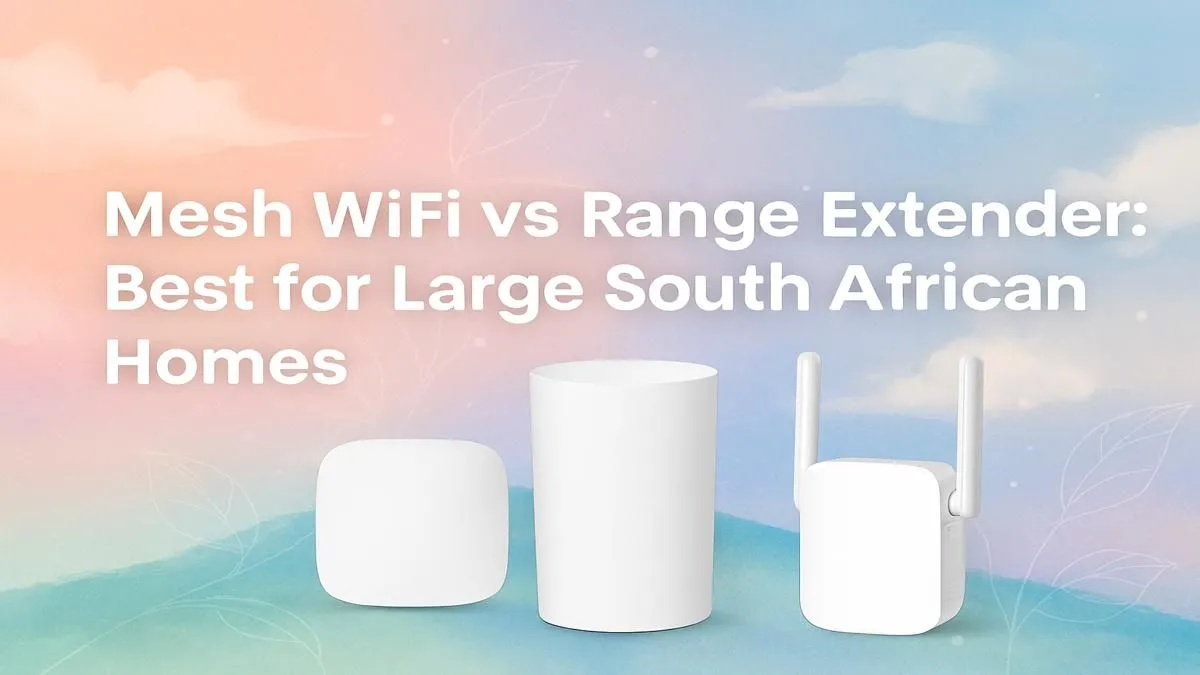
Is there anything more frustrating? The WiFi signal in your gaming den or out by the braai area is... well, non-existent. You're stuck in a digital dead zone. For years, South Africans have faced a choice to fix this: a cheap range extender or a fancy mesh system. So, in the great Mesh WiFi vs Range Extender South Africa debate, which one actually solves the problem?
What Exactly is a WiFi Range Extender?
Think of a WiFi range extender as a simple signal booster. 📶 It captures the existing wireless signal from your router and rebroadcasts it, pushing the boundaries of your network's coverage into a previously unreachable room.
They are often the first port of call for many because they're affordable and seem straightforward. For a small flat or fixing a single dead spot—like a study at the end of the hall—a simple wireless range extender can be a perfectly adequate, budget-friendly fix.
However, they have a significant drawback. Most basic extenders create a new network name (like "MyWiFi_EXT") and effectively cut your potential internet speed in half for any device connected to them. This happens because the extender has to use the same radio to both receive and transmit the signal, creating a bottleneck. For casual browsing it might be fine, but for gaming or 4K streaming? It can be a recipe for lag.
How Does a Mesh WiFi System Work?
Now, let's talk about the modern solution: Mesh WiFi. Instead of one device trying to shout louder, a mesh system is a team of smart devices (called nodes) that work together. You replace your old router with a primary mesh node and place other nodes around your home. ✨
These nodes communicate with each other, creating a single, powerful, and seamless WiFi network that covers your entire property under one network name. As you move around the house, your phone or laptop intelligently connects to the strongest node automatically, without any dropouts. It’s a massive leap forward from the technology used in older wireless routers.
This intelligent "handoff" is what makes mesh WiFi in South Africa a superior choice for larger, double-story, or thick-walled homes where a single router just can't cope.
Placement Pro Tip 🔧
Whether you choose a mesh node or an extender, placement is key! Avoid tucking them away in cupboards or behind the TV. For best results, place them in the open, about halfway between your main router and the dead zone, ensuring a clear line of sight if possible. This drastically improves signal strength and stability.
Mesh WiFi vs Range Extender: The South African Showdown
So, how do they stack up head-to-head for the typical Mzansi home? Let's break it down.
Performance and Speed
A range extender will always be a compromise on speed. By rebroadcasting the signal, it introduces latency and reduces bandwidth. Mesh systems, especially tri-band models, use a dedicated wireless channel (a "backhaul") for the nodes to talk to each other, leaving the other channels free for your devices. The result? Far superior speeds and lower latency, which is critical for competitive online gaming. Of course, the quality of your device's wireless adapters also plays a crucial role in the speeds you ultimately achieve.
Coverage and Simplicity
While an extender patches a hole, a mesh system blankets your entire home in consistent coverage. There are no separate networks to connect to, no signal dropouts as you walk from the lounge to the kitchen. It’s a true "set it and forget it" solution that just works. Expanding it is as simple as adding another node to the network.
The Cost Factor
This is where the range extender wins a point. You can pick one up for a few hundred Rand, making it a tempting quick fix. A good mesh WiFi system is an investment, typically costing a few thousand Rand for a starter kit. However, considering the performance and frustration-free experience it delivers, many see it as money well spent.
So, Which is Best for Your Mzansi Setup? 🤔
The final verdict in the Mesh WiFi vs Range Extender South Africa battle really depends on your specific needs and home.
- Choose a Range Extender if: You live in a smaller apartment or house, have only one or two specific dead zones to fix, and are on a tight budget. It’s a functional patch for a minor problem.
- Choose a Mesh WiFi System if: You have a medium-to-large home, multiple stories, or thick interior walls. If you have many connected devices, stream 4K content, or are a serious gamer who can't afford lag, mesh is the undisputed champion. 🚀 It’s the definitive solution to kill WiFi dead zones for good.
Ultimately, investing in your home network is investing in your daily digital life. By understanding the core differences, you can choose the right tool for the job and explore our full range of wireless networking gear to find the perfect fit.