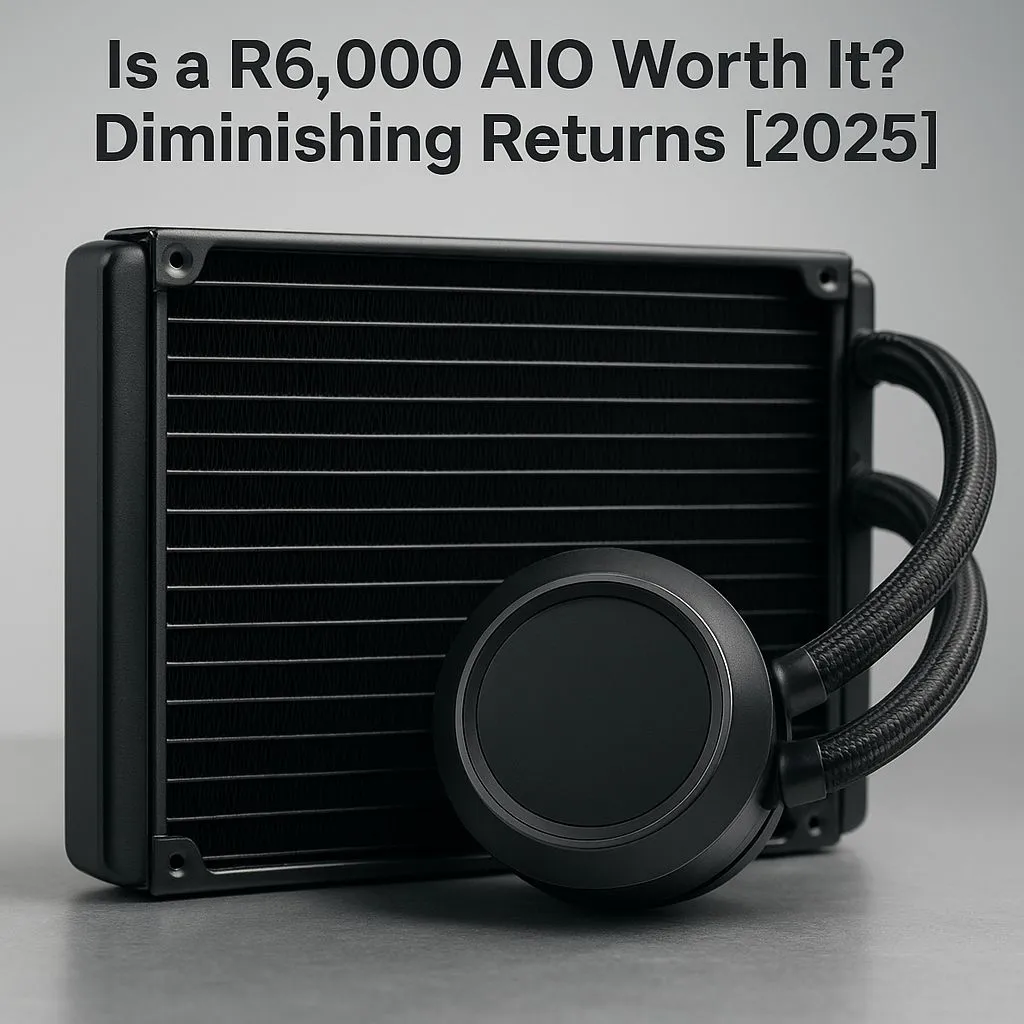
You’re finalising your dream PC build. The cart is loaded, the budget is... mostly intact. Then you see it: a magnificent, RGB-lit, screen-toting AIO liquid cooler for nearly R6000. It promises frosty temperatures and looks absolutely incredible. But a nagging voice whispers, “Is a R6000 AIO worth it?” For most South African gamers, the answer is more complex than a simple yes or no. Let's dive into the chilling truth about high-end cooling.
The Cold Hard Facts: Understanding Diminishing Returns
Before we decide if that R6000 AIO is worth it, we need to talk about a crucial concept in PC building: diminishing returns.
Think of it like this: upgrading from your CPU's stock cooler to a solid R1000 tower cooler gives you a massive performance jump. Your temperatures might drop by 20°C under load, preventing throttling and unlocking more performance. That’s huge value.
But the jump from a R4000 AIO to a R6000 AIO? You might only see a 2-4°C improvement. You’re paying 50% more for a tiny fraction of extra performance. This is the point where your money starts buying aesthetics and features more than raw cooling power. For a comprehensive look at the options, it's always good to browse the full range of CPU coolers.
So, When is a R6000 AIO Worth the Price Tag? 🤔
While it might not be a value king, a premium cooler has its place. The debate over whether an expensive liquid cooler (AIO) is a good investment comes down to three specific scenarios.
For the Extreme Overclocker
If you're pushing a top-tier Intel Core i9 or AMD Ryzen 9 processor to its absolute thermal limits, every single degree matters. You're squeezing out the last drops of performance for competitive gaming or demanding productivity tasks. In this case, the superior cooling capacity of a premium 360mm radiator AIO is a non-negotiable part of your setup.
For the Showcase PC Builder ✨
Let's be real... high-end AIOs are gorgeous. With customisable LCD screens for displaying GIFs or system stats, vibrant RGB lighting, and clean aesthetics, they are often the centrepiece of a build. If your PC is as much a work of art as it is a gaming machine, then the visual flair from a top-tier brand like CORSAIR can absolutely justify the cost.
For the Silent Workstation
A larger radiator doesn't just cool better; it can also cool quieter. With more surface area to dissipate heat, the fans on a 360mm or 420mm AIO don't have to spin as fast (or as loud) as those on a smaller cooler. If your goal is a whisper-quiet workstation that can still handle intense rendering or compiling, a premium AIO provides a great balance of power and peace.
Case Compatibility Check! 🔧
Before you click "buy" on a massive 360mm or 420mm AIO, double-check your PC case specifications. Make sure it has the correct mounting points (top, front, or side) and enough clearance for both the radiator and the fans. There's nothing worse than unboxing your shiny new cooler only to find it won't fit!
Smart Alternatives: Better Bang for Your Buck 💰
For everyone else, that R6000 could probably be better spent. The truth is, the performance gap between elite AIOs and other cooling solutions has shrunk dramatically.
A quality mid-range AIO in the R2000-R3500 bracket will easily tame even an i7 or Ryzen 7 CPU, leaving you with thousands of Rands to put towards a faster GPU, a larger NVMe SSD, or more RAM.
Even more compelling are today's high-end air coolers. These beefy towers offer phenomenal performance, often matching mid-to-high-end AIOs for a fraction of the price, with the added benefit of rock-solid reliability (no pumps to fail!).
The Final Verdict
So, is a R6000 AIO worth it in 2025?
If you're an elite overclocker, a dedicated aesthetic builder, or someone who demands silence above all else... yes, it can be a fantastic purchase that completes your ultimate rig.
However, for the vast majority of South African gamers and PC builders, it represents a point of heavy diminishing returns. That money will almost always deliver a more noticeable performance boost if invested in your graphics card or system memory. The best cooler isn't the most expensive one; it's the one that best fits your CPU, your case, and your budget.
Ready to Find Your Perfect Cooling Solution?
From budget-friendly air coolers to show-stopping liquid AIOs, the right choice depends on your build. Explore our massive range of CPU coolers and find the perfect match to keep your rig cool and your frames high.