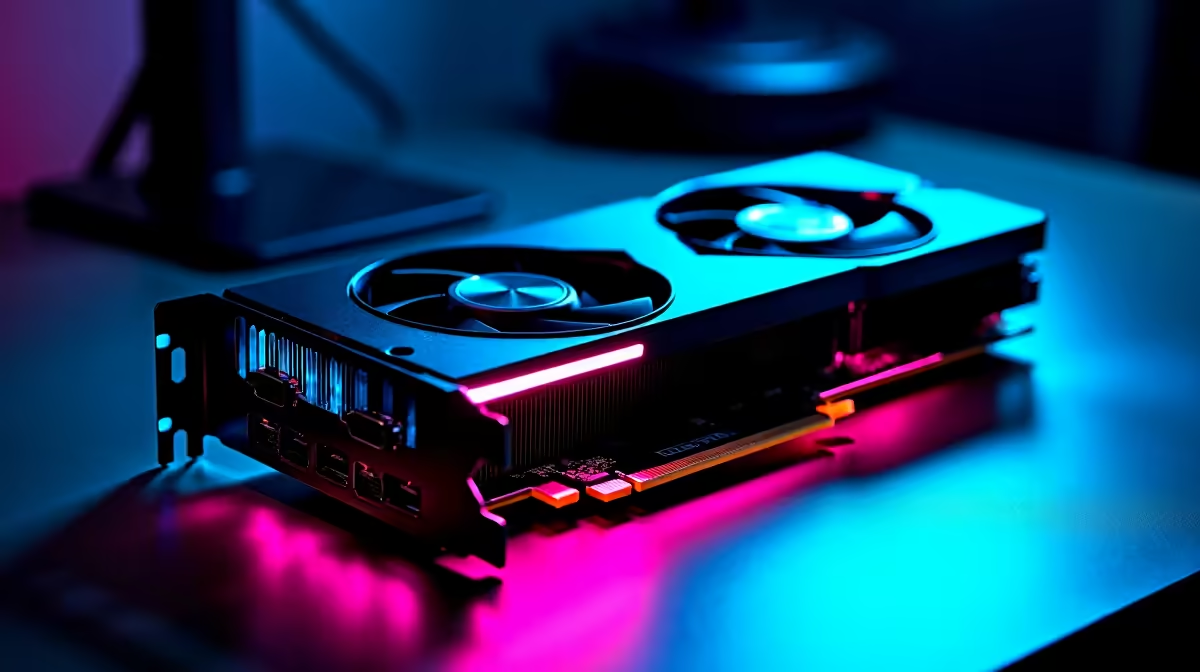
Building a solid gaming PC in South Africa can feel like a boss battle on the highest difficulty, especially with a tight budget. You want smooth frames, but the price tags on high-end GPUs can make you want to rage-quit. What if you could get modern features like DLSS and Ray Tracing without emptying your wallet? Enter the NVIDIA GeForce RTX 3050. It’s a card designed specifically for accessible 1080p gaming, making it a powerful contender for your first build.
Why the RTX 3050 is a Smart Choice for Budget Builds
For years, features like real-time Ray Tracing were reserved for the top-tier, most expensive cards. The RTX 3050 for entry-level gaming builds changes that narrative. It brings NVIDIA’s Ampere architecture to a price point that’s far more approachable for everyday gamers. This means you’re not just buying a graphics card; you’re buying into a modern ecosystem.
The biggest advantage here is DLSS (Deep Learning Super Sampling). In simple terms, it’s like having an AI co-processor that boosts your frame rates. It renders your game at a lower resolution and then cleverly uses AI to upscale the image to look sharp and clear on your 1080p monitor. The result? More FPS for a smoother experience, without a noticeable drop in visual quality. This tech makes choosing the right graphics card a strategic decision, not just a raw power comparison. ✨
Real-World 1080p Gaming Performance
Let’s talk numbers… or rather, experiences. An RTX 3050 for entry-level gaming is the perfect partner for 1080p monitors. In popular esports titles like Valorant, CS2, and Fortnite (on performance mode), you can expect high frame rates that give you a competitive edge.
For more graphically intense titles like Cyberpunk 2077 or Baldur's Gate 3, you’ll get a solid, playable experience. You might not be cranking every setting to Ultra, but with a mix of medium-to-high settings and DLSS enabled on "Quality" or "Balanced," you can comfortably hit that sweet 60 FPS spot. It’s about smart optimisation, not just brute force. 🚀
Pro Tip: Balance Your Build
Pairing your RTX 3050 with an overly powerful CPU is a waste of money. A modern Intel Core i3 or AMD Ryzen 5 processor is the perfect match to avoid bottlenecks, ensuring your GPU can run at its full potential without being held back.
How Does It Stack Up Against the Competition?
In the budget GPU arena, every Rand counts. So, how does the RTX 3050 compare to its rivals? While some older cards or even some of AMD's Radeon alternatives might offer similar raw performance in certain games, the 3050's secret weapon remains its feature set. DLSS support is a massive plus that competing cards in its original price bracket often lack.
The market is always evolving, with new players like Intel Arc gaming PCs adding more options for budget-conscious builders. However, the RTX 3050 benefits from the maturity and stability of NVIDIA's driver support, which is a crucial factor for a hassle-free gaming experience. It sits comfortably within the wider family of NVIDIA's GeForce graphics cards as a reliable starting point.
Building Your First Rig Around the RTX 3050 🔧
One of the best things about crafting an RTX 3050 for entry-level gaming build is that the rest of your components don't need to be top-of-the-line either. This card is incredibly efficient.
It doesn’t draw a massive amount of power, so you can get by with a quality 550W power supply unit (PSU), saving you money and making your build more energy-efficient… a nice bonus considering our power interruptions. Its modest power needs and compact size mean it fits into most PC cases, making it a flexible and forgiving choice for first-time builders.
Ready to Level Up Your Game?
The RTX 3050 delivers the perfect blend of performance, modern features, and value for your first gaming rig. Stop dreaming and start playing; check out our latest graphics card deals for performance that leaves lag in the dust.