

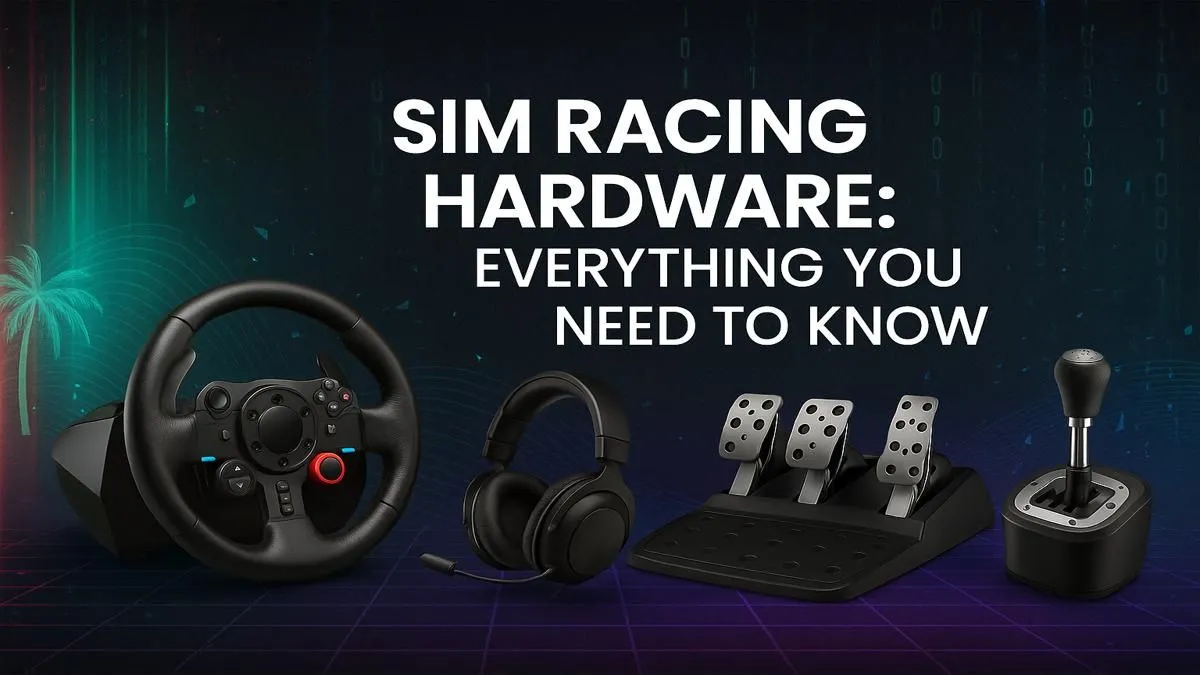
So, you’ve felt the itch. The desire to trade your controller's rumble for the visceral feedback of a proper racing wheel as you clip the apex at Kyalami. That raw, immersive feeling is no longer just for the pros. Building your first setup is more accessible than ever, but the options can feel overwhelming. This guide breaks down the essential sim racing hardware you need to go from your desk chair to the digital podium. 🚀
Core Components: Your First Sim Racing Setup
Before you dive into brands and models, it's crucial to understand the three non-negotiable pieces of sim racing hardware: the wheelbase, the wheel rim, and the pedals. Think of them as the engine, steering, and brakes of your virtual race car. Getting these right forms the foundation of every lap time you'll ever set.
The Wheelbase: The Heart of the Feedback
The wheelbase is the motor that connects to your PC or console and translates the game's physics into physical force you feel through the wheel. This is called Force Feedback (FFB), and it’s what separates a toy from a training tool.
- Gear-Driven: The entry-point. Good for getting started, but can feel a bit notchy or loud.
- Belt-Driven: The sweet spot for many. A belt connecting the motor to the wheel shaft provides smoother, more detailed feedback. It's a significant step up, and many excellent options from brands like Thrustmaster live in this category.
- Direct Drive (DD): The pinnacle. The wheel attaches directly to the motor shaft, offering the most powerful, detailed, and responsive feedback possible. Once a high-end dream, DD wheelbases are becoming more affordable.
Tuning Your Force Feedback (FFB) 🔧
Don't just crank your FFB to 100%! Start around 50-60% in your game's settings. This prevents "clipping"—where the wheel can't produce stronger forces, causing you to lose detail. A smoother FFB lets you feel the tyres losing grip, helping you catch slides and shave seconds off your lap times. Fine-tune from there to find your sweet spot.
Pedals: Your Connection to the Tarmac
Don't underestimate the importance of a good pedal set. Your ability to brake consistently and modulate the throttle out of a corner is where you'll find most of your speed. Look for pedals with a load cell brake. Unlike cheaper potentiometer-based pedals that measure travel distance, a load cell measures pressure. This mimics a real car's braking system and helps you build muscle memory for more consistent braking performance.
Beyond the Desk: Cockpits and Mounting
You can start by clamping your new wheel to a sturdy desk, but you'll quickly discover the limitations. Under heavy braking, your office chair might roll back, and an aggressive turn could make your whole desk wobble. This is where a dedicated cockpit or wheel stand becomes a vital piece of your sim racing hardware puzzle.
A solid mounting solution ensures your gear stays put, allowing you to race with confidence and consistency. For those looking for the full immersion package, dedicated cockpits from brands like Playseat combine a rigid frame with an integrated racing seat for the ultimate plug-and-play experience. ✨
Putting It All Together
Starting your journey into the world of sim racing is an exciting prospect. The key is to begin with a solid foundation. A quality belt-driven wheel and a set of load cell pedals will serve you far better than a flashy setup with a flimsy base. As your skills grow, you can upgrade components piece by piece. Whether you're just starting out or ready for your first big upgrade, exploring complete sim racing hardware packages can often provide great value and ensure compatibility between all your components.
Ready to Build Your Dream Rig? From your first wheel to a full direct-drive cockpit, the perfect setup is waiting. Stop dreaming and start driving. Explore our complete range of sim racing gear and find the hardware to fuel your passion.











