

Can Sim Racing Really Match the Real Thing?
Strapped into your rig, hands gripping the wheel, tyres screeching through Eau Rouge—it's easy to feel like a pro driver. But how close is it really? South African sim racers are levelling up fast… yet many still wonder: sim racing vs professional racing—what’s the difference? Let's unpack the physics, the gear, the adrenaline, and what separates hobbyists from the real track warriors. 🏎️
Feel vs Reality: The Physical Divide
On the surface, sim racing and pro motorsport look nearly identical. Tracks are laser-scanned, cars are modelled down to every torque curve, and even fuel strategies play out in-game. But your body knows the truth.
In real-world racing:
- G-forces punish you in corners and under braking
- Heat, noise, and vibration wear you down
- Mistakes come with physical and financial risk
Sim rigs, no matter how advanced, can’t replicate those forces. But they do offer a mental challenge that's surprisingly similar—reaction times, focus, and racecraft all matter just as much.
Hardware: Sim Rigs vs Race Cars
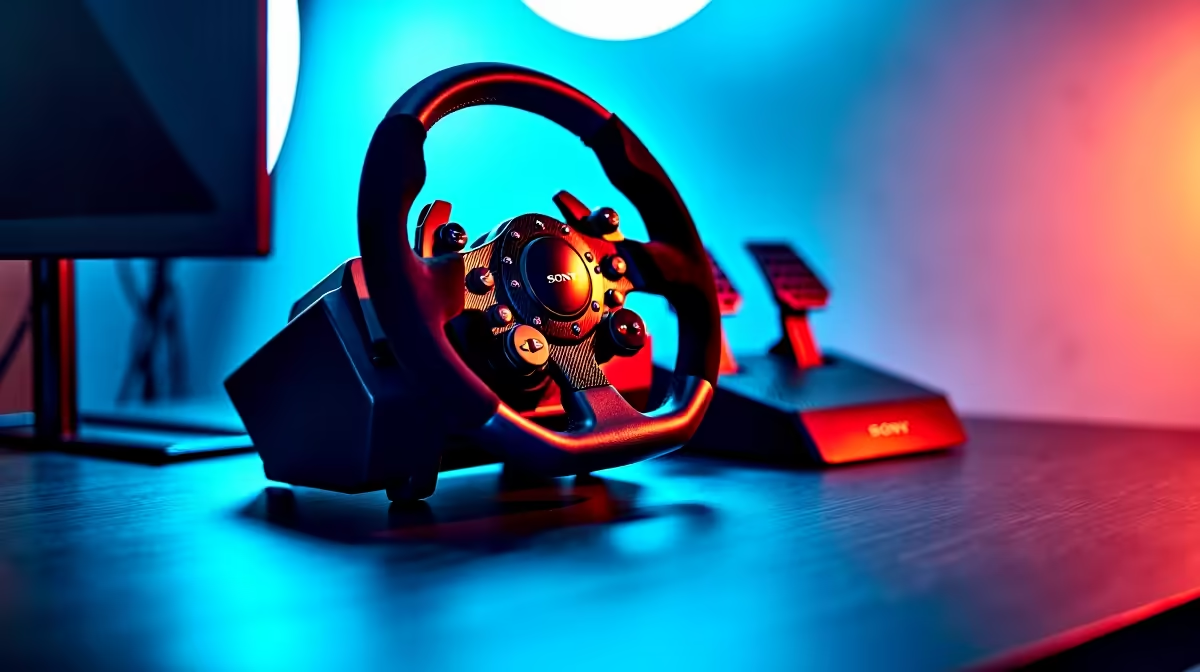
Racing tech has come a long way. Today’s entry-level rigs offer force feedback, pedal realism, and even telemetry integration. Some budget racing setups include a decent wheel and pedal combo that already feels great for casual play.
At the pro level, you’ll find:
- Direct-drive wheels with ultra-low latency
- Load-cell or hydraulic pedal systems
- Motion platforms and triple-screen or VR rigs
These premium setups, often available in mid-range packages, deliver the kind of nuance that mirrors cockpit conditions. You’re still in a gaming chair—but your brain starts treating it like a pit wall.
Train Like a Pro
Use real-world techniques in your sim racing—trail braking, racing lines, throttle modulation. Skills built virtually will carry over.
Skillset Crossovers: What Sim Racers Get Right
Pro drivers are increasingly using sim racing to train, and for good reason:
- Muscle memory: Gear shifts, braking points, corner entries
- Track knowledge: Memorising layouts, elevations, and reference markers
- Race strategy: Managing tyre wear, fuel loads, and undercut opportunities
South African leagues like SAGT (Sim Auto GT) prove how deep this skill transfer can go. Several local drivers have even earned test laps in real cars thanks to their virtual consistency.
Looking to level up? Browse Evetech’s complete racing gear catalogue and see what setups top local racers are using.
Psychological & Competitive Pressure
The big difference? Consequences.
Real racing has high stakes—damage, injury, sponsorship, even championship standings. Sim racing removes the risk but keeps the pressure. You still battle nerves, split-second decisions, and the desire to win.
Want to bridge the gap? Race with no assists. Compete in endurance events. Set personal benchmarks and track your improvement.
Final Verdict: Different Tools, Shared Passion ✨
So… sim racing vs professional racing? They’re more alike than they are different. One tests your reflexes and resilience. The other tests your budget and bandwidth. But both are fuelled by love for the sport.
Start where you are. Drive what you can afford. But drive well.
Take Your Racing to the Next Level Build your ultimate sim setup and close the gap between virtual and reality… Shop now at Evetech for performance that leaves lag in the dust.











