

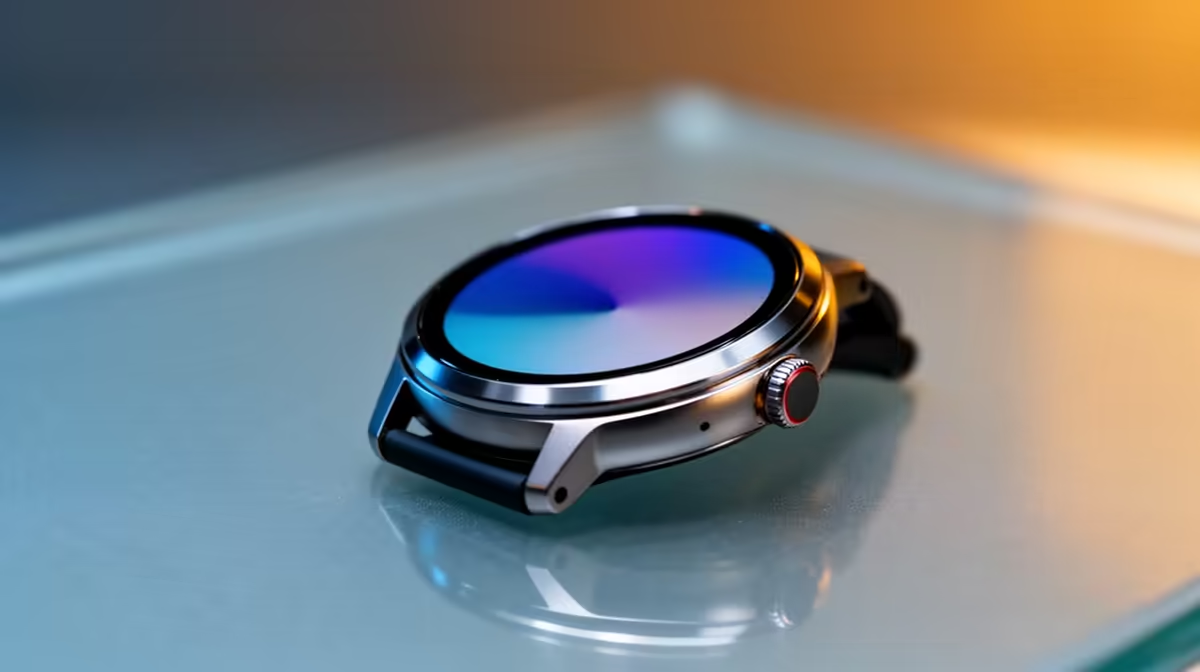
Remember strapping on that bulky chest-strap heart rate monitor before a run? Or rummaging through a drawer for the thermometer when you felt a bit off? That era is quickly fading. Today, powerful health monitoring is no longer a collection of separate gadgets… it’s a single, sleek device on your wrist. The trend of smart watches replacing traditional health tools is accelerating, giving everyday South Africans unprecedented insight into their wellbeing. ⌚
Why Smart Watches Are the New Standard in Health Monitoring
The biggest reason for the shift is simple: convenience. A smartwatch is always on, passively collecting data that provides a much richer, more complete picture of your health than a single, isolated reading ever could. Instead of just checking your heart rate during a 30-minute workout, you can track it 24/7, including your resting rate while you sleep.
This continuous monitoring is where the magic happens. Many of today's advanced smart watches can spot irregularities you might otherwise miss, from subtle changes in your heart rhythm to dips in your blood oxygen levels overnight. This evolution is central to why smart watches are replacing traditional health tools for proactive, everyday wellness management. It’s about building a baseline and getting early warnings, not just reacting to problems.
Beyond Step Counting: Key Health Features to Look For
When you're choosing a smartwatch as a health tool, it's easy to get lost in the specs. While step and calorie counting are standard, the features that truly elevate these devices are more clinical.
Essential Health-Tracking Tech
- Heart Rate (HR) Monitoring: The foundation of smartwatch health tracking. Look for continuous monitoring to establish your resting heart rate—a key indicator of cardiovascular fitness.
- Blood Oxygen (SpO2) Tracking: Measures the oxygen saturation in your blood. It’s particularly useful for tracking sleep quality (as it can indicate issues like sleep apnea) and monitoring recovery after intense exercise.
- Sleep Analysis: Goes beyond just logging hours. It breaks down your sleep into light, deep, and REM stages, helping you understand your recovery and energy levels. ❤️
- Stress Management: Uses heart rate variability (HRV) to estimate your stress levels and often includes guided breathing exercises to help you find your calm.
You don't need to spend a fortune to get these powerful features. In fact, many quality Promate smart watches bundle these capabilities into an affordable package.
Calibrate for Accuracy ⚡
For the most accurate readings, make sure your smartwatch is snug but not too tight—about a finger's width above your wrist bone. Regularly clean the sensors on the back with a soft, dry cloth to ensure nothing interferes with the measurements.
Finding Your Fit Without Breaking the Bank
So, what do you actually need? The best device is the one you'll wear consistently. For most people, that means finding a balance between features, battery life, and price. You don't need the top-of-the-line model with every bell and whistle to start taking control of your health.
The core functions—heart rate, sleep tracking, and activity monitoring—are executed brilliantly on even the most budget-friendly models. You can find great options starting from R800 that provide all the essential data to help you build healthier habits. Using a smartwatch as a health tool is more about consistency than cost. Start with a solid, affordable foundation and build from there. ✨
Upgrade Your Health Game Today Ready to swap out the old gear for a smarter way to track your wellness? Explore our curated collection of Promate smart watches and find the perfect partner for your health journey.











