

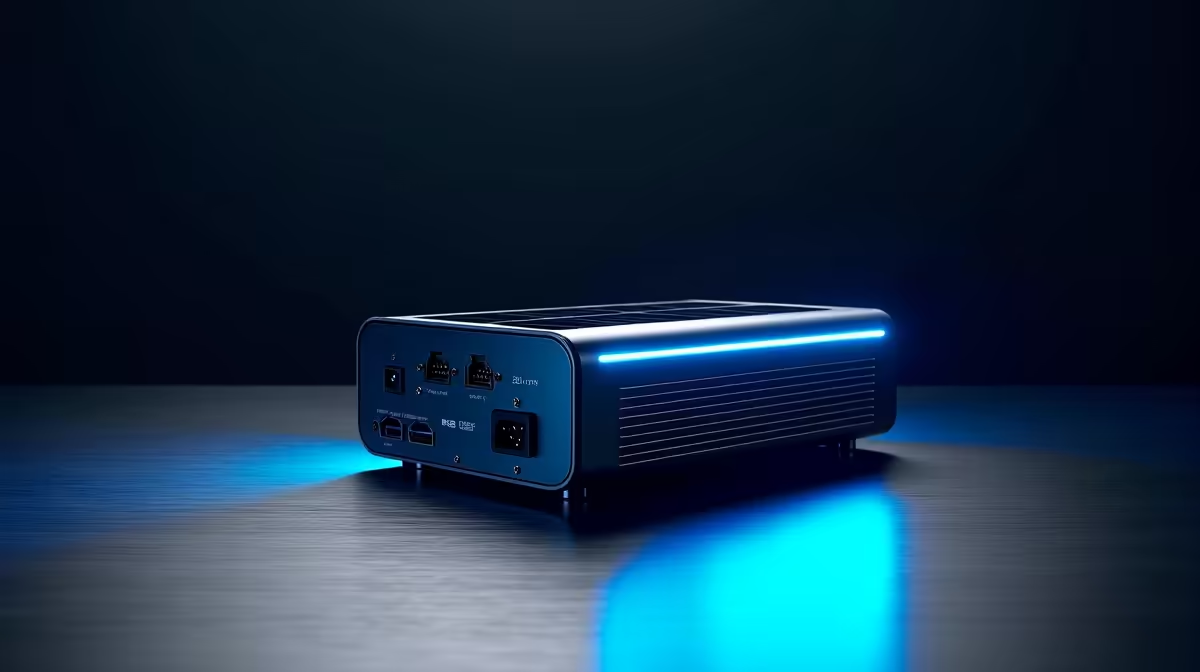
Loadshedding is a frustrating South African reality. When the grid drops, your ranked match shouldn't. A standard inverter is great, but integrating solar panels takes your setup to the next level. This solar UPS setup and configuration guide will help you keep the lights on and the latency low without burning through your hard-earned ZAR. Let's get your rig partially off the grid... and keep you in the game.
Mastering Your Solar UPS Setup and Configuration ☀️
Transitioning from grid dependency to solar power requires careful planning. You cannot simply plug a solar panel directly into your computer. The core of any successful solar UPS setup and configuration relies on three main components... the solar array, the charge controller, and the inverter battery bank.
When Eskom flips the switch, your system needs to failover instantly to prevent data loss. This is exactly why investing in reliable UPS power solutions is absolutely crucial. Always ensure your inverter is a pure sine wave model. Pure sine wave tech delivers clean power that mimics the main grid. Cheaper modified sine wave units can cause audio buzzing and permanently damage sensitive PC components over time.
Calculating Your Daily Power Draw ⚡
Before climbing onto your roof to mount panels, you must accurately calculate your total wattage. Different machines draw vastly different amounts of power under heavy load.
If you are primarily running standard work laptops and a fibre router, your power requirements will be relatively low. A modest 1000W inverter paired with a single 100Ah lithium battery will easily get you through stage six outages.
However, if you are powering high-end gaming PCs equipped with power-hungry graphics cards, your draw spikes significantly. A heavy gaming session can pull upwards of 600W. You will need a robust 3kW to 5kW inverter to handle the peak load safely.
Battery Lifespan Pro Tip 🔋
Always opt for Lithium Iron Phosphate (LiFePO4) batteries over traditional lead-acid or gel options. They handle deep discharges much better and offer thousands of cycles... making them far more cost-effective for daily South African loadshedding schedules.
The Safe Installation Process 🔧
Proper solar UPS setup and configuration demands respect for high-voltage electricity. If you are ever unsure, always hire a certified solar installer to issue a Certificate of Compliance.
First, secure your panels facing true north. This angle optimises your energy yield during our harsh South African sun hours. Next, wire the panels directly to your charge controller. An MPPT (Maximum Power Point Tracking) controller is vastly superior to older PWM models... ensuring your batteries charge efficiently even on cloudy days.
Finally, connect the battery bank to your inverter. This clean setup physically protects your costly hardware investments. If you recently grabbed one of our amazing pre-built PC deals, the last thing you want is a massive power surge frying your motherboard when the grid unexpectedly returns.
Maximising Your Solar Investment
Once your solar UPS setup and configuration is fully operational, actively monitor your usage. Run heavy appliances during peak sunlight hours to bypass the battery completely.
Saving thousands of ZAR on your monthly electricity bill is a fantastic feeling. It also frees up your monthly budget. You can use those savings to browse the latest tech specials and finally upgrade your gaming peripherals.
Ready to Power Up Your Setup? Surviving loadshedding is only half the battle... dominating your games is the other. Once your power is sorted, explore our massive range of PC specials and find the perfect machine to conquer your world without interruption.











