

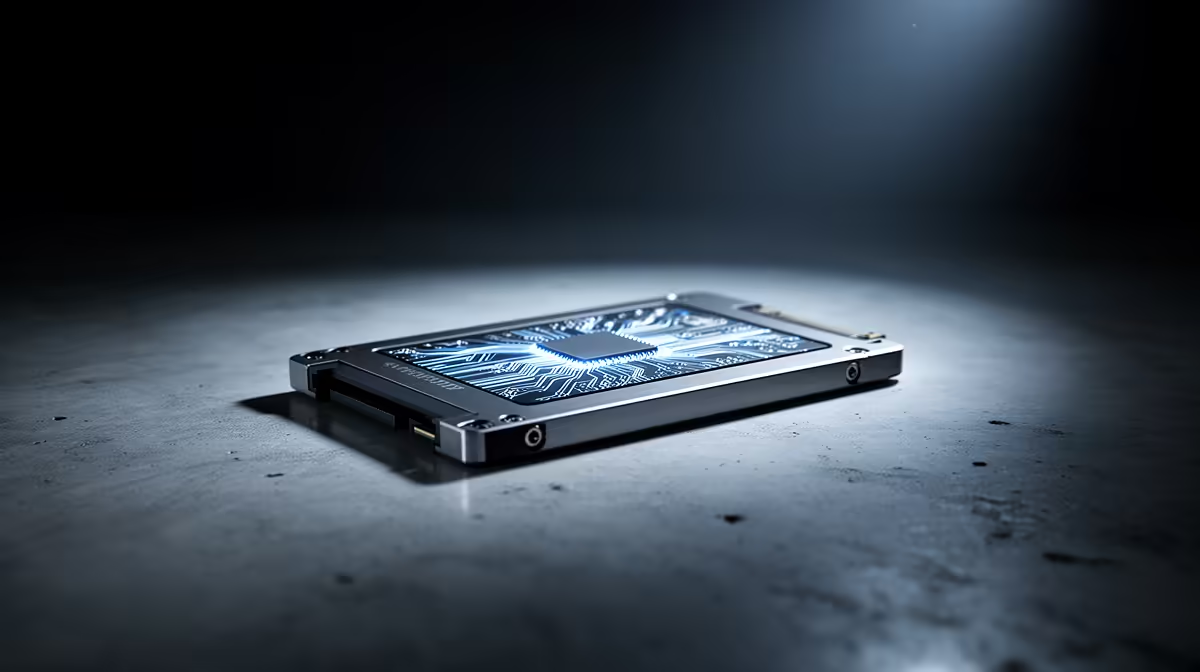
Remember staring at a loading screen, praying it would finish before load shedding hit? We’ve all been there. The slow crawl of a hard drive was once a painful reality for South African gamers. Thankfully, the SSD evolution in gaming has completely rewritten the rules. This isn't just about faster boot times anymore; it's about seamless, immersive worlds that load in the blink of an eye. Let's trace this incredible journey.
The Dawn of SSDs: From Niche Tech to Gaming Necessity
Just over a decade ago, Solid-State Drives (SSDs) were expensive, low-capacity luxuries. Most of us were still running our systems on clunky, mechanical Hard Disk Drives (HDDs). The difference was night and day. The first time you booted Windows or loaded a game like Skyrim from a SATA SSD… it felt like magic. ⚡
This initial leap showed us what was possible. While HDDs physically searched for data on a spinning platter, SSDs accessed it instantly from flash-memory chips. This marked the first major step in the SSD evolution in gaming, turning long waits into brief pauses and making systems feel incredibly responsive. Even today, these standard solid-state drives offer a massive performance boost over any traditional HDD.
The NVMe Revolution: Unleashing True Speed 🚀
SATA SSDs were fast, but they were still using an interface designed for much slower mechanical drives. The real breakthrough came with NVMe (Non-Volatile Memory Express). Instead of the old SATA cable, NVMe SSDs plug directly into the motherboard's high-speed PCIe slot—the same kind used by your graphics card.
The result? A colossal jump in speed. While a good SATA SSD might top out around 550 MB/s, entry-level NVMe drives start at over 2,000 MB/s, with high-end models pushing past 7,000 MB/s. For gaming, this means textures in massive open-world titles like Cyberpunk 2077 or Starfield stream in instantly, eliminating pop-in and stutter. The performance jump that blazing-fast NVMe SSDs provide is a core part of the modern gaming experience.
🔧 Check Your M.2 Slot
Before buying an NVMe SSD, check your motherboard's manual to ensure you have a compatible M.2 slot. Look for terms like 'PCIe Gen3 x4' or 'PCIe Gen4 x4' to know you're getting the maximum speed your board can handle!
SSD Evolution Beyond the PC: Consoles & Portability
The SSD evolution in gaming wasn't confined to PCs. The PlayStation 5 and Xbox Series X|S made ultra-fast, custom NVMe storage a core part of their architecture. This move forced game developers to design their games around instant data access, benefiting PC gamers as well.
This trend has also made high-speed storage more portable. Need to take your Steam library to a friend's place or expand your console storage without cracking it open? Modern portable external SSDs are now faster than the internal drives of just a few years ago, offering a tough, pocket-sized solution for gamers on the move.
What's Next in the SSD Evolution for Gaming? ✨
The journey is far from over. We're now seeing PCIe Gen5 SSDs hit the market, promising speeds that can double what we have today. More importantly, technologies like Microsoft's DirectStorage are set to leverage this speed even more effectively. DirectStorage allows the GPU to load game assets directly from the SSD, bypassing the CPU and drastically reducing overhead.
This means future games will have virtually non-existent loading screens, more detailed environments, and richer worlds than ever before. Keeping an eye on the latest SSDs is key to staying ahead of the curve and ensuring your rig is ready for what's next. The ongoing improvements in SSD technology continue to be one of the most exciting developments for PC enthusiasts.
Ready to Ditch the Lag? Don't let a slow drive be the bottleneck in your R50,000 rig. Upgrade your storage and experience gaming the way it was meant to be played… instantly. Find the best SSD deals in South Africa for performance that leaves loading screens in the dust.











