

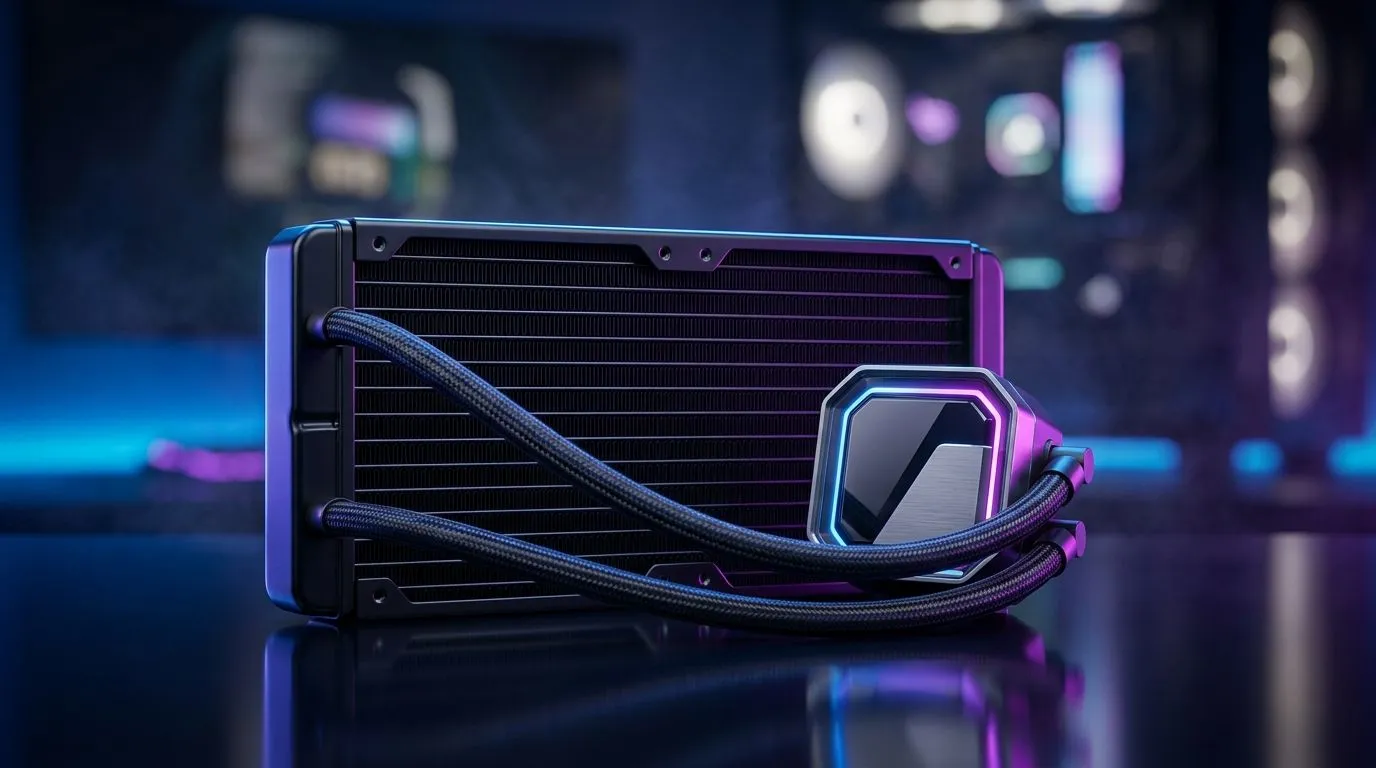
Ultra-Thin Spade Fins Microchannel Radiators: Why AIOs Feel So Different in SA
If you’ve ever built a gaming PC in a hot South African summer and thought “my temps don’t match the benchmarks,” you’re not imagining things. AIO cooling performance is a blend of radiator design, coolant flow, fan control, and how well the whole loop dumps heat.
That’s where Ultra-Thin Spade Fins Microchannel Radiators for Maximum AIO Cooling come in. These radiators use high-surface-area fin geometry and microchannel tubes to move heat efficiently, helping your cooler keep boost clocks steadier during long sessions.
What Ultra-Thin Spade Fins Microchannel Radiators Actually Do 🔧
Most people focus on “how many fans” or “what pump RPM” they’re buying… but radiator heat transfer is the gatekeeper. An AIO radiator must reject heat into room air. The better the radiator’s surface area and internal flow paths, the more effectively it can do that.
Ultra-thin spade fins increase fin density without making the radiator excessively thick. Microchannel passages, meanwhile, are designed to improve heat exchange by bringing more of the coolant volume into close contact with the fin stack. In practical terms, you get:
- More effective heat transfer across a given radiator footprint
- Smoother thermal behaviour under sustained loads (think raids, ranked grinds, or Shader compilation)
- Potentially lower component temperatures, assuming the rest of the system is tuned
A quick mental model for “why it matters”
In plain English: your CPU heats the coolant. The radiator then has to spread that heat into air quickly enough that the coolant doesn’t overheat. If the radiator can’t keep up, the CPU cooler will eventually “lose the race,” and temperatures climb.
Picking the Right AIO (360mm vs 240mm) for Real SA Builds ⚡
Choosing radiator size is not just about clearance. It’s about how much surface area you can place into your case’s airflow.
- 240mm radiators are common for balanced builds and tighter cases. You still get strong results, especially with good fan placement.
- 360mm radiators tend to give you more radiator surface area, which can help with sustained cooling… particularly in warmer rooms or high-watt CPUs.
If you’re aiming for maximum performance from an AIO, prioritise airflow and radiator placement before you chase aesthetics.
Evetech AIO selection paths to match your case
If you want to start with Liquid Coolers and browse by radiator size, Evetech’s AIO filter options are a good place to begin:
- Explore a wide range of Liquid Coolers (AIO) here:
https://www.evetech.co.za/PC-Components/cpu-coolers-84?attributes-coolertype=Liquid+Cooler+%28AIO%29 - If you specifically want 360mm radiator options:
https://www.evetech.co.za/PC-Components/cpu-coolers-84?attributes-coolertype=Liquid+Cooler+%28AIO%29&attributes-coolingsize=360mm+Radiator - If 240mm fits your build better:
https://www.evetech.co.za/PC-Components/cpu-coolers-84?attributes-coolertype=Liquid+Cooler+%28AIO%29&attributes-coolingsize=240mm+Radiator
You can also browse the full CPU cooler catalogue and then narrow down: https://www.evetech.co.za/PC-Components/cpu-coolers-84
And if you’ve got your heart set on specific brands that often show up in enthusiast builds, filter by brand too:
- CORSAIR AIO options:
https://www.evetech.co.za/PC-Components/cpu-coolers-84?attributes-coolertype=Liquid+Cooler+%28AIO%29&brands=CORSAIR - Deepcool AIO options:
https://www.evetech.co.za/PC-Components/cpu-coolers-84?attributes-coolertype=Liquid+Cooler+%28AIO%29&brands=Deepcool
Installation and Tuning Tips That Unlock AIO Potential 🚀
Even the best radiator design can underperform if installation and fan behaviour are off. Here are the practical things that consistently move the needle.
1) Radiator orientation and pump placement
Follow the cooler’s manual, but the general goal is to avoid trapping too many air bubbles in the pump. Many users find that keeping the pump oriented as recommended improves stability after installation.
2) Fan curve matters more than you think
If your fans don’t ramp early enough, the CPU will heat soak before the radiator can respond. A gentle “ramp-up” fan curve often beats a delayed aggressive curve for gaming stability.
3) Use airflow like a system, not a guess
- Front intake + radiator exhaust can work well in many cases.
- Top exhaust can also perform strongly, if your case supports it and your fan setup is balanced.
If you’re unsure where to mount, compare your case’s airflow path first. Not every chassis flows the same.
Cooling Pro Tip ✨
"Before you judge an AIO’s performance, run a controlled test: load your CPU for 10 to 15 minutes, then check temps at peak and after the fan curve kicks in. If temps climb steadily after the fans should be ramping, tweak the curve in small steps instead of buying a new cooler. This saves time (and money in ZAR) while you dial in the loop."
Common Myths South African Gamers Still Believe
Let’s clear a few misconceptions:
- Myth: “Bigger radiator always equals cooler CPU.”
Bigger can help, but only if your case has room for good airflow and your fan tuning supports it. - Myth: “Radiator thickness is all that matters.”
Fin design, microchannel flow behaviour, and how efficiently the radiator dumps heat into airflow also matter. - Myth: “It’s set and forget.”
After an AIO install, temps can improve after settling and air removal steps. Also, fan curve changes make a real difference.
If you want to compare options and filter quickly, browse the AIO category at Evetech and narrow down by cooler type, radiator size, and brand.
Ready to Find Your Perfect Match?
Ready to Find Your Perfect Match? The Mac vs Windows debate is complex, but for maximum power, choice, and value in South Africa, Windows is hard to beat. Explore our massive range of laptop specials and find the perfect machine to conquer your world.











