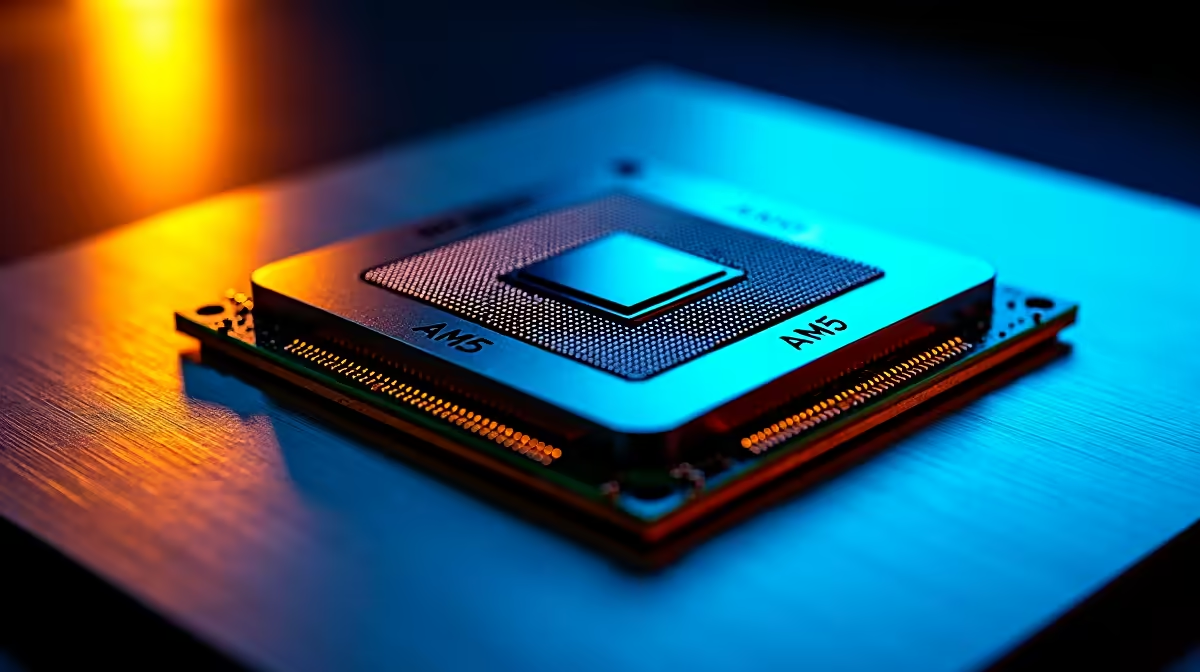
Building a new Ryzen rig in South Africa is an exciting investment. You have saved up your hard-earned ZAR for a top-tier processor. But as you browse the specs, you keep seeing confusing jargon. What does a 16+2+1 power design actually mean for AM5 CPU performance? Is it just marketing fluff, or does it actually impact your frame rates? Let us break down the science of smooth power delivery.
Decoding the VRM Mystery ⚡
Your motherboard acts as the central nervous system of your PC. When you plug your rig into the wall, the power supply sends 12 volts to the board. However, your delicate AMD processor operates on just over 1 volt. The Voltage Regulator Module (VRM) steps down this voltage.
If you want to browse our wide selection of motherboards, you will notice premium boards boast higher phase counts. That 16+2+1 number is simply the physical layout of these crucial power phases.
What Do the Numbers Mean?
Think of power phases like lanes on the N1 highway. More lanes mean less traffic congestion and a much smoother flow of electricity.
- 16 Phases: Dedicated entirely to the Vcore... the main CPU cores. This ensures incredibly stable power during heavy gaming.
- 2 Phases: Dedicated to the SOC. This handles the memory controller. Pairing a solid SOC phase design with high-speed DDR5 memory kits ensures flawless system stability.
- 1 Phase: Manages miscellaneous motherboard components like your PCIe lanes.
Brands engineer these robust layouts to handle extreme loads. You can see this premium engineering in action when you explore ASUS AMD motherboards designed specifically for the AM5 socket.
How Power Design Boosts AM5 CPU Performance 🚀
Modern AM5 CPUs are incredibly smart pieces of silicon. They constantly monitor their own temperature and power limits. If they detect clean, stable power, they boost to higher clock speeds and stay there longer.
A 16+2+1 power design spreads the electrical load across more components. This keeps the motherboard VRMs physically cooler. Cooler VRMs mean your processor will not throttle during a marathon session of Warzone. This principle applies across the board. It works whether you prefer AMD setups or high-end ASUS Intel motherboards.
If you plan to install a high-end Ryzen 9 processor, this power design is absolutely crucial. These top-tier chips draw significantly more wattage under heavy multi-threaded workloads. A weaker VRM setup would struggle to supply enough clean power.
Maybe you prefer not to build it yourself. You can always grab one of our expertly assembled custom gaming PCs. They already feature optimal power designs out of the box.
Overclocking Pro Tip 🔧
When tweaking your AM5 CPU, always update your motherboard BIOS to the latest version. Manufacturers frequently release updates that optimise VRM thermal limits and improve memory training for better overall stability.
Future-Proofing Your AM5 Investment ✨
The AM5 socket is built to last for several years. AMD has promised long-term support for this platform. Investing in a robust 16+2+1 power design today means you are ready for tomorrow.
When next-generation processors launch, your motherboard will easily handle their power demands. You will not need to spend thousands of extra ZAR upgrading your entire system. You can simply drop in a new chip and enjoy the massive performance gains. Clean power delivery protects your hardware lifespan... making your initial investment stretch much further.
Ready to Maximise Your AM5 Performance?
Choosing the right motherboard is vital for unlocking your processor's true potential. For maximum power, stability, and value in South Africa, a premium VRM layout is hard to beat. Explore our massive range of AM5 motherboards and find the perfect foundation to conquer your world.