Ever felt that pang of lag in a crucial online match? Or wondered how Netflix knows to show you Uzalo and not The Crown first? The answer often lies with a simple string of numbers: your IP address. It’s the digital fingerprint for your connection to the world. For South African gamers and tech enthusiasts, understanding what an IP address is isn’t just trivia… it’s the key to a smoother, faster, and more secure online life. 💻
So, What is an IP Address, Exactly?
Think of an IP (Internet Protocol) address as a postal address for your device on the internet. When you want to visit a website like Evetech, your computer sends a request, and the website needs a return address to send the data back to. Your IP address is that unique return address.
Every device connected to the internet—your PC, smartphone, console, even your smart TV—has one. It’s how data finds its way across the vast, complex network of the web to your screen. Without it, you’d be shouting into the void with no way for a response to find you.
Public vs. Private IP Addresses Explained
It gets a little more interesting because you actually have two types of IP addresses working together.
Your Public IP Address
This is the main address the outside world sees. It’s assigned to your router by your Internet Service Provider (ISP) in South Africa, whether you're on a Vumatel, Openserve, or Telkom line. When you connect to a game server or a website, this is the address they see. It identifies your entire home network to the rest of the internet.
Your Private IP Address
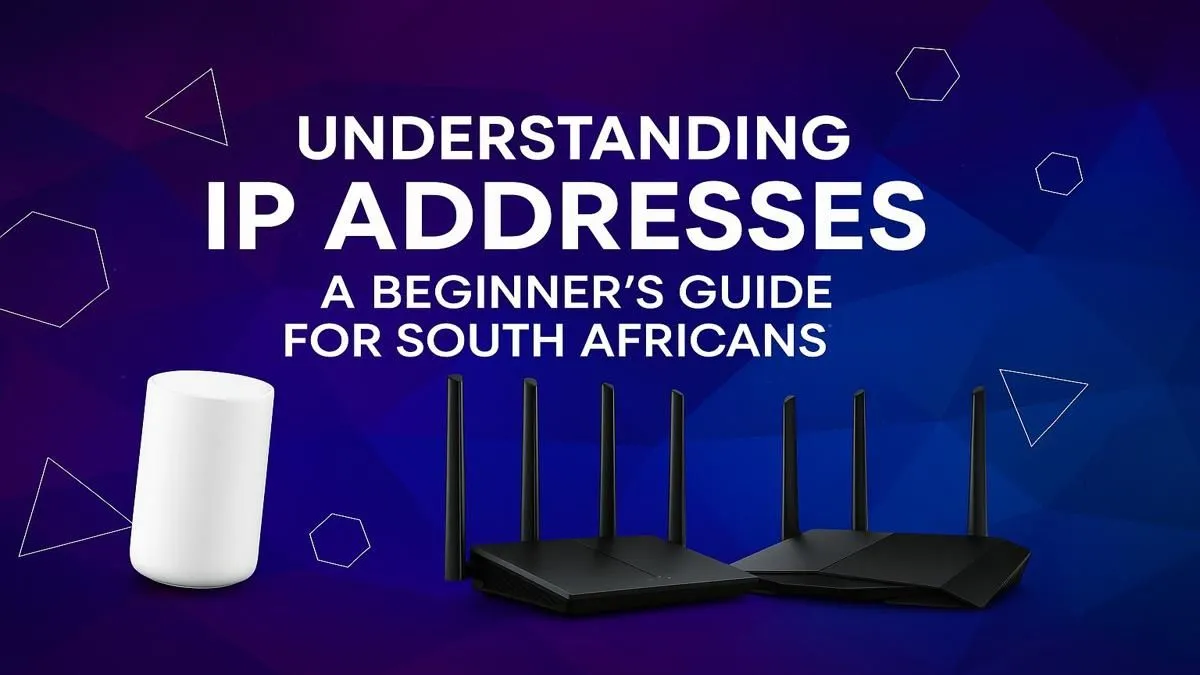
This is the local address your router assigns to each device inside your home network. Your PC might be 192.168.1.10, while your phone is 192.168.1.11. These private addresses aren't visible to the outside internet. Your router acts like a digital receptionist, directing the right internet traffic to the right device. This entire process is managed by the brain of your home network, which is why having one of the latest wireless routers is so crucial for handling multiple devices smoothly.
Find Your IP in Seconds ⚡
Want to know your IP addresses? For your public IP, simply Google "what is my IP address". For your private IP on Windows, open Command Prompt (type cmd in the Start Menu) and enter the command ipconfig. Look for the "IPv4 Address" under your active connection.
Why Your IP Address Matters for Gaming and Streaming
So, why should a gamer in Gauteng or a streamer in the Western Cape care about this? Understanding your IP address can directly impact your online experience.
- Better Ping and Geolocation: Game servers use your IP to guess your location and connect you to the nearest server (like local servers in Johannesburg or Cape Town) for lower latency, or "ping."
- Troubleshooting Connection Issues: If you're experiencing lag, knowing your IP can help you run network tests to see where the problem is. Sometimes, the issue isn't your fibre speed but the route your data is taking. If your signal is weak, strategically placed wireless range extenders can make a world of difference.
- Port Forwarding for an Open NAT: This is a big one for gamers. Setting up port forwarding in your router tells it to send specific gaming traffic directly to your console or PC. This can solve connection problems and change your NAT Type from "Strict" to "Open," making it easier to join lobbies and host matches. ✨
Dynamic vs. Static IP: What's the Difference?
Most South African home internet connections use a dynamic IP address. This means your ISP assigns you a temporary IP from a pool of available addresses, and it can change every time you restart your router or after a certain period. For 99% of users, this is perfectly fine and works seamlessly.
A static IP address, on the other hand, is a fixed address that never changes. You usually have to request and pay extra for one from your ISP. While most people don't need it, it's essential for tasks like:
- Hosting your own game or web server.
- Setting up a reliable remote connection to your home PC.
- Certain business-from-home security applications.
Regardless of the type, your PC needs a solid link to your network. For desktops, this often means installing one of these quality wireless adapters to catch the best possible signal.
Taking Control of Your Home Network 🚀
Understanding what an IP address is empowers you. It's the first step towards diagnosing problems, improving security, and getting the performance you pay for. A stable, fast connection is the foundation of modern gaming and entertainment. By getting to grips with the basics, you can optimise your entire wireless networking setup to ensure every device performs at its peak.
Ready to Build a Rock-Solid Network?
Understanding your IP address is step one. Step two is getting the hardware that delivers a flawless connection. Whether you're chasing lower pings or just want buffer-free streaming, a powerful network is key. Explore our massive range of PC components and find the gear to conquer your connection.