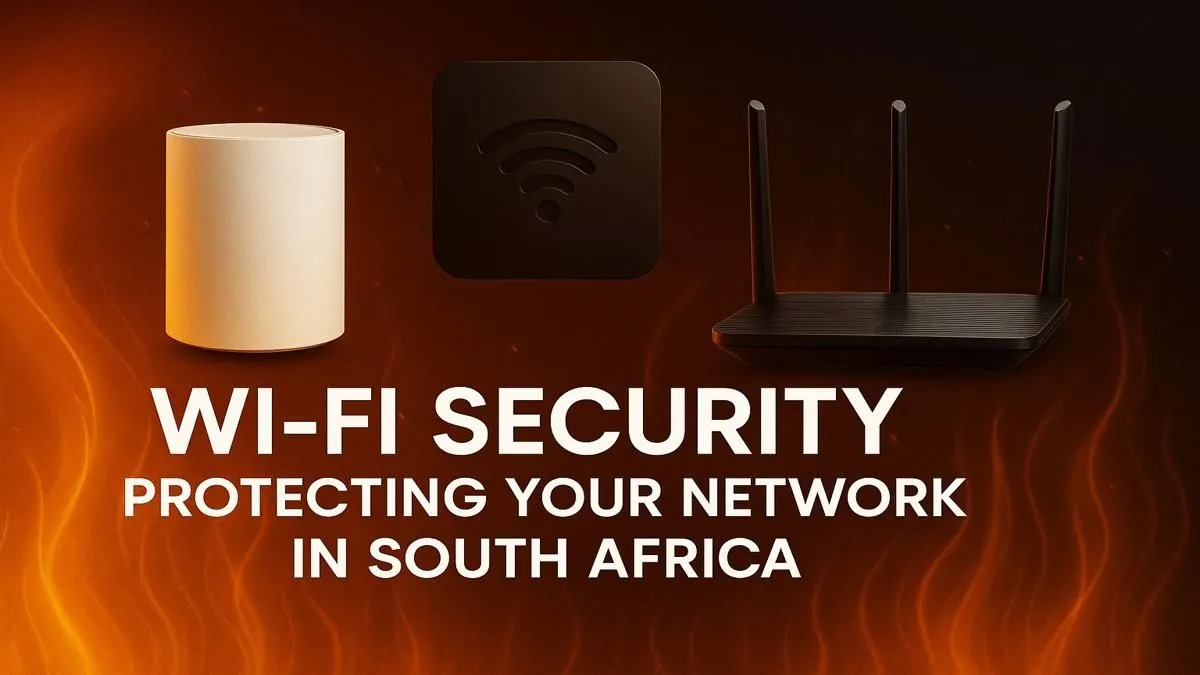
Is your Wi-Fi also leaving you vulnerable? For many South African gamers and families, an unsecured network is an open invitation for data thieves and bandwidth hogs. From your smart TV to your gaming rig, everything is connected… and potentially at risk. This guide will help you lock down your digital home, ensuring your connection is fast, stable, and, most importantly, secure. Let's get your Wi-Fi security in South Africa sorted.
Why Wi-Fi Security in South Africa Matters More Than Ever
In a world of fibre rollouts and ever-increasing data costs, a secure Wi-Fi network is no longer a "nice-to-have"—it's essential. Think about it: your banking details, private conversations, and game logins all travel through that wireless signal. A poorly secured network can be exploited by neighbours to piggyback on your connection (slowing you down and costing you ZAR), or worse, by criminals looking to intercept your data. ⚡
With more of us working and gaming from home, improving your home network's security is a critical step. The foundation of this protection starts with having the right wireless networking hardware configured correctly.
Your First Line of Defence: Essential Router Settings
Your router is the gateway to the internet, and its default settings are often a major vulnerability. Taking 15 minutes to tweak these can drastically improve your Wi-Fi protection.
Change the Default Admin Login
Every router comes with a default username and password (like "admin" / "admin"). This is public knowledge. Change it immediately to prevent anyone on your network from messing with your settings.
Enable WPA3 Encryption
WPA3 is the latest security protocol, offering much stronger protection than its predecessor, WPA2. If your router supports it, enable it. If not, WPA2-AES is the next best thing. This encrypts the traffic between your devices and the router, making it unreadable to outsiders.
Choose a Strong, Unique Password
Your Wi-Fi password (or pre-shared key) should be long and complex. Avoid common words or personal information. A mix of upper-case letters, lower-case letters, numbers, and symbols is ideal.
Password Pro-Tip
Use a three-word phrase with numbers and symbols, like 'LekkerGame!2024'. It's easier to remember than 'p@55W0rD' but much, much harder to crack.
Rename Your Network (SSID)
Don't use your family name or address as your network name. While not a major security feature on its own, it prevents attackers from easily identifying you. A cool, anonymous name is best.
Advanced Wi-Fi Protection Strategies 🔧
Once you've mastered the basics, you can implement a few more advanced tactics for rock-solid Wi-Fi security in South Africa.
Set Up a Guest Network
Most modern routers allow you to create a separate network for visitors. This is a brilliant feature. It gives guests internet access without giving them access to your main network, where your personal computers, consoles, and storage devices live.
Keep Your Firmware Updated
Router manufacturers periodically release firmware updates to patch security holes and improve performance. Check your router's admin page every few months for updates. It’s one of the easiest and most effective ways to stay protected. For older PCs that might not support the latest protocols, a quick upgrade with one of these powerful wireless adapters can bring them up to speed.
Bolstering Your Network's Reach and Security
Sometimes, a weak signal isn't just frustrating—it can be a security issue. If your signal is poor in certain parts of your home, your devices might drop off and connect to less secure networks, or you might be tempted to use less-secure solutions.
Properly placed Wi-Fi range extenders not only eliminate dead spots for a smoother gaming experience but also ensure your devices remain connected to your secure, primary network. A strong, stable signal everywhere is a key part of a comprehensive security strategy. ✨
The Future of Secure Connections: Fibre and Wi-Fi 6
As fibre continues to connect more South African homes, the speed and bandwidth available are incredible. This, however, also raises the stakes for security. The latest Wi-Fi 6 and Wi-Fi 6E standards were built with modern security challenges in mind, offering more robust encryption and better device management.
Pairing your high-speed internet with a modern router is crucial for getting the most out of your connection safely. Investing in quality high-speed fibre routers ensures you have the latest security features, like WPA3, built-in from day one, providing a secure foundation for your entire digital life.