

Complete Guide: Setting Up Monitor Light
Setting Up Monitor Light. Tested & verified settings for best FPS and visual quality on SA hardware budgets.
Read moreChoosing a wireless esports mouse? Learn DPI, polling rate, switch type, and weight so you can buy with confidence and improve aim and clicks 🎮⚡
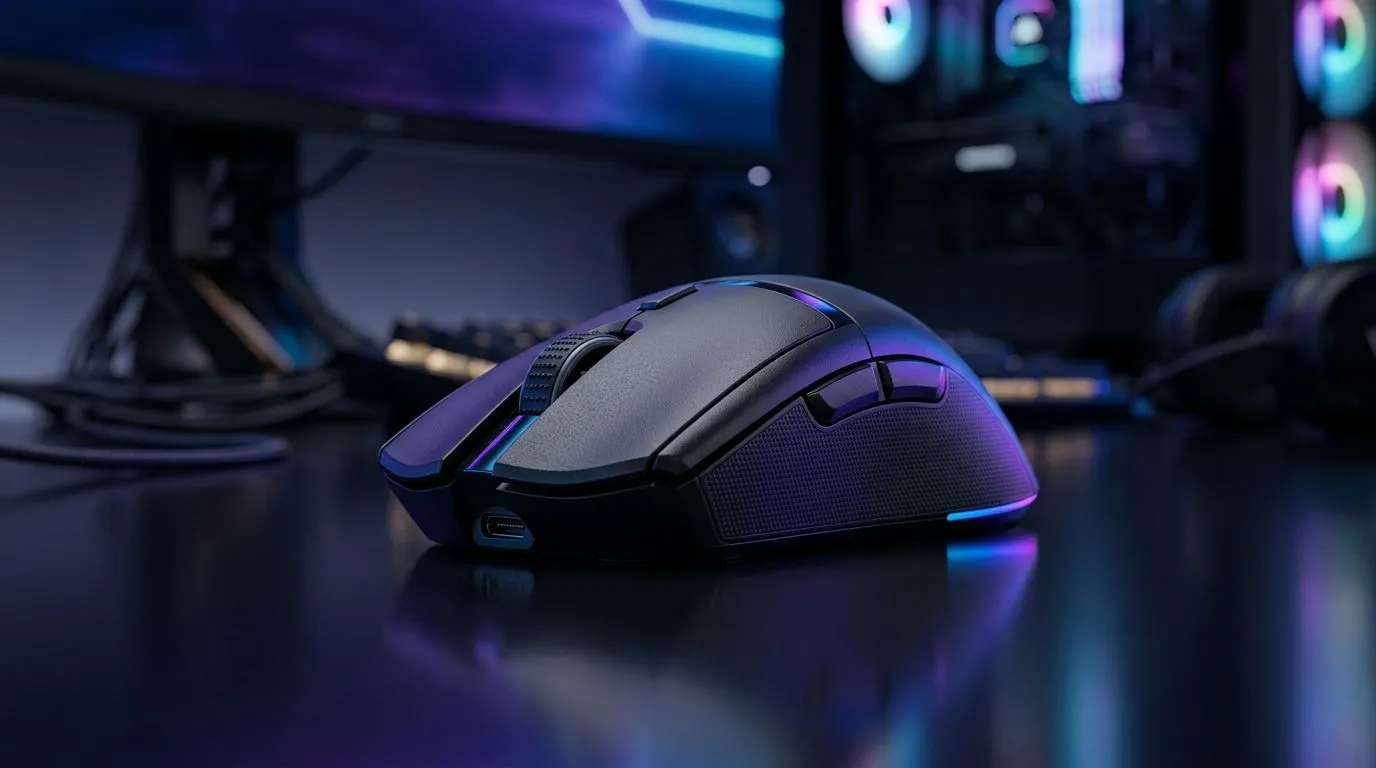
If you’ve ever lost a clutch because your mouse felt sluggish, too heavy, or just plain weird… you already know the pain. In South Africa, we buy gear with our wallets and our expectations. We want low latency, clean tracking, and enough battery life to survive a weekend of ranked grind. This guide breaks down wireless esports mouse DPI, polling rate, switch feel, and weight so you can choose smarter, not louder.
A good mouse is personal. It should suit your grip, your desk space, and your favourite games. That matters whether you’re flicking in Valorant, tracking in Apex, or managing camera movement in Fortnite. For a broader look at bundle options and add-ons, start with mouse accessories when you’re planning a full desk upgrade. 🔧
DPI gets talked about like it’s the whole story. It isn’t. DPI simply affects how far your cursor moves for a given hand movement. Higher DPI can feel faster, but it does not automatically mean better aim. What matters more is consistency and comfort. Many players settle into a range that feels natural, then fine-tune in-game sensitivity.
Polling rate is the other headline number. It refers to how often the mouse reports its position to the PC. A higher polling rate can improve responsiveness, especially in fast-paced games. The catch? Your setup still needs to be stable. If your mouse, USB receiver placement, or system performance is poor, the spec sheet won’t save you.
For players comparing gaming mice more broadly, Evetech’s gaming mouse category is a practical starting point because you can compare shapes, features, and pricing in one place.
Weight affects fatigue more than most buyers expect. A lighter mouse can feel easier to flick with, while a heavier mouse may feel steadier for slow, controlled aim. There’s no universal winner. The best choice depends on whether you play high-sensitivity or low-sensitivity, and how much wrist movement you use.
Palm grip, claw grip, and fingertip grip each put different demands on a mouse. A palm gripper may prefer a fuller shell. A fingertip player may want something lighter and shorter. That’s why the same mouse can feel perfect to one player and awkward to another. If possible, compare shapes before buying.
Wireless mice often balance battery size with total weight. Some models feel feather-light because they use smaller batteries. Others add a bit of mass for longer runtime. That extra weight can be worth it if you hate charging every few days.
Switch feel is easy to ignore until you miss a shot. Click force, actuation feel, and side-button placement all matter. In competitive play, you want buttons that feel clear, predictable, and repeatable. A mushy click can make fast semi-auto taps feel less precise.
If the left and right clicks feel different, your muscle memory has to adapt. That is tiring over time. Reliable switches help build confidence, especially in games where timing matters. It is a small detail that can make long sessions less frustrating ✨
On Windows, test your mouse in a calm environment first. Set your DPI, then keep in-game sensitivity fixed for a few days. Small changes make more sense when your muscle memory has had time to settle.
South African gamers often have to balance performance with value. That makes hunting for the right deal part of the process, not an afterthought. If you’re comparing prices or timing a purchase around a promotion, check best gaming mouse deals to see what offers are live before you commit.
If you already know you want wireless, narrow your search with wireless mouse options. If you still prefer a cable for zero charging anxiety and absolute simplicity, wired mouse choices are still worth a look. The right answer is the one that fits your play style, not the loudest marketing claim.
There is no perfect mouse for everyone. There is only the one that feels right in your hand, on your desk, in your games, and within your budget. If you can narrow it down by shape, then by weight, then by click feel, the choice gets much easier. That is where most buyers win or lose the purchase.
And if you are still comparing models, that is normal. A little research now saves a lot of regret later. Shop carefully, check the specs, and aim for the mouse that supports your reflexes instead of fighting them 🚀
Ready to Find Your Perfect Match? The Mac vs Windows debate is complex, but for maximum power, choice, and value in South Africa, Windows is hard to beat. Explore our massive range of laptop specials and find the perfect machine to conquer your world.
Your DPI should match your sens and playstyle. Higher DPI can be fine, but consistent aim comes from stable sens settings and good tracking.
A higher polling rate (like 1000Hz) sends updates more often, which can reduce perceived latency and improve responsiveness in fast FPS games.
Yes. Switch type impacts click feel, actuation distance, and durability. Linear and tactile switches suit different players and grip styles.
Most competitive players prefer lighter weights for faster flicks and less fatigue. The best weight depends on your aim style and grip.
They can feel slower for micro-adjustments, but balance and sensor quality matter too. Try similar shapes and weights before deciding.
Start with a solid polling rate (typically 1000Hz), then tune DPI to a comfortable sens. Prioritize consistency over chasing max specs.
Look at sensor performance, lift-off distance, wireless range, battery life, and build comfort. These often affect results more than a single spec.
Setting Up Monitor Light. Tested & verified settings for best FPS and visual quality on SA hardware budgets.
Read more
Assassins Creed Shadows Ultrawide Support: 21:9. Clear setup instructions with SA-specific considerations, troubleshooting tips & recommended components.
Read more
Complete Gaming Setup Guide for the Collector. Clear setup instructions with SA-specific considerations, troubleshooting tips & recommended components.
Read more
Will the Steam Deck 2 Have an OLED Screen? Leaked. Plain-English explanation of what it means, why it matters & how it affects your buying decisions in SA.
Read more
Setting Up Ultrawide 144Hz. Tested & verified settings for best FPS and visual quality on SA hardware budgets.
Read more
Kingdom Come: Deliverance 2 Ultrawide Support. Clear setup instructions with SA-specific considerations, troubleshooting tips & recommended components.
Read more
When Will the RTX 6090 Launch in South Africa Detailed answer with SA data, expert analysis & practical recommendations for local buyers.
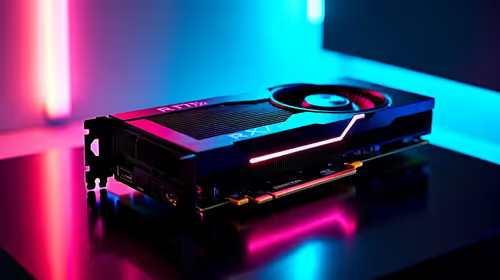
Top Valorant Settings for RTX 5070: FPS Optimisation picks evaluated on performance, value & SA availability with current Rand pricing from Evetech.
RDNA 3.5 Graphics in Ryzen AI 400? Can You Game. Plain-English explanation of what it means, why it matters & how it affects your buying decisions in SA.
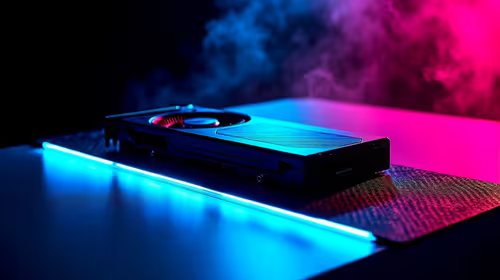
GPU Price Index : December Report. Current stock data & price tracking for SA buyers. See what is available and where prices are heading.
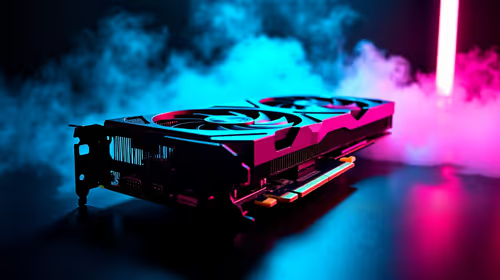
Can the RX 7700 XT Handle 1440p 144Hz Gaming. Performance testing verdict with real data & practical recommendations for SA buyers.
Top Laptop with Core i7 + RX 7700S: Picks picks evaluated on performance, value & SA availability with current Rand pricing from Evetech.
RX 7700 XT Black Myth Wukong 2 FPS: Performance. Real-world benchmark data, FPS numbers & performance analysis. What SA gamers can actually expect.
RTX 6080 Gran Turismo 7 PC Performance: FPS Test. Real-world benchmark data, FPS numbers & performance analysis. What SA gamers can actually expect.
Setting Up Monitor Light. Tested & verified settings for best FPS and visual quality on SA hardware budgets.
Assassins Creed Shadows Ultrawide Support: 21:9. Clear setup instructions with SA-specific considerations, troubleshooting tips & recommended components.
Complete Gaming Setup Guide for the Collector. Clear setup instructions with SA-specific considerations, troubleshooting tips & recommended components.
Will the Steam Deck 2 Have an OLED Screen? Leaked. Plain-English explanation of what it means, why it matters & how it affects your buying decisions in SA.