

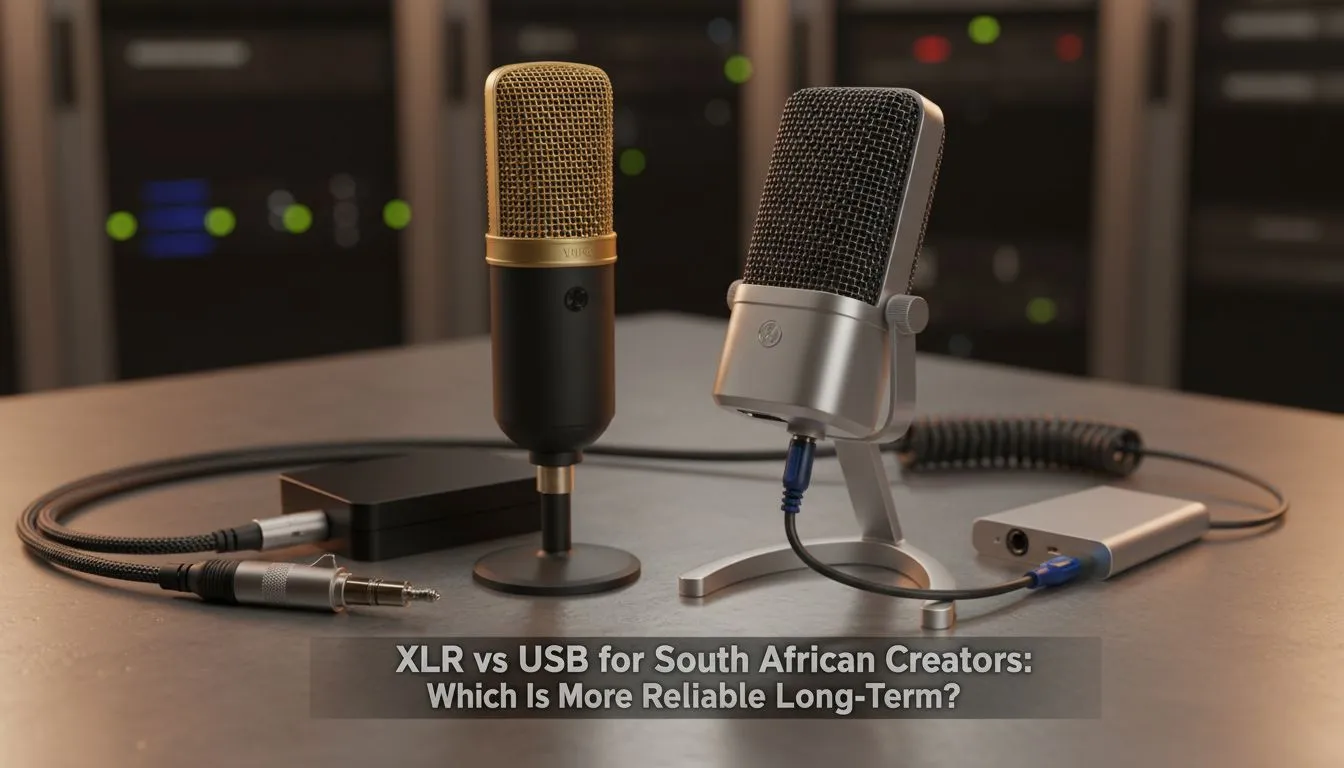
Starting your streaming journey in South Africa usually begins with a tough choice. Do you grab a plug-and-play USB mic or invest in an XLR setup? While USB is easier on your wallet today, reliability over five years is a different story. If you want gear that survives load shedding and heavy daily use, understanding the long-term durability of XLR vs USB microphones is essential for any serious creator.
USB Microphones: The Convenience of Plug-and-Play
USB microphones are the go-to choice for beginners. They house a built-in preamp and an analogue-to-digital converter. This means you just plug it into your PC and start recording. When browsing for streaming essentials, most South Africans look for this simplicity. However, this convenience comes with a hidden shelf life.
Because the electronics are crammed inside the microphone body, they are susceptible to heat and electrical wear. If the internal USB port becomes loose or the converter chips fail, the entire unit is usually e-waste. Repairing a proprietary circuit board in a USB mic is often more expensive than buying a new one.
XLR Microphones: The Modular Path to Longevity
The debate regarding XLR vs USB microphones often leans toward XLR when we talk about professional longevity. An XLR microphone is a purely analogue device. It does not have built-in converters or complex digital chips. It relies on an external audio interface to handle the heavy lifting.
Professional brands like CORSAIR through their Elgato line have made XLR setups more accessible than ever. The main advantage here is modularity. If your cable breaks, you replace the cable for a few hundred Rand. If you want better sound, you upgrade the interface without throwing away your microphone. This separation of components makes the XLR system far more reliable over a decade of use.
Audio Reliability Pro Tip ⚡
When using an XLR setup in South Africa, always plug your audio interface into a high-quality surge protector. While the microphone itself is hardy, the interface's sensitive preamps can be damaged by the power spikes that often follow load shedding stages. This simple step can double the lifespan of your recording gear.
Comparing Build Quality and Physical Durability
When comparing XLR vs USB microphones, you will notice a difference in weight and materials. Many entry-level USB mics use plastic housings to keep costs down. In contrast, even budget-friendly XLR mics usually feature all-metal chassis.
Visuals matter too for your setup... and adding Cololight lighting can make your sturdy metal XLR mic look even more professional on camera. A metal body does more than just feel premium. It provides better shielding against electromagnetic interference from your PC components and monitors.
Future-Proofing Your South African Gaming Setup
If you plan on streaming for years, the XLR route is the safer investment. You can start with a basic interface and a dynamic mic. As your channel grows, you can swap to a condenser mic or a higher-end mixer. Pairing a solid mic with one of our webcams ensures your stream looks as good as it sounds.
USB mics are fantastic for portability and quick setups. But for a permanent desk installation in a home studio, the mechanical simplicity of XLR wins every time. It is the difference between buying an "all-in-one" gadget and a dedicated piece of audio equipment.
Ready to Upgrade Your Audio Game? Whether you need the simplicity of USB or the professional reliability of an XLR setup, we have the gear to help you sound your best. Explore our massive range of streaming essentials and find the perfect microphone to start your professional journey today.











