You’ve just pulled back on the yoke, wheels touching down smoothly at Cape Town International after a long-haul flight from Dubai. The view over Table Mountain was spectacular, but now your eyes feel gritty and tired. Sound familiar? Flight simulator eye strain is a real issue for dedicated SA pilots, turning epic sessions into a literal headache.
Don't ground yourself just yet. Protecting your vision is easier than you think. Here are 10 actionable tips to combat eye strain from flight simulators.
Understanding Flight Simulator Eye Strain
Before we dive into the fixes, let's quickly understand the problem. Digital Eye Strain (DES) happens when we focus on a screen for too long. Our blink rate drops, our eye muscles get locked into a single focal length, and we're constantly exposed to the blue light from the display. This combination leads to dryness, fatigue, headaches, and blurred vision… all symptoms that can ruin an immersive flight.
Your Pre-Flight Checklist: 10 Tips to Protect Your Vision ✈️
Think of these tips as part of your standard operating procedure before you even start the engines.
1. Follow the 20-20-20 Rule
This is the golden rule of screen time. Every 20 minutes, look at something at least 20 feet (about 6 metres) away for 20 seconds. This simple act relaxes your eye muscles and gives them a much-needed break from focusing on the monitor. Set a timer on your phone if you have to!
2. Optimise Your Monitor Settings
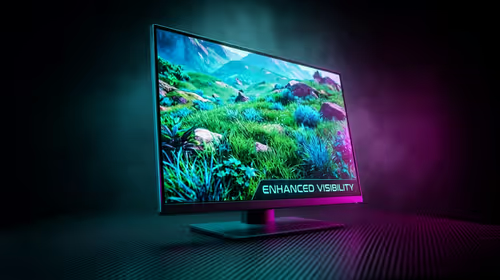
A screen that's too bright is like staring into a lightbulb. Dive into your monitor's settings and adjust the brightness to match the ambient light in your room. Lowering the blue light output or using a "reading mode" in the evenings can significantly reduce eye fatigue. Many modern PC monitors come with excellent, eye-care technologies built right in.
Quick Display Calibration Tip 🔧
Windows has a built-in tool! Just type "Calibrate display color" into your Start Menu. This wizard will walk you through adjusting gamma, brightness, contrast, and colour balance. It’s a free and easy way to ensure your display isn’t overly bright or blue-toned, a major cause of eye fatigue during long flights.
3. Position Your Screen Correctly
Ergonomics are crucial. Your monitor should be about an arm's length away from your face, and the top of the screen should be at or slightly below your eye level. This encourages a natural posture and prevents you from straining your neck and eyes.
4. Get Your Room Lighting Right
Flying in a pitch-black room might feel cinematic, but the high contrast between your bright screen and dark surroundings is brutal on your eyes. Ensure your room has soft, ambient lighting to reduce glare and minimise the harshness of the monitor's light.
5. Go Big, Go Curved
For ultimate immersion and comfort, a larger screen is better. It fills more of your peripheral vision, making the experience feel more real. Better yet, consider an upgrade to one of the latest curved monitors available in South Africa. The gentle arc mimics the natural curvature of your eye, reducing distortion at the edges and minimising eye movement needed to see the whole screen.
6. Remember to Blink! 👀
When we're concentrating on a complex approach or navigating tricky weather, our blink rate can drop by more than half. This leads to dry, irritated eyes. Make a conscious effort to blink fully and often to keep your eyes lubricated.
7. Stay Hydrated
This one’s simple. Dehydration affects your whole body, including your eyes. Keep a bottle of water at your desk, especially during those long hauls across the Atlantic. Your eyes will thank you.
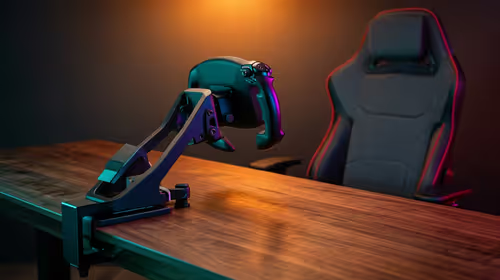
8. Invest in a Proper Cockpit Chair
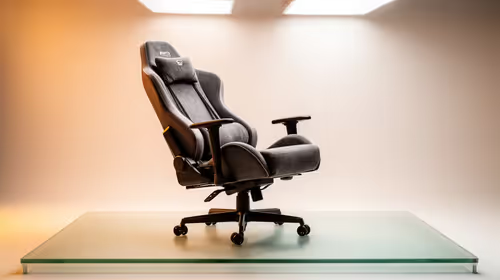
Your posture has a direct impact on flight simulator eye strain. If you're slouched in a cheap office chair, your head and neck are pushed into an unnatural position, which in turn strains your eyes. A quality seat from our range of ergonomic gaming chairs provides proper lumbar and neck support, keeping you comfortable and correctly aligned.
9. Use Realistic Peripherals
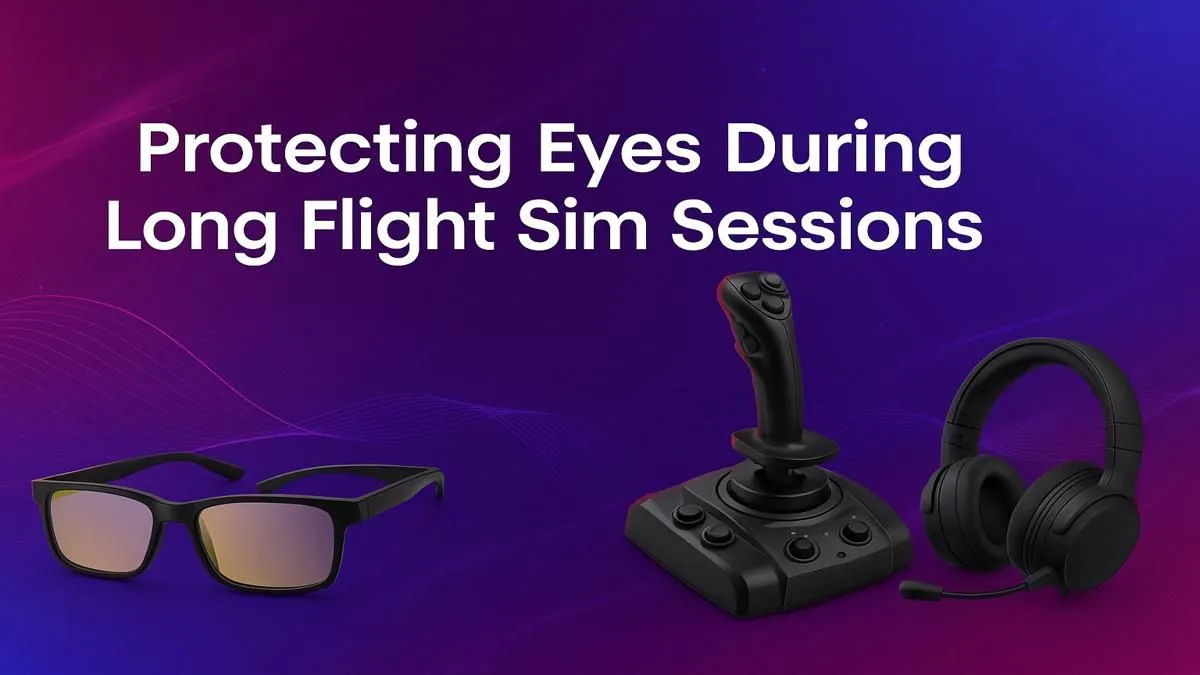
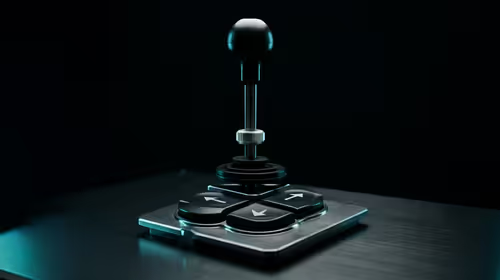
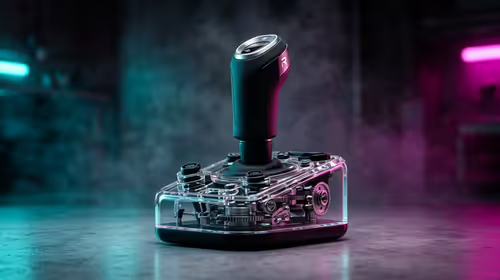
Using a mouse and keyboard keeps your focus locked onto the screen. By integrating a hands-on yoke, throttle, and rudder pedals from a respected brand like Thrustmaster, you create a more tactile experience. This physical interaction encourages more natural head movement and reduces the intensity of fixed staring.
10. Ensure Your PC Can Keep Up ✨
Finally, poor performance is a hidden cause of eye fatigue. Stuttering frame rates and screen tearing force your eyes to constantly readjust, working much harder to track motion. A smooth, consistent visual experience is far less demanding on your vision. Make sure your rig is up to the task with one of our purpose-built Microsoft Flight Simulator gaming PCs, optimised for ultra settings.
By combining these good habits with the right gear, you can wave goodbye to post-flight eye fatigue and focus on what matters most… nailing that perfect landing.
Ready for a First-Class Upgrade?
Tackling flight simulator eye strain is about smart habits and even smarter hardware. A comfortable, high-performance cockpit isn't a luxury... it's your ticket to countless hours of enjoyable flying. Explore our massive range of PC components and build a setup that lets you soar without the sore eyes.