

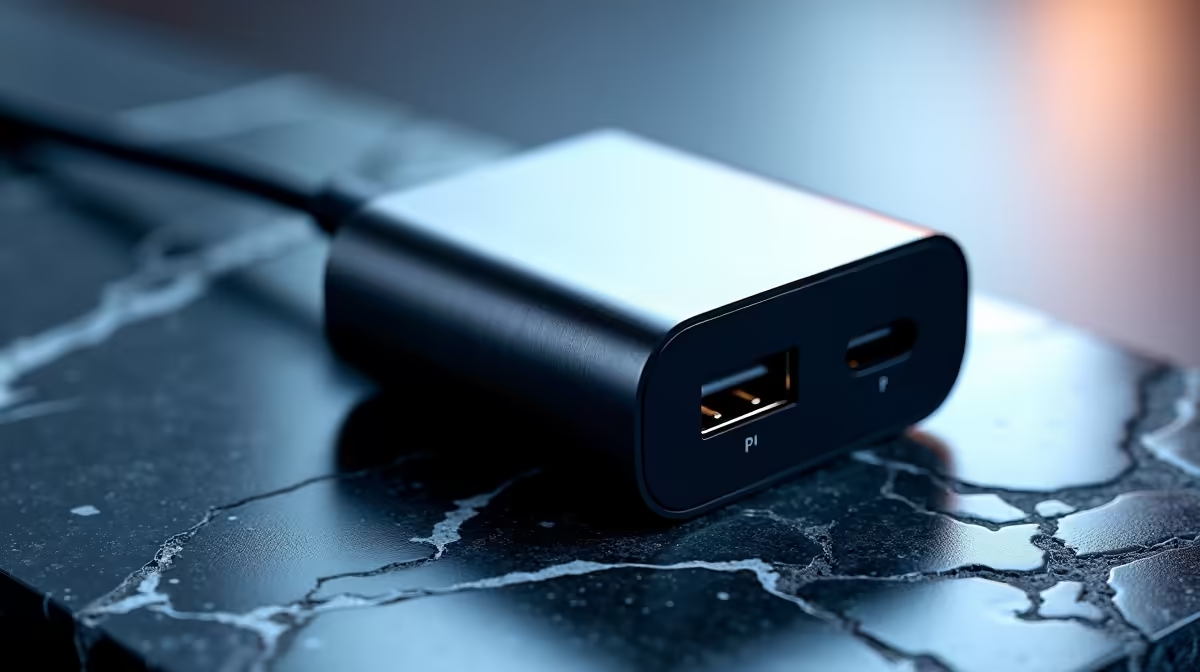
90W USB-C Charger vs 45W and 65W: Everyday Use
South African gamers and mobile pros: ever stood in a café wondering if that R650 charger will keep your laptop and phone topped up, or if you should splurge on a 90W brick? Let’s cut through the specs, real-world speed, and value so you buy a charger that fits your daily grind and wallet. 🔧⚡
Why 90W USB-C Charger vs 45W and 65W matters for everyday use
If you carry a laptop, phone and a Switch, wattage matters. A 90W USB-C charger can power larger ultraportables and fast-charge phones, while 45W and 65W bricks suit phones, tablets and many light laptops (see Evetech’s charger selection for wattage options) (https://www.evetech.co.za/PC-Components/charger-397.aspx). Think of wattage like water pressure: more power means faster top-ups when the device accepts it.
Real-world charging: speed, heat and device limits
Most modern laptops declare a maximum USB-C PD input; giving more than that won’t hurt but won’t speed things up beyond the device’s limit. For example, many thin-and-light laptops accept 65W, while mobile-first laptops or some 15-inch machines can use 90W—check your device spec pages before buying (refer to Evetech’s charger listings) (https://www.evetech.co.za/PC-Components/charger-397.aspx?max-price\=1000). Higher wattage chargers run a touch warmer under load, so look for vendors that list safety certifications and proper PD protocol support.
Everyday scenarios: which wattage to pick
- Commuter with a phone and tablet: 45W covers phones and most tablets at a lower cost. Explore budget options if you’re cost-conscious, like chargers under R500 (https://www.evetech.co.za/PC-Components/charger-397.aspx?max-price\=500).
- Hybrid work laptop user: 65W is the sweet spot for many 13–14-inch laptops and keeps things compact.
- Power users and travel rigs: 90W handles heavier laptops and lets you carry one charger for multiple devices. That flexibility matters when you’re gaming on the train or streaming at a LAN.
Tips on charging cables, ports and safety
A top-rated charger is only as good as its cable. Use USB-C cables rated for 100W if you plan to push 90W. Also check for Power Delivery (PD) compliance and short-circuit protection—Evetech’s product pages list these specs for each charger model (https://www.evetech.co.za/PC-Components/charger-397.aspx). For brand-conscious buyers, Promate offers compact USB-C PD chargers worth considering (https://www.evetech.co.za/PC-Components/charger-397.aspx?brands\=Promate). 🚀
Charging Pro Tip ⚡
Carry one higher‑wattage charger (65W or 90W) and two shorter USB-C cables. Use the high‑wattage brick for laptops and the short cables for phones. It saves bag space and ensures faster top-ups without swapping chargers.
Buying advice for South African buyers
Set a budget in ZAR, check warranty and look for local stock to avoid long shipping times. If you want one charger to rule them all, step up to 90W—but if you mostly top up a phone and tablet, a 45W unit saves cash and weight. For a quick browse of options at different price points, check Evetech’s full charger range and filter by price or brand before you decide (https://www.evetech.co.za/PC-Components/charger-397.aspx).
Ready to Find Your Perfect Match? The Mac vs Windows debate is complex, but for maximum power, choice, and value in South Africa, Windows is hard to beat. Explore our massive range of laptop specials and find the perfect machine to conquer your world.











