

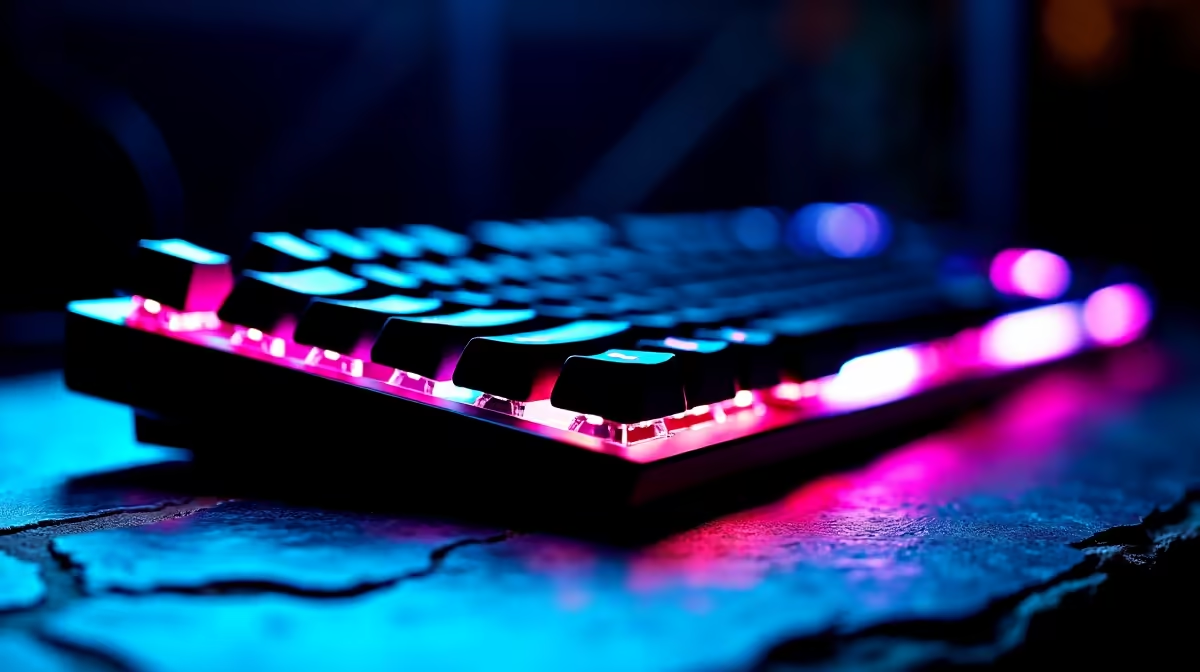
Second year at Wits University is when the workload shifts up a gear - assignments stack, late-night study sessions become the norm, and the tools you type on start to matter a lot more than they did in first year. A quality keyboard can meaningfully reduce typing fatigue during marathon essay and report-writing sessions, whether you are in your Braamfontein digs, the library, or pulling an all-nighter in a study pod. Choosing the right one in 2026 comes down to understanding what your specific Wits workflow actually demands.
Quick Answer
The best keyboard for a 2nd year Wits student balances portability, quiet switches (for library use), and a comfortable typing feel for long sessions. A compact tenkeyless or 75% mechanical keyboard with tactile-but-silent switches - like brown or silent red variants - is the sweet spot. Budget around R800–R2,500 for a reliable option that will last your full degree.
⌨️ Mechanical vs Membrane: What Wits Students Actually Need
Membrane keyboards are cheaper upfront but wear out faster and offer poor tactile feedback - not ideal when you are typing 3,000-word essays regularly. Mechanical keyboards cost more initially but last years longer and provide switch feedback that reduces mistakes and improves typing speed over time. For Wits students in 2026, a mechanical board is the better long-term investment given the volume of writing across faculties like Commerce, Humanities, Engineering, and Science.
Switch choice matters for shared spaces. Wits libraries and res common rooms are noise-sensitive environments. Cherry MX Brown equivalents give you tactile feedback without loud clicks - a good middle ground. If you share a room in Wits residences like David Webster or Jubilee Hall, silent switches (Cherry MX Silent Red or equivalent) are the considerate option. Clicky blue switches are best kept for solo home setups. Browse keyboards at Evetech to find options across all switch types within your budget.
📦 Size, Layout, and Portability for Campus Life
A full-size keyboard with a numpad is great at a fixed desk but impractical to carry between campus, res, and the library. Tenkeyless (TKL) and 75% form factors remove the numpad and compact the layout without eliminating essential keys - they fit neatly in a backpack alongside a 15-inch laptop and textbooks. 60% keyboards are the most portable but sacrifice function row keys, which can disrupt shortcuts in software used across Wits Engineering or Science labs.
Wireless connectivity is worth considering if you rotate between study spots. Bluetooth keyboards work across your laptop, tablet, and phone without dongles. Battery life should be at least two weeks per charge for reliable use without constant re-charging during exam season. A USB-C rechargeable board is preferable over AAA-battery models - easier to power from any laptop port. Evetech's keyboard range includes wireless mechanical options suited to students who move between study environments.
💡 Features Worth Paying for in 2026
Wrist fatigue is real after extended typing sessions. A keyboard with a built-in wrist rest, or a keeb paired with a separate foam or gel rest, reduces strain during report season. PBT keycaps (thicker plastic) are more durable and resist the shine that builds up on cheaper ABS caps over time - worth looking for if you type heavily every day. RGB backlighting is not essential for academic work, but single-colour white backlighting is genuinely useful during evening study sessions.
N-key rollover (NKRO) matters if you use keyboard shortcuts heavily in tools like Excel, AutoCAD, or coding environments - it ensures every simultaneous keypress registers correctly. Macro keys are rarely necessary for students but hot-swappable switch sockets are a premium feature worth paying for if you want the option to change switches without soldering later.
🎓 Budget Recommendations for Wits Students
For students on a tight budget, R800–R1,200 gets a solid entry-level mechanical keyboard. R1,500–R2,500 unlocks better build quality, wireless functionality, and premium keycaps. Spending above R3,000 on a keyboard as a student is rarely justified unless you also game seriously. Focus budget on a keyboard that solves your specific friction points - noise level, portability, or typing endurance - rather than chasing premium aesthetics.
❓ FAQ
Q: Is a mechanical keyboard worth it for a Wits student on a budget? A: Yes, for most students. The longevity, typing accuracy improvement, and reduced fatigue over a multi-year degree justify the higher upfront cost compared to a membrane keyboard that may need replacing within 18 months of heavy use.
Q: Can I use a gaming keyboard for studying at Wits? A: Absolutely. Gaming keyboards are mechanically identical to "study" keyboards - the difference is usually just RGB lighting and branding. A gaming keyboard with quiet switches is perfectly suited for academic work, and the build quality is often superior to cheaper office-labelled alternatives.
Q: What keyboard size is best for carrying to Wits campus? A: TKL (tenkeyless) or 75% are the best balance of portability and key access for campus use. They fit easily in a backpack without sacrificing the function row, which is important for software shortcuts across most Wits faculties.
Q: Do I need wireless or is wired fine for student use? A: Wired is fine if you have a fixed study setup. If you frequently move between locations - res, library, lecture venues, home - a dual-mode wireless/USB keyboard saves significant setup friction and is worth the modest premium.
Check out All Gaming Keyboards and Graphics Card Deals at Evetech — South Africa's home for gaming gear.
Ready to Find Your Perfect Match? Upgrade your study setup at Evetech - find keyboards and peripherals that keep up with your Wits workload.











