

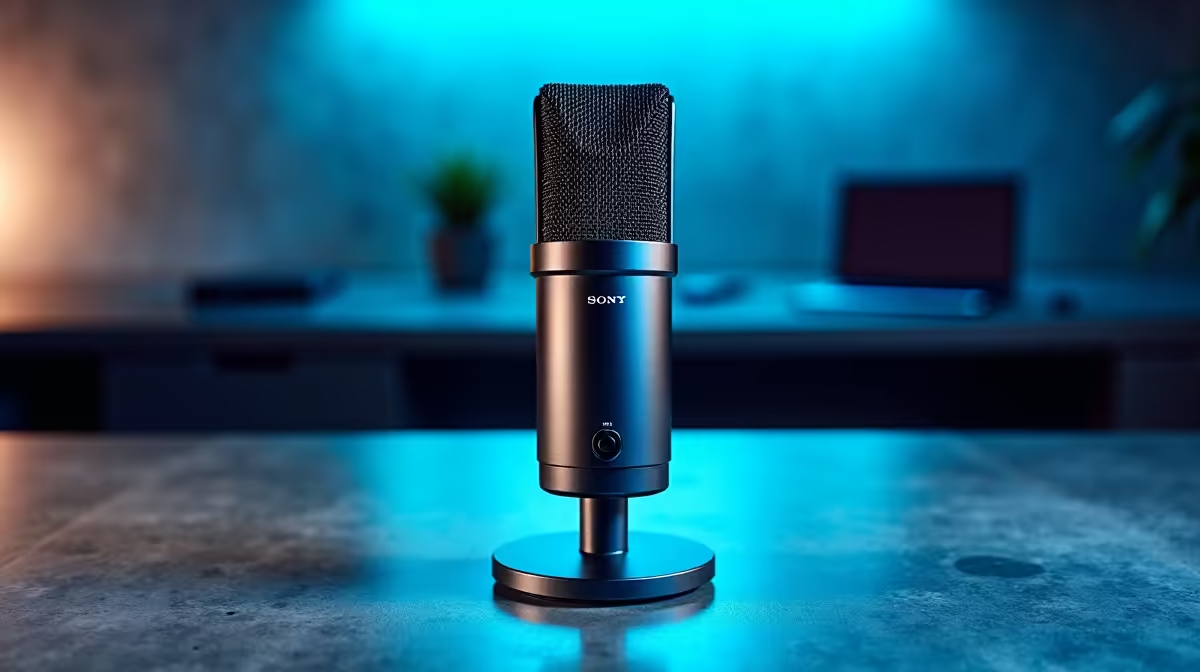
South African podcasters in 2026 have better USB microphone options than ever before, and you don’t need a full studio setup to sound professional. A quality USB mic plugs directly into your laptop or PC, needs no audio interface, and can produce broadcast-quality audio for interview shows, solo commentary, and educational content.
Quick Answer
What is the best USB microphone for podcasting in South Africa? For most SA podcasters, a cardioid condenser USB mic in the R2,000–R5,000 range delivers the best balance of quality and practicality. Focus on cardioid polar pattern, 24-bit/48kHz recording capability, and a built-in headphone jack for zero-latency monitoring - these three features separate genuinely useful podcast mics from entry-level options.
🔧 What Makes a USB Mic Good for Podcasting
Not every USB microphone is designed for voice work. Here’s what to evaluate specifically for podcasting:
Polar pattern: Cardioid is the standard for podcasting - it picks up sound from the front and rejects noise from the sides and rear. Avoid omnidirectional microphones unless you’re recording a roundtable with the mic in the centre of the table. Some premium USB mics offer switchable polar patterns (cardioid, omnidirectional, bidirectional), which gives you flexibility for interview formats.
Frequency response: A mic with a slight presence boost in the 3–8kHz range makes vocals sound clear and forward in the mix - this is why many podcast-focused mics have a slightly “brighter” character than flat studio mics.
Sample rate and bit depth: 24-bit/48kHz is the current standard for podcast production. 16-bit/44.1kHz is acceptable but gives you less headroom when editing. Most reputable USB mics released from 2023 onward capture at 24-bit minimum.
Headphone monitoring jack: A built-in headphone output lets you hear your own voice in real time without latency through your computer’s audio system. This is essential for catching issues during recording rather than discovering them in post-editing.
Gain control: A physical gain knob on the mic body is far more practical than adjusting input levels through software. This matters when moving between quiet voiceover work and louder interview formats.
📊 USB Mic Comparison: Key Specs for Podcasters
| Feature | Entry Level | Mid-Range | Premium |
|---|---|---|---|
| Bit Depth | 16-bit | 24-bit | 32-bit float |
| Sample Rate | 44.1kHz | 48kHz | 96kHz |
| Polar Patterns | Cardioid only | Cardioid only | Multiple switchable |
| Headphone Jack | Sometimes | Yes | Yes + volume control |
| Gain Control | Knob or none | Physical knob | Knob + meter |
| Build | Plastic body | Metal body | Metal + shock mount |
| Approx SA Price | R800–R2,000 | R2,000–R5,000 | R5,000+ |
💡 SA-Specific Considerations for Podcast Recording
Background noise management: South African home recording environments often have background noise from street traffic, dogs, and ambient sounds. A cardioid mic with tight pickup pattern helps, but positioning is equally important - place the mic close to your mouth (15–25cm) to keep your voice loud relative to room noise in the recording.
USB vs. USB-C connectivity: Many newer SA laptops - especially the ultrabook and student categories - only have USB-C ports. Confirm your mic ships with a USB-C cable or adapter, or budget for one separately. Most mid-range mics now include both.
Software compatibility: USB mics are plug-and-play on Windows, macOS, and most Linux distributions. Recording software like Audacity (free), Adobe Audition, and Reaper all work with any USB audio device. No drivers needed in most cases.
Remote and hybrid recording: If you’re recording interviews with guests over Zoom, Microsoft Teams, or Discord, your USB mic will be recognized immediately as an audio input device. Platforms like Riverside.fm and SquadCast let remote guests record locally at full quality, bypassing internet compression entirely - worth recommending to your guests.
Acoustic treatment: Even a high-end USB mic will sound average in a reflective room. Recording in a small room with soft furnishings (couches, carpet, curtains, bookshelves) dramatically improves quality. A R3,500 mic in a treated space will beat a R7,000 mic in a bare concrete room.
❓ Frequently Asked Questions
Do I need an audio interface with a USB podcast mic? No. USB microphones have the audio interface built in - that’s the entire point of the format. You only need a dedicated audio interface if you want to use XLR microphones, which are a step up from USB mics used in professional broadcast studios.
Can I use a USB mic for video content and streaming as well as podcasting? Absolutely. A good USB cardioid mic works equally well for YouTube voiceovers, Twitch streaming, online teaching, and corporate video recording. The investment covers all voice recording use cases, not just podcasting.
What’s the difference between a condenser and dynamic USB mic for podcasting? Condenser microphones are more sensitive and capture more detail - great for treated recording spaces. Dynamic microphones are less sensitive and reject room noise better - better for untreated spaces or environments with background noise. For most SA home setups without acoustic treatment, a dynamic USB mic (like a USB version of the classic broadcast-style mic) will produce more consistent results than a sensitive condenser in the same space.
Evetech stocks Graphics Card Deals and Evetech Best Sellers — shop online with fast delivery across South Africa.
Ready to Find Your Perfect Match? Shop at Evetech











