Quick Answer
Pairing a Core i5-14600K with 32GB of DDR4 at 3600MHz is a well-matched and high-performing configuration in 2026. The i5-14600K benefits clearly from faster DDR4 speeds, and 3600MHz sits at the sweet spot for this platform where gains are real but instability risk is low. The 32GB capacity handles gaming, streaming, content creation, and multitasking without memory pressure, making this a strong all-rounder build configuration in SA.
The Core i5-14600K remains one of the most popular mid-to-high performance CPUs among South African PC builders in 2026, and paired with 32GB of DDR4 running at 3600MHz it delivers a genuinely balanced system. The question of how much the memory speed actually matters and what the best configuration looks like is worth examining in detail, because DDR4 tuning on the Intel 700 series platform has some nuances that affect real-world results.
Performance Impact of DDR4 3600MHz on the i5-14600K
The Core i5-14600K on the Z790 platform responds measurably to memory frequency increases across both gaming and productivity workloads. Moving from DDR4 2133MHz (the spec-default) to 3600MHz typically produces a 5 to 12 percent improvement in gaming frame rates depending on the title, with CPU-limited games like CS2, Valorant, and simulators showing the largest gains. In rendering and compression tasks the improvement is 4 to 8 percent. The reason is memory bandwidth and latency feeding the processor's cache hierarchy - the 14600K's combination of P-cores and E-cores benefits from lower memory latency particularly in mixed workload scenarios. At 3600MHz with CL18 or CL16 timings, you are running near the optimal point for this platform. Going to 4000MHz or 4400MHz offers diminishing returns and raises instability risk significantly.
32GB vs 16GB - Is the Extra RAM Worth It in 2026
In 2026, 32GB is the right choice for this CPU tier. Modern AAA games regularly use 12 to 16GB of system RAM under gaming conditions, and if you are also running Discord, a browser, or streaming software simultaneously, 16GB creates memory pressure that degrades performance. Valorant and Apex are light, but titles like Microsoft Flight Simulator, Hogwarts Legacy, and the Elden Ring successor titles push toward 14GB in active use. For content creation workflows alongside gaming - video editing in DaVinci Resolve, 3D rendering, or multi-tab research - 32GB is a comfortable ceiling rather than a tight constraint. In SA rands, the price difference between 16GB and 32GB DDR4 3600MHz kits has narrowed significantly, making 32GB the sensible choice for a platform you expect to use for three to five years.
Best Configuration and BIOS Settings
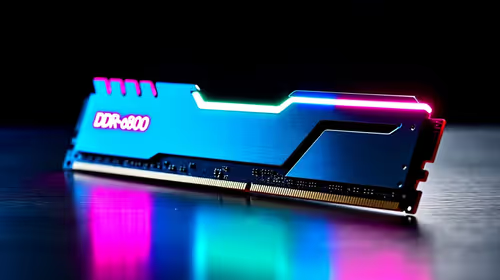
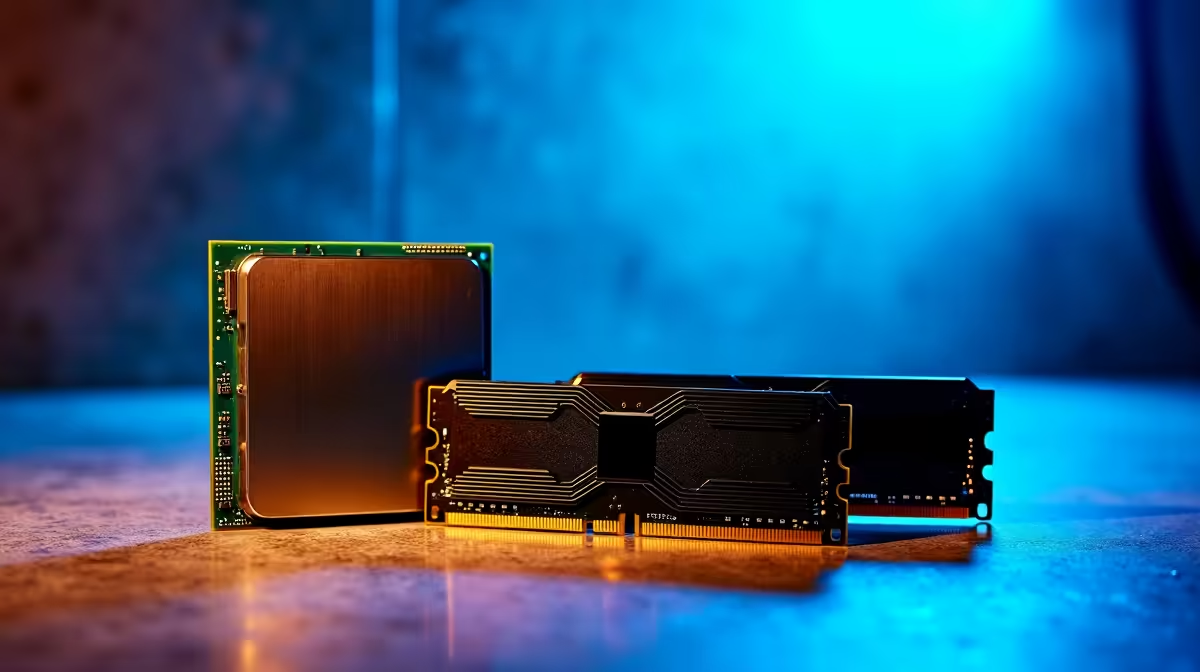
For optimal performance from a 32GB DDR4 3600MHz kit on a Z790 board, enable XMP Profile 1 in BIOS immediately after building. This automatically applies the correct 3600MHz frequency and associated timings. Use a dual-rank kit (two sticks of 16GB) rather than a single 32GB stick for better interleaving and memory controller performance. Kits from reputable manufacturers with Samsung B-die or Hynix A-die ICs typically reach 3600MHz CL16 without manual tuning. If your system is stable at 3600MHz XMP for 24 hours under stress testing, there is rarely reason to push higher - the gains above 4000MHz on the 14600K platform do not justify the tuning effort. Pair this memory configuration with a Z790 motherboard rather than B760 if you want full XMP flexibility; B760 supports XMP to 3600MHz but headroom for adjustment is more limited.
Real-World Gaming and Productivity Results
In practical SA use, a build around the Core i5-14600K with 32GB DDR4 3600MHz and an RTX 4070 or RTX 4070 Ti handles every gaming scenario in 2026 with headroom. Streaming at 1080p60 while gaming introduces minimal performance penalty thanks to the E-core cluster handling the encoding workload. Multi-monitor setups with productivity apps running alongside games stay responsive. Video editing in 1080p is smooth; 4K editing is manageable though not instant. This configuration represents the mid-to-high tier of SA gaming builds, typically priced between R20,000 and R28,000 all-in depending on GPU choice, storage, and cooler selection.
Frequently Asked Questions
Q: Should I run the i5-14600K with DDR4 or DDR5 in 2026? A: Both work well. DDR5 offers higher bandwidth at the cost of higher latency and kit price. For gaming, DDR4 3600MHz on a Z790 DDR4 board is comparable to mid-range DDR5 in most titles and is typically less expensive in SA. If budget allows, DDR5 5600MHz or faster is marginally better for future-proofing.
Q: Does the i5-14600K need a high-end cooler with 32GB DDR4? A: The memory kit does not affect cooling requirements. The 14600K is a power-hungry chip under load, drawing up to 125W at stock and more when boosting. A 240mm AIO or a large air cooler like a Deepcool AK620 is recommended for sustained workloads.
Q: What is the best DDR4 3600MHz kit for the i5-14600K in SA? A: Look for dual-stick 2x16GB kits rated at 3600MHz CL16. Kits from Corsair, G.Skill, Kingston, and Crucial are all available locally through Evetech and perform well at this speed on the 700-series Intel platform.
Q: Can I run 4 sticks of 16GB DDR4 for 64GB total on this platform? A: Yes, Z790 boards support four DIMM slots. However, four-stick configurations may not run as high a frequency as two-stick configs. 3600MHz with four sticks is achievable but verify your motherboard's QVL list.
Ready to Find Your Perfect Match? Find the best gaming PC deals built around Intel Core i5-14600K and matched memory configurations.