Quick Answer
Pairing the Core Ultra 5 245K with 32GB of DDR5 at 5600MHz is a strong, well-balanced configuration for gaming and productivity in 2026. The memory speed sits in the performance sweet spot for Arrow Lake, and 32GB capacity handles modern multi-tasking without constraint.
Core Ultra 5 245K: What You Are Working With
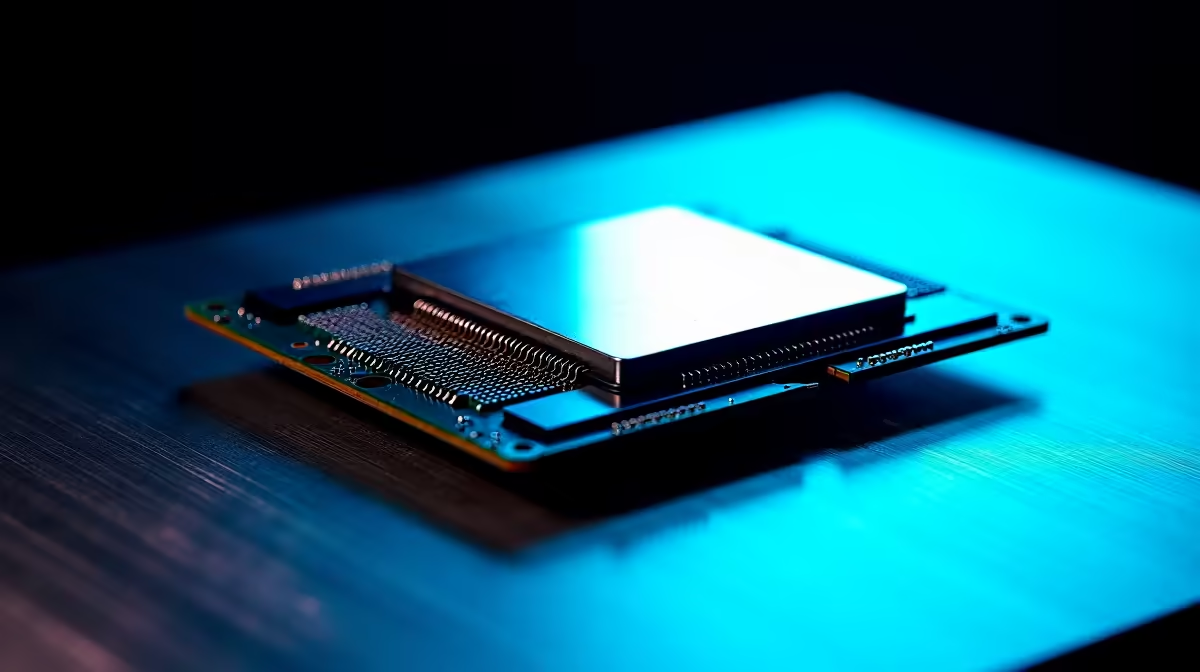
The Core Ultra 5 245K is Intel's mainstream performance CPU on the Arrow Lake architecture and LGA 1851 platform. It brings P-cores and E-cores to a single die design without the chiplet approach of AMD's competition, with a focus on per-core performance and efficiency. The 245K is an unlocked processor -- the K suffix confirms this -- which means it can be pushed beyond its base frequency on a compatible Z890 or supported B860 board.
Arrow Lake brought a reworked memory controller that responds differently to DDR5 frequencies than Raptor Lake did. Intel formally recommends DDR5-6400 as the optimal frequency for Arrow Lake, but the gap between DDR5-5600 and DDR5-6400 in gaming is modest. For most SA buyers purchasing this config, DDR5-5600 at 32GB is a sensible, widely compatible, and cost-effective choice.
Does DDR5-5600MHz Leave Performance on the Table?
Compared to DDR5-6000 or DDR5-6400 with tight timings, DDR5-5600MHz on the Core Ultra 5 245K results in a small but measurable difference -- typically 2 to 5 percent in gaming frame rates in titles that are memory-latency sensitive, and less than 1 percent in most content creation and productivity workloads.
In practical ZAR terms: the price difference between a DDR5-5600 32GB kit and a DDR5-6400 32GB kit with comparable timings is real. For most SA builders prioritising value, DDR5-5600 is the right call. If you want to squeeze the last few percent out of the platform, a DDR5-6000 CL30 kit is the recommended sweet spot for Arrow Lake before costs scale sharply.
Optimal Configuration for the 245K with 32GB DDR5
Memory kit: 2x16GB DDR5-5600 or DDR5-6000. Two-DIMM configurations are always recommended over four-DIMM on DDR5 for stability at higher frequencies.
XMP/EXPO profile: Enable XMP 3.0 in BIOS. Arrow Lake's memory controller handles XMP profiles well at DDR5-5600. Avoid manually pushing timings beyond the rated profile unless you have experience with DDR5 tuning.
CPU cooler: The 245K generates meaningful heat at load, particularly with all-core boost engaged. A 240mm AIO or a premium tower air cooler is recommended. Budget South African coolers in the R600 to R1,200 range from established brands cover this adequately.
Motherboard: A mid-range Z890 board is ideal for the 245K to allow full frequency and voltage control. B860 works but limits memory overclocking. Target boards with solid VRM -- at least a 12-phase design -- to sustain all-core performance.
Storage: Pair with a PCIe 5.0 NVMe drive if your board supports it. Arrow Lake platforms fully support Gen5 storage, and the 245K's workload handling benefits from fast sequential read in creative and data-heavy applications.
Use Cases: Gaming vs. Productivity
For gaming, the Core Ultra 5 245K with 32GB DDR5-5600 handles every current title at 1440p and 4K paired with a capable GPU without a CPU bottleneck. The 32GB capacity ensures no memory pressure even with Chrome, Discord, Spotify, and a streaming application running alongside the game.
For productivity -- video editing, 3D rendering, code compilation, data processing -- 32GB is the minimum comfortable working set. Projects in DaVinci Resolve or Blender with GPU rendering will use the CPU primarily for decoding and preprocessing, where the 245K's E-core efficiency cluster helps keep workloads moving between frames.
South African students managing large datasets, CAD files, or content creation projects alongside gaming benefit meaningfully from the 32GB capacity versus a 16GB starter configuration.
Frequently Asked Questions
Is DDR5-5600MHz the best memory speed for the Core Ultra 5 245K?
DDR5-5600 is a solid, compatible choice. DDR5-6000 CL30 offers a small performance gain for a moderate price increase. DDR5-6400 and beyond adds cost without proportional real-world gains for most workloads.
Can the Core Ultra 5 245K be overclocked on a B860 motherboard?
B860 limits memory and CPU overclocking compared to Z890. You can run XMP profiles within B860's supported frequency range, but full manual CPU frequency overclocking requires a Z890 or higher-tier board.
Is 32GB of DDR5 enough for gaming and content creation in 2026?
Yes for most workflows. Video editors working with 4K raw footage or large multi-layer projects may find 64GB useful, but 32GB handles the majority of gaming plus productivity use cases comfortably.
Does Arrow Lake benefit from faster DDR5 more than previous Intel generations?
Arrow Lake's memory controller is more sensitive to DDR5 frequency than Raptor Lake's was. The gains from going above DDR5-5600 are real but modest in gaming. Productivity workloads that are memory-bandwidth intensive see more benefit.
Ready to Find Your Perfect Match? Build your Arrow Lake system with the right processor from the start. Shop CPUs at Evetech