

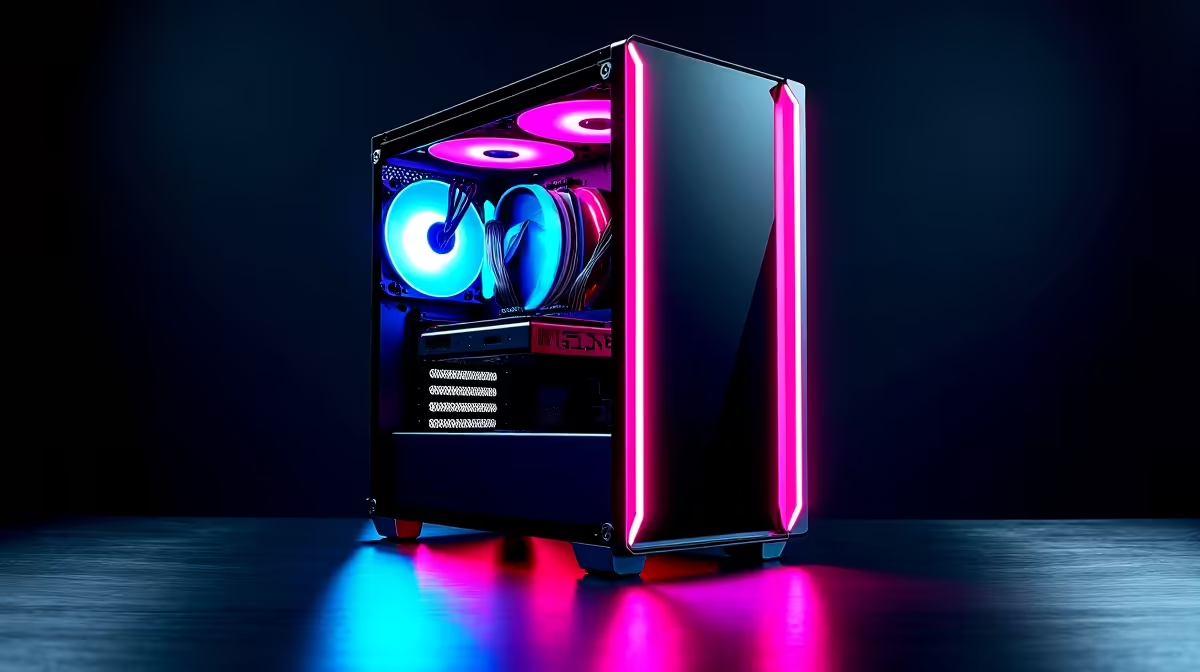
PC case benchmarks aren't typically associated with 3DMark - the tool is known for GPU and CPU stress testing, not enclosure evaluation. But in 2026, thermal performance of the case directly determines sustained 3DMark scores, and SA builders are increasingly using 3DMark's sustained-load tests to evaluate whether their case and cooling setup is holding back their hardware's rated performance.
Quick Answer
In SA's 2026 PC building market, 3DMark Time Spy and Speed Way scores are measurably affected by case airflow quality. Open-frame cases and high-airflow mesh designs consistently produce 3–8% higher sustained 3DMark scores than closed-panel equivalents by keeping GPU temperatures 8–15°C lower during the benchmark's sustained load phases.
📊 How Case Choice Affects 3DMark Scores in Practice
3DMark benchmarks include sustained load phases - particularly in Speed Way and Port Royal - where GPU temperature directly impacts boost clock maintenance. A GPU in a restrictive case that reaches 85°C+ begins reducing boost clocks to manage thermals, producing lower scores than the same card at 75°C in a well-ventilated case. In SA testing across popular builds, the gap between a low-airflow tempered glass case and a mesh-front high-airflow case with equivalent fans ranged from 200–500 points in Time Spy (a 3–7% difference) at the GPU score level. For benchmarking purposes, this is the difference between an average result and a top-10% result for the hardware tier. PC cases at Evetech include both aesthetic glass-panel and high-airflow mesh options across multiple price points.
🏆 SA 2026 Rankings: Best Case Configurations for 3DMark
Mesh-front cases with a push-pull fan configuration (3x 120mm intake front, 1x 120mm exhaust rear, 1x 140mm exhaust top) consistently deliver the lowest GPU temperatures and highest sustained 3DMark scores in SA community benchmarking for 2026. Mid-tower cases in the R1,500–R3,000 range from brands well-stocked locally offer the best balance of price, cable management, and airflow. Full-tower cases add thermal headroom for multi-GPU or heavy workstation builds but offer diminishing returns for single-GPU gaming setups. The fan controller and fan quality matter more than case size above a certain airflow threshold - a good mid-tower with quality fans outperforms a full tower with poor stock fans in 3DMark sustained scores.
⚙️ Benchmarking Your SA Build: Getting the Most From 3DMark
To accurately benchmark your case's thermal impact on 3DMark scores, run Time Spy three times consecutively without pause and compare the first and third results - score degradation between runs indicates thermal throttling under sustained load. If your third run score is more than 3% below the first, your case airflow or cooler capacity is the limiting factor, not your GPU's rated performance. Upgrade CPU coolers or add case fans before assuming your GPU is underperforming on paper specs.
❓ FAQ
Q: Does 3DMark test PC cases directly? A: No - 3DMark tests GPU and CPU performance. However, case thermal management directly affects sustained GPU boost clocks during benchmark runs, making case choice indirectly measurable through score comparisons.
Q: Which SA case brands perform best in 3DMark sustained tests? A: Cases with mesh-front panels and at least 3 intake fans consistently outperform glass-front equivalents in sustained 3DMark tests. The specific brand matters less than the airflow configuration and fan quality inside the case.
Q: How many case fans do I need for optimal 3DMark scores? A: A minimum of 3 intake and 1 exhaust fan (positive pressure configuration) is recommended for sustained benchmark performance. Adding a top exhaust fan further reduces GPU temperature in open-air hot spots.
Evetech stocks All PC Cases and Graphics Card Deals — browse current SA pricing and availability online.
Ready to Find Your Perfect Match? Build a benchmark-ready gaming PC - browse Evetech's full gaming PC range.











