

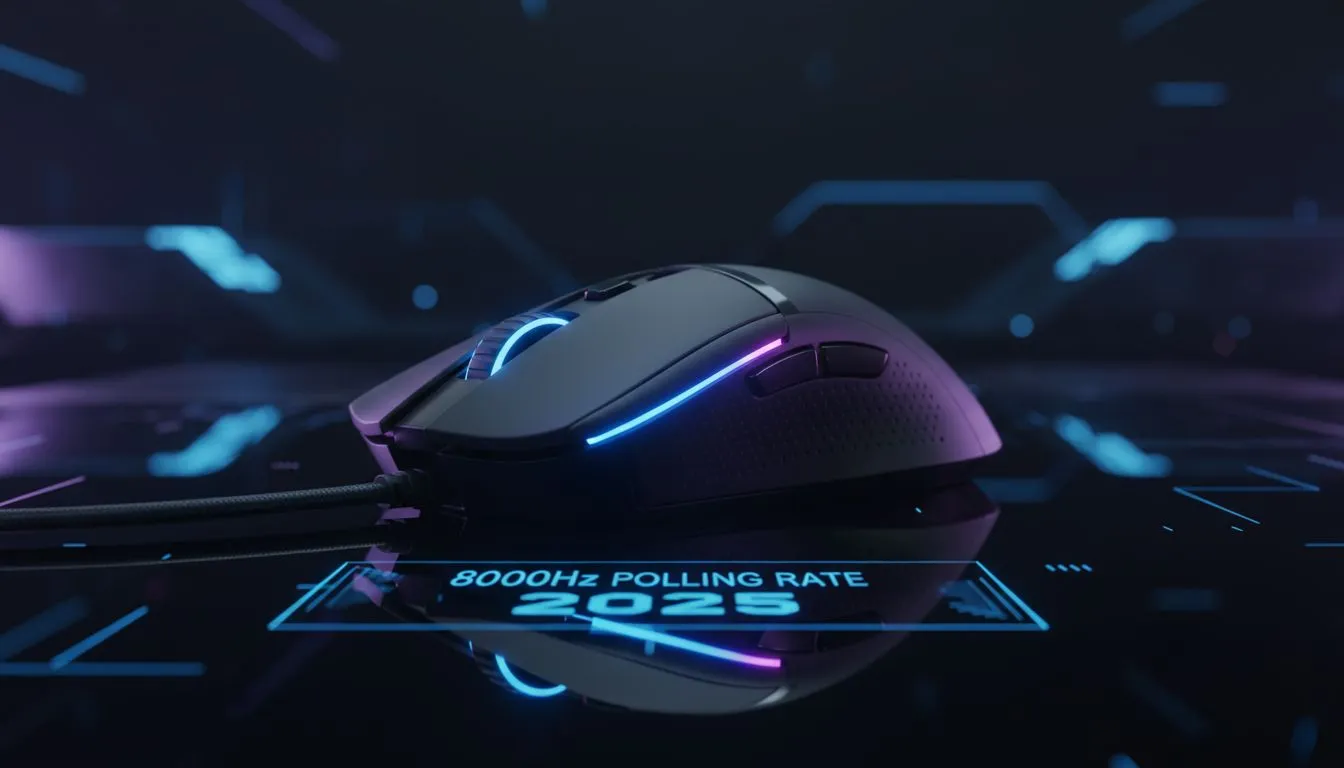
Is 8000Hz Polling Rate the Secret to Perfect Aim?
You line up the perfect headshot in Valorant. You click. You miss. Was it you, or was it your gear? In the ruthless world of South African esports, milliseconds separate the legends from the spectators. Enter the 8000Hz polling rate... a tech leap promising to make your aim truer than ever. But is this speed essential, or just marketing hype designed to drain your wallet? Let’s find out.
What Does 8000Hz Actually Mean?
To understand the hype, we need to look at the numbers. Most standard peripherals operate at 1000Hz. This means your device reports its position to your PC 1,000 times per second, creating a 1ms delay. An 8000Hz polling rate ramps that up to 8,000 reports per second, dropping the delay to a staggering 0.125ms.
This results in "micro-stutter" reduction. Your cursor movement becomes visibly smoother on high-refresh screens, allowing for tracking that feels almost telepathic. To experience this raw speed, you naturally need a high-end gaming mouse equipped with the latest sensors and MCUs capable of handling this data torrent.
The Hidden Cost: CPU Demand
Here is the catch nobody tells you... speed is heavy. sending 8,000 signals a second puts a significant load on your processor. If your rig is aging, this can actually cause frame drops in CPU-intensive games like CS2 or Warzone.
To run 8K peripherals smoothly, your system needs to be balanced. Your storage needs to keep up with asset streaming, so ensure you are running fast solid state drives to eliminate system bottlenecks. Furthermore, there is absolutely no point in transmitting data this fast if your screen cannot display it. You need high-refresh PC monitors—ideally 240Hz or 360Hz—to visually benefit from the smoother cursor path. 🚀
Optimisation Pro Tip ⚡
If you buy an 8KHz mouse, don't just plug and play. Many games require you to enable 'Raw Input' in the settings to handle the high data rate without bugging out. Also, check your Windows mouse settings to ensure 'Enhance pointer precision' is turned OFF for consistent tracking.
It's Not Just About the Mouse
While the mouse gets the glory, the rest of your desk setup contributes to total system latency. Competitive gaming is an ecosystem.
For movement, input lag on your keys can mean getting tagged before you reach cover. While the cheapest gaming keyboard in South Africa is fine for casual play, competitive setups are moving toward magnetic or optical switches that can also handle higher polling rates. Even console converts moving to PC are seeking out overclockable gaming controllers to minimize that input delay gap.
The Streamer's Dilemma
If you are a content creator, 8000Hz polling adds another layer of complexity. Since the polling rate eats into CPU resources, it might fight with your encoding software (like OBS) for processing power.
If you plan to broadcast your gameplay while using ultra-fast peripherals, double-check your streaming essentials. You might need a dual-PC setup or a high-core-count CPU to manage the load. Audio timing matters too; you don't want your reaction to be out of sync with your voice. A quality microphone ensures your comms are crisp, while low-latency headphone headsets are non-negotiable for hearing footsteps the instant they happen.
The Verdict: Future or Fad?
The 8000Hz polling rate is not just a gimmick; it is the mathematical future of competitive aiming. However, it yields diminishing returns if the rest of your PC isn't up to scratch. It is for the player who has optimised everything else and is hunting for that final 1% advantage. ✨
Ready to Upgrade Your Aim? Whether you need the blistering speed of 8000Hz or a reliable wireless workhorse, the right gear makes the difference between a win and a loss. Browse our premium gaming mice and find the weapon that fits your grip and your budget.











