

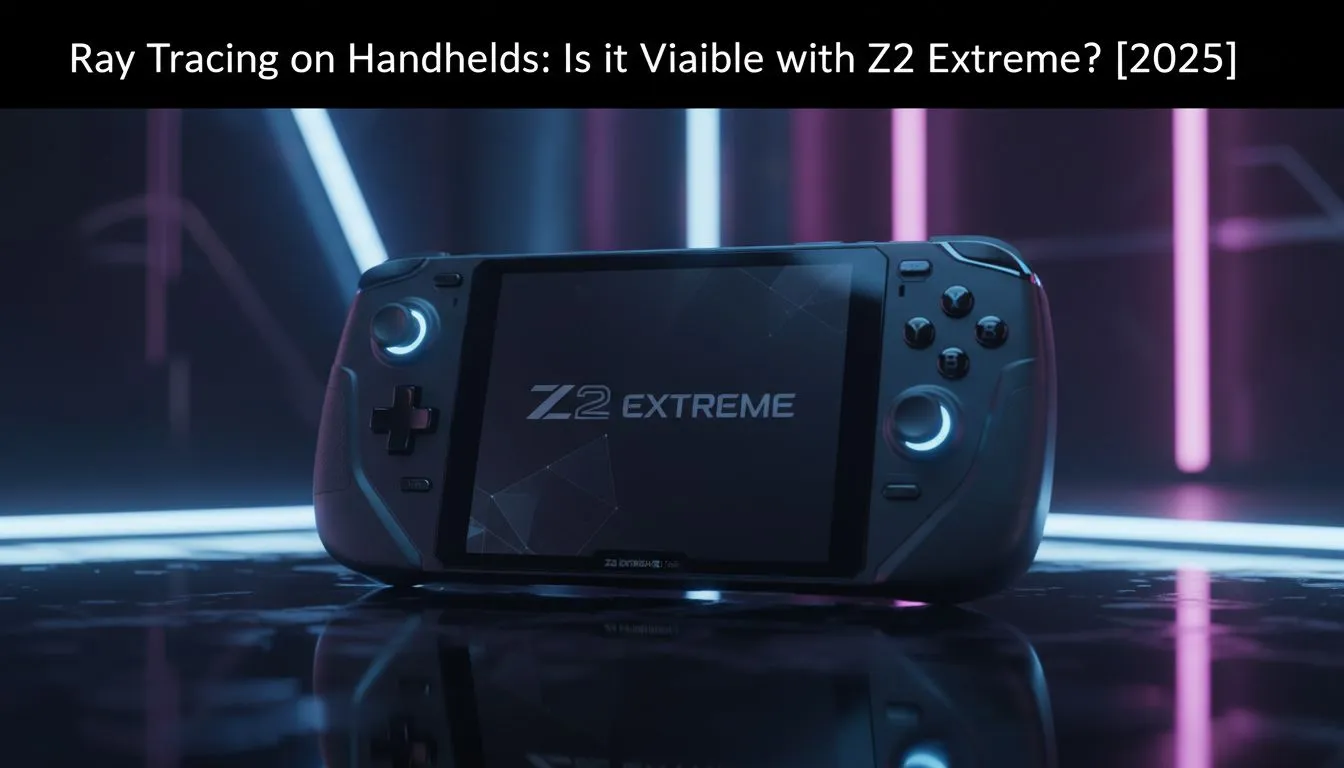
Remember when "portable gaming" meant a Game Boy with a dim green screen? Fast forward to 2025, and we’re talking about real-time light simulation in the palm of your hand. With the AMD Z2 Extreme chip on the horizon, South African gamers are asking one big question: can a battery-powered device really handle realistic lighting without melting... or dying in twenty minutes? Let’s dive in. 🎮
The Evolution of Handheld Power
The first generation of Windows handhelds proved that PC gaming doesn't need a desk. Devices powered by the Z1 Extreme chip showed us that 1080p gaming on the go is viable. However, the upcoming Z2 Extreme promises a massive leap in efficiency. This isn't just about raw framerates; it's about making AMD Z2 Extreme Ray Tracing a reality without tethering you to a wall socket—a crucial feature when you're trying to conserve power during a bout of load shedding.
If you are looking to jump into the ecosystem now, the market is already flooded with premium handheld gaming consoles that offer incredible performance for the price.
Ray Tracing: Dream or Reality?
Ray tracing has traditionally been the heavyweight champion of GPU resource hogging. On a desktop with a 1000W PSU? Easy. On a 7-inch device? That's tricky. The Z2 Extreme aims to utilise RDNA 3.5 (or potentially RDNA 4) architecture to handle these calculations more intelligently.
We expect pioneers like the ASUS ROG Ally series to be among the first to adopt these new chips. The goal is to balance visual fidelity with playable framerates, likely leaning heavily on FSR (FidelityFX Super Resolution) upscaling technologies to keep things smooth.
Handheld Optimisation Tip ⚡
When chasing better visuals on a small screen, turn Ray Tracing off for fast-paced shooters. The visual difference on a 7-inch display is negligible when you're moving fast, but the battery drain is massive. Save RT for atmospheric, slower-paced RPGs where you can appreciate the lighting.
Screen Real Estate and Immersion
It's not just about the chip inside; it's about the display it powers. Ray tracing shines best on high-quality screens with deep blacks and vibrant colours. This is where devices like the Lenovo Legion Go have set a high bar with their massive QHD panels.
For the Z2 Extreme to truly succeed in 2025, it needs to drive these high-resolution displays efficiently. South African gamers want crisp visuals, but not at the expense of carrying a portable power station everywhere they go.
The Competition Heats Up
AMD isn't the only player in the arena. Intel has been making waves with their Core Ultra processors, powering alternatives like the MSI Claw lineup. This competition is excellent for consumers because it drives innovation and keeps pricing competitive in ZAR.
Is 2025 the Year of Portable Ray Tracing?
So, is handheld gaming ready for ray tracing in 2025? The answer is a cautious "yes." With the Z2 Extreme, we will likely see "Low" to "Medium" RT settings becoming playable at 30-45 FPS on portable devices. It won't match a desktop RTX 4090, but seeing realistic reflections on a bus ride? That is a technological marvel we are ready for. 🚀
Level Up Your Commute Why wait for the future when high-performance gaming is available right now? Whether you team Red or Team Blue, we have the portable power you need. Browse our full range of Handheld Gaming Consoles and take your steam library wherever life takes you.











