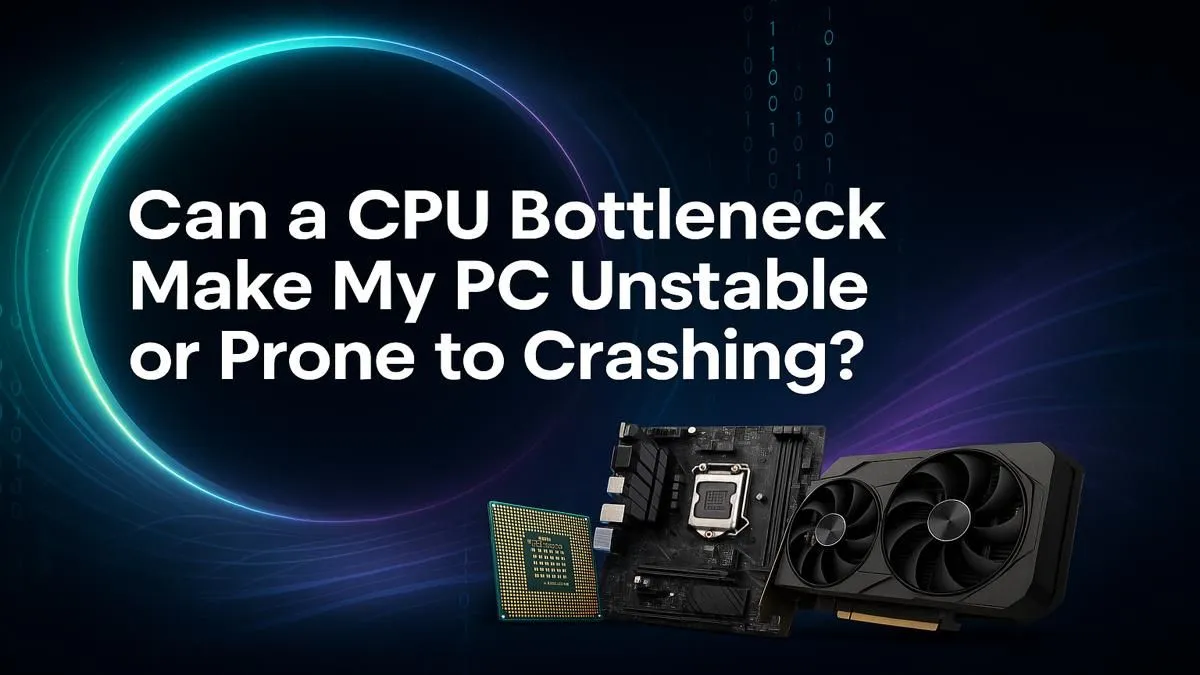
You're pinned down in a firefight in Warzone, your squad's counting on you... and your PC freezes for a split second. That stutter isn't just frustrating; it could be a warning sign. While many gamers blame their GPU, the real culprit might be your processor. But can a simple performance dip actually lead to a full-blown CPU bottleneck crash? Let's investigate why your PC might be feeling unstable and what you can do about it. 🚀
Understanding the CPU Bottleneck
Before we talk about crashes, what even is a CPU bottleneck? Imagine your powerful new graphics card is a master chef, ready to prepare a five-star meal (your game's stunning visuals). Your CPU is the kitchen assistant, chopping the ingredients (processing game logic, physics, and AI). If the assistant is too slow, the chef has to wait. That's a bottleneck.
It's not about having a "bad" CPU, but a mismatch in power. Your GPU is sitting idle, waiting for instructions, which results in lower frame rates and stuttering. A well-balanced PC ensures every component can work at its full potential. To achieve this, you need to pair the right parts, starting with a solid selection of CPU processors available online.
So, Can a CPU Bottleneck Crash Your PC?
Here’s the straight answer: a CPU bottleneck itself rarely causes a direct system crash like a Blue Screen of Death (BSOD). Windows is designed to manage resources, and a slow processor just means... well, slow performance.
However, a severe and prolonged bottleneck can absolutely make your PC unstable and lead to a crash indirectly. Here’s how:
- Extreme Heat: A CPU constantly running at 100% to keep up with the GPU generates a massive amount of heat. If your cooling solution isn't up to the task, the CPU will overheat. To protect itself from damage, it will first throttle (slow down dramatically), and if temperatures continue to rise, it will trigger an emergency shutdown. That's your crash.
- System Stress: When the CPU is maxed out, it has no headroom to handle other essential background tasks from your operating system. This can cause programs to become unresponsive, drivers to fail, and the entire system to freeze, forcing a reboot. This is the scenario that feels most like a CPU bottleneck crash.
How to Spot a Bottleneck Before It Causes Instability
Think your processor might be holding you back? It’s easy to check. You don't need fancy software, just the tools already on your PC. Keep an eye out for these tell-tale signs while you're gaming. 🔧
Key Symptoms
- High CPU, Low GPU Usage: Your CPU usage is pinned at 90-100%, while your GPU is chilling at 50-60%. This is the classic sign.
- Inconsistent Frame Rates: Your FPS is all over the place, with sudden drops and jarring stutters, especially in busy scenes with lots of action or characters.
- Input Lag: There's a noticeable delay between when you move your mouse or press a key and when the action happens on screen.
Whether you're running a powerful new AMD CPU or a reliable workhorse from the Intel CPU lineup, pairing it with an overly ambitious GPU can lead to these issues.
Quick Bottleneck Check ⚡
While your game is running, press Ctrl + Shift + Esc to open the Windows Task Manager. Go to the "Performance" tab. If you see your CPU graph hitting 100% consistently while your GPU graph is significantly lower, you've likely found your bottleneck. It’s the quickest way to diagnose the problem without installing extra software.
Fixing the Bottleneck and Restoring Stability
If you've confirmed a CPU bottleneck is making your PC unstable, you have a few options to fix it.
- Optimise In-Game Settings: Lower CPU-intensive settings like shadow quality, physics detail, and view distance. This reduces the load on your processor, giving it more breathing room.
- Close Background Apps: Make sure unnecessary programs like web browsers, Discord, or streaming software are closed while you game. Every little bit of CPU power helps.
- Check Your Cooling: A CPU running hot is a CPU that can't perform at its best. Ensure your CPU cooler is clean, the thermal paste is fresh, and your case has good airflow. Sometimes, a simple cooler upgrade can make a world of difference.
- Upgrade Your CPU: This is the most effective long-term solution. Upgrading your processor to better match your GPU's capabilities will eliminate the bottleneck, boost your frame rates, and create a much more stable and enjoyable gaming experience.
A balanced system is a happy system. By addressing the root cause of a potential CPU bottleneck crash, you're not just stopping the instability; you're unlocking the true performance you paid for. ✨
Ready to Unshackle Your GPU?
A CPU bottleneck can hold back your entire system. Don't let an underpowered processor ruin your gaming experience. For the best performance, balance is key. Explore our massive range of PC components and find the perfect parts to build a stable, powerful rig.