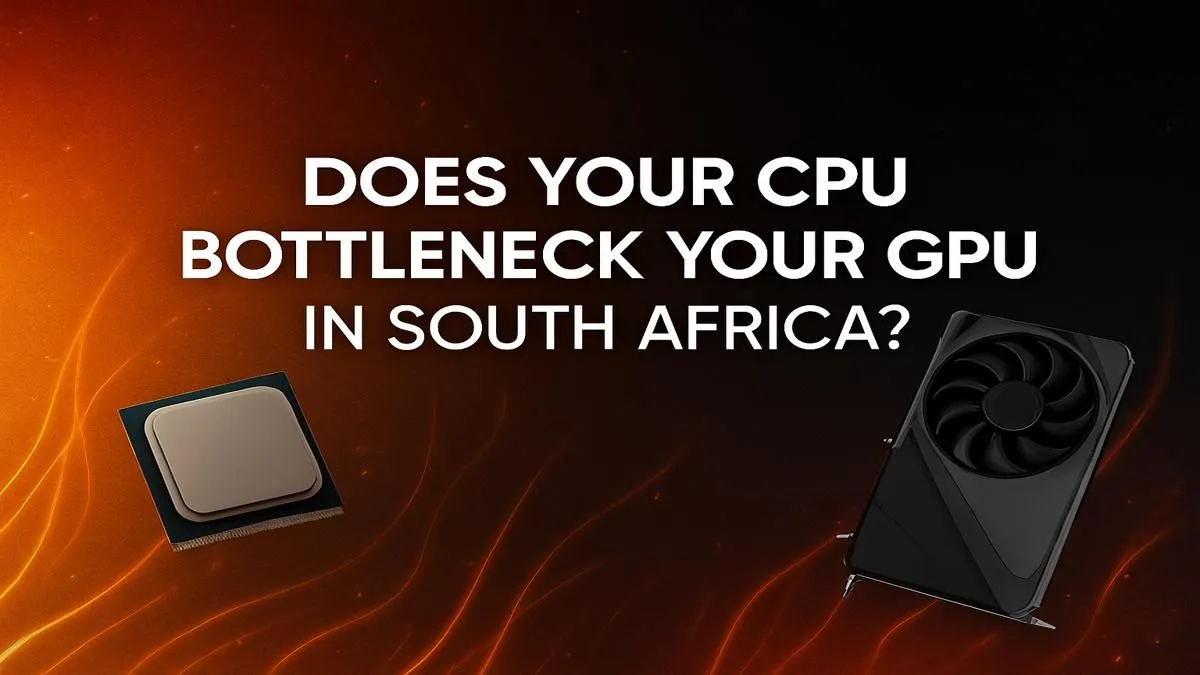
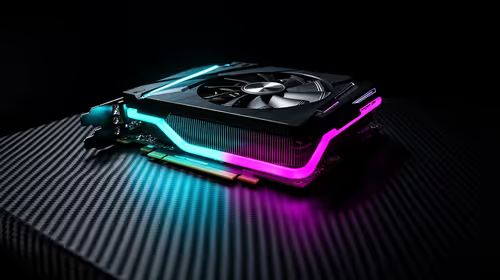
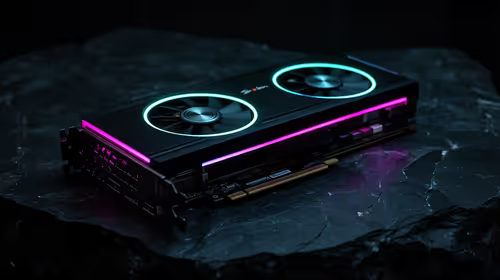
You've just dropped serious cash on a beastly new graphics card. You're dreaming of silky-smooth frame rates in Warzone and stunning visuals. But when you fire it up… the performance is just… meh. Sound familiar? You might be facing a classic PC-building problem, and it's a common CPU bottleneck in South Africa, where balancing your budget is key. Your powerful new GPU is essentially waiting for your older CPU to catch up.
What Exactly Is a CPU Bottleneck?
Think of your PC as a high-speed assembly line. The CPU (Central Processing Unit) is the worker that prepares tasks—like calculating game physics and AI—and sends them down the line. The GPU (Graphics Processing Unit) is the specialised machine at the end that takes those prepared tasks and renders the beautiful frames you see on screen.
A CPU bottleneck happens when your CPU can't prepare those tasks fast enough for your powerful GPU. ⚡ Your expensive graphics card ends up sitting idle, waiting for instructions. The result? Lower frame rates, stuttering, and the feeling that you didn't get your money's worth.
How to Spot a CPU Bottleneck in Your Rig
Not sure if your CPU is the culprit slowing your GPU down? It’s easier to diagnose than you think. Here are two simple methods to check if you’re dealing with a performance bottleneck.
1. The In-Game Performance Test
This is the quickest way to get a clue. If you're playing at a lower resolution like 1080p (which many South African competitive gamers prefer for high refresh rates) and your frame rates are low despite having a high-end GPU, that’s a big red flag.
Why? Because at 1080p, the GPU can render frames incredibly fast, putting more pressure on the CPU to keep up. If you lower your graphics settings from Ultra to Low and your FPS barely improves, a CPU bottleneck is the likely cause.
2. Use Monitoring Software
For a more scientific answer, use a tool like MSI Afterburner with RivaTuner Statistics Server. Fire up your favourite game and look at your hardware usage percentages.
- High CPU Usage (90-100%) + Low GPU Usage (below 90%): This is the classic sign of a CPU bottleneck. Your CPU is running flat-out, while your GPU is cruising because it isn't receiving data fast enough. If you see this, it might be time to start browsing for new CPU processors online to restore balance to your system.
Quick Diagnosis Tip 🔧
An easy way to test for a bottleneck is to increase your game's resolution. If you go from 1080p to 1440p and your frame rate doesn't drop much, it confirms your GPU had spare power and was being held back by the CPU at the lower resolution. This shifts the workload more onto the GPU.
Fixing the Bottleneck: Your Upgrade Path
So you've confirmed your CPU is holding you back. What now? You have a couple of options to solve the problem and unlock the performance you paid for. An upgrade is usually the most effective solution.
For those seeking incredible value and multi-core performance for both gaming and productivity, the latest range of AMD CPUs offers fantastic options across various price points. They are often praised for their efficiency and powerful integrated platform features.
On the other hand, if your main goal is squeezing out every last frame in competitive titles, the raw single-core speed of a top-tier Intel CPU is tough to beat. Finding the right balance for your specific needs and motherboard is crucial for a successful upgrade. 🚀
Ultimately, eliminating a CPU bottleneck in South Africa means creating a balanced system where your components work together in harmony, not against each other.
Ready to Unleash Your GPU's Full Power?
Don't let a CPU bottleneck hold your rig back. A balanced PC is a happy PC. Explore our massive range of CPUs and find the perfect processor to match your graphics card today.