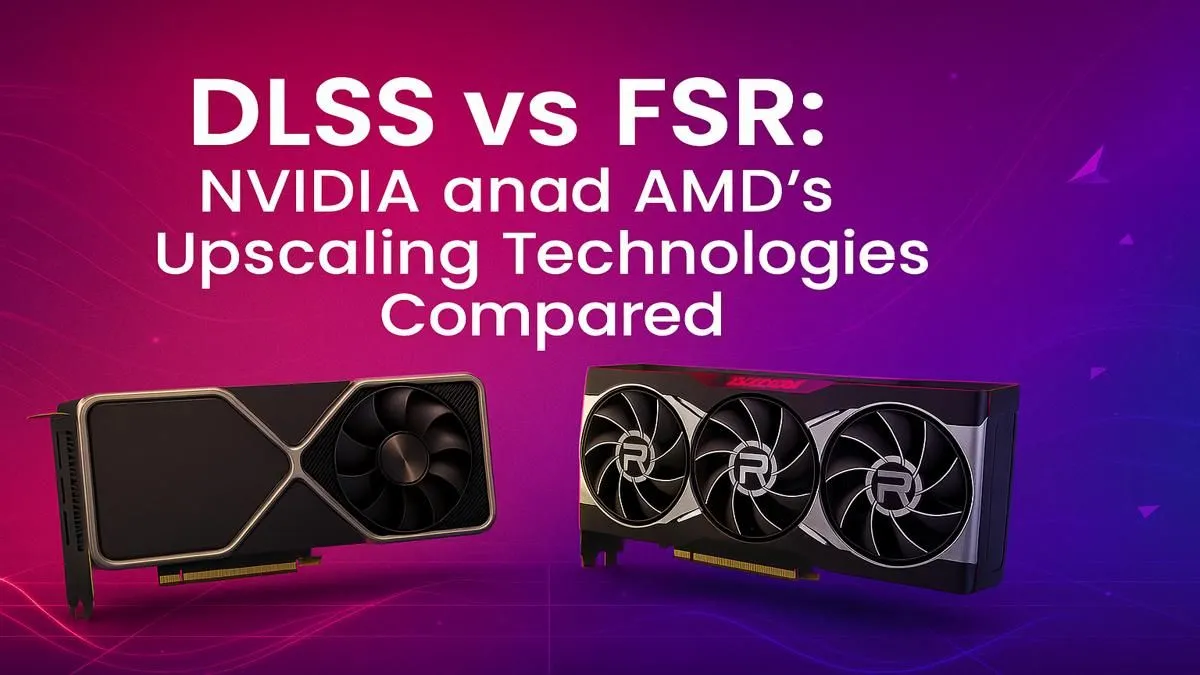
Stuttering frame rates during a crucial moment in your favourite game? We've all been there. In the eternal quest for smooth gameplay, two technologies stand tall: NVIDIA's DLSS and AMD's FSR. But this isn't just a simple brand showdown. The DLSS vs FSR debate is about how you can squeeze more performance out of your rig... for free. So, which upscaling tech will give your PC the FPS boost it so desperately needs? Let's find out. 🚀
So, What Exactly is Upscaling Technology?
Before we pit them against each other, let's quickly cover what upscaling is. Imagine telling your graphics card to draw the game at a lower resolution (like 1080p) but then display it on your high-resolution 1440p or 4K monitor. In the old days, this would look blurry and awful.
Today, smart upscaling tech like DLSS and FSR uses advanced algorithms or AI to intelligently "fill in the gaps," reconstructing the image to look sharp and clean at your native resolution. The result? Your GPU works less, and you get a massive FPS boost. It's one of the best ways to get more performance without spending an extra Rand.
NVIDIA DLSS: The AI-Powered Juggernaut 🟢
NVIDIA's Deep Learning Super Sampling (DLSS) is the more established of the two. It uses dedicated hardware called Tensor Cores, found only on NVIDIA's powerful range of GeForce RTX graphics cards, to run a sophisticated AI model. This model analyses game frames and motion data to produce an image that is often as sharp as—or even sharper than—the native resolution.
The main takeaway? DLSS generally provides exceptional image quality. With newer versions like DLSS 3 introducing "Frame Generation," it can deliver truly incredible performance uplifts, though this feature is exclusive to the latest 40-series cards. The only real catch is its hardware requirement; you need an RTX card to join the club.
AMD FSR: The Open-Source People's Champion 🔴
AMD's FidelityFX Super Resolution (FSR) takes a different approach. It's an open-source spatial upscaling technology, which is a fancy way of saying it doesn't require specialised AI hardware. This is its superpower: FSR works on a massive variety of GPUs. This is a huge win for gamers running anything from older cards to the latest AMD Radeon GPUs, and even on competitor NVIDIA cards.
While early versions of FSR couldn't quite match the image quality of DLSS, AMD has made huge strides. FSR 2.0 and beyond deliver impressive visuals that are very competitive. For gamers who value flexibility and accessibility, FSR is a fantastic option that brings modern performance-boosting tech to everyone.
DLSS vs FSR: The Head-to-Head Breakdown
So, when the dust settles, which upscaling tech should you use? The answer really depends on your hardware and priorities. 🤔
The Key Differences:
- Image Quality: DLSS generally holds a slight edge, producing a more stable and detailed image thanks to its AI brainpower. FSR is excellent but can sometimes appear a little softer in direct comparisons.
- Performance: Both technologies offer a significant FPS boost. The DLSS vs FSR performance race is often neck-and-neck, though DLSS 3's Frame Generation gives it a raw performance advantage on supported hardware.
- Compatibility: FSR is the undisputed champion here. It's an open standard that works across a huge range of graphics cards and manufacturers. DLSS is a walled garden, exclusive to NVIDIA's RTX lineup.
Ultimately, your final choice might come down to budget and availability. It always pays to check out the best graphics card deals available in South Africa before making a decision.
Pro Gamer's Setting Tip ⚡
Always start with the 'Quality' preset in both DLSS and FSR. If your FPS is still below your target (like 60fps), then move to 'Balanced' or 'Performance'. This ensures you get the best possible image quality for the performance you need. Avoid 'Ultra Performance' unless you're aiming for extremely high frame rates on a 4K screen.
If you have a compatible NVIDIA RTX card, DLSS is likely your best bet for maximum image fidelity. If you have an AMD card, an older NVIDIA card, or simply value open standards, FSR is an incredible tool that will give you the frames you crave.
Ready to Unleash Smoother Frame Rates?
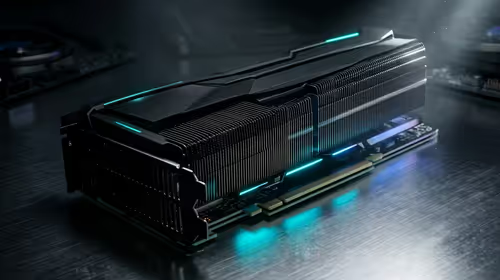
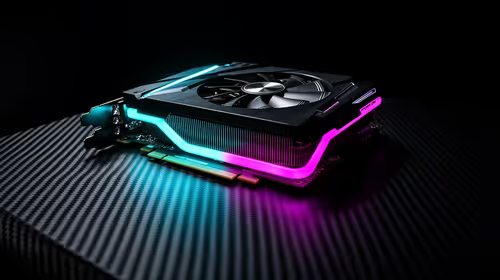
The DLSS vs FSR choice often begins with the hardware in your machine. Whether you're upgrading for AI-powered visuals or open-source flexibility, the right GPU is your ticket to a high-FPS paradise. Explore our massive range of graphics card specials and find the perfect engine for your gaming rig.