Eskom tariffs are no joke. As a South African gamer, you’re already juggling outage schedules and praying your UPS holds out. But have you ever wondered if your monitor's anti-tearing tech is quietly sipping extra power? The debate over FreeSync vs G-Sync power consumption is more than just a technical curiosity; it’s a real-world question of efficiency and cost. Let’s plug in and find out which VRR tech is kinder to your electricity bill. 🇿🇦
The Big Difference: Hardware vs Standard
Before we talk watts, we need to understand the core difference. NVIDIA's G-Sync (specifically the 'Ultimate' and standard tiers) uses a dedicated hardware module built right into the monitor. Think of it as a specialised processor just for managing your screen's refresh rate. AMD's FreeSync, on the other hand, is an open standard built on top of DisplayPort's Adaptive-Sync protocol. It doesn't require a special chip, making it more widely available across all kinds of PC monitors.
This single difference—a dedicated hardware module versus a software-based standard—is the primary driver behind any variation in power usage.
A Breakdown of FreeSync vs G-Sync Power Consumption
So, which one draws more power from the wall? The answer depends on what you're doing. The conversation around the power consumption of FreeSync and G-Sync isn't as simple as one being universally better than the other.
Idle and Desktop Use
This is where the biggest difference lies. A monitor with a dedicated G-Sync hardware module is always on, managing the display even when you're just browsing the web or staring at your desktop. Historically, this has resulted in a slightly higher idle power draw compared to a FreeSync monitor, which doesn't have that extra component running. We're often talking about a few extra watts… not enough to break the bank, but it's a measurable difference.
During Intense Gaming 🚀
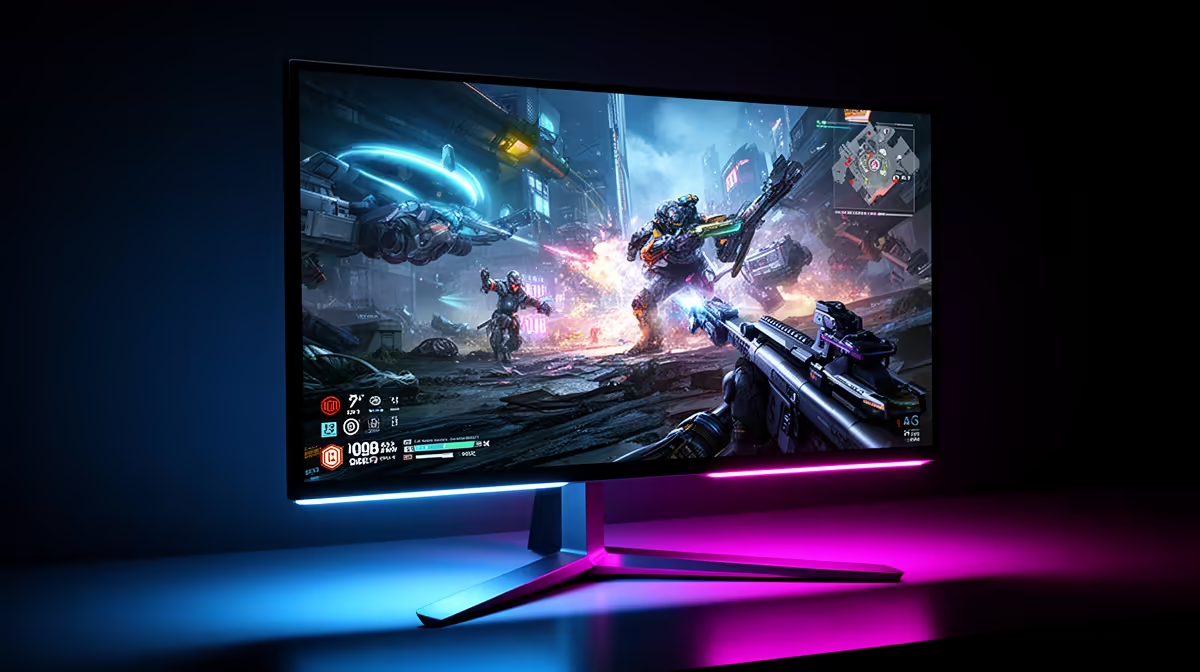
When you’re deep in a match, the power consumption landscape changes. Your graphics card and the monitor's backlight are the main energy hogs, drawing hundreds of watts combined. The power used by the VRR technology itself—whether it's the G-Sync module or the FreeSync standard—becomes a tiny fraction of the total. At this point, the power usage of G-Sync vs FreeSync is practically identical. The quest for ultra-smooth gameplay on high-refresh-rate or stunning 4K monitors will always demand more from your PSU than the VRR tech itself.
Check Your Own Power Usage ⚡
Want to see the real numbers? A simple plug-in watt meter from a local hardware store can be a fascinating tool. Plug your monitor into it to see its exact power draw during idle, browsing, and gaming. This is the best way to understand your specific setup's energy footprint and optimise your settings for efficiency.
What About G-Sync Compatible Displays?
Here’s a key point: "G-Sync Compatible" monitors are essentially high-quality FreeSync displays that NVIDIA has tested and certified to work flawlessly with its GPUs. Since they don't have the dedicated hardware module, their power consumption profile is the same as any other FreeSync monitor. This gives you the best of both worlds: NVIDIA's stamp of approval without the potential for higher idle power draw. Many gamers find these offer the perfect balance, especially on immersive curved monitors.
The Verdict: Does It Really Matter for SA Gamers?
Honestly, for most people, the difference in electricity cost is minimal. An extra 5 watts of idle power draw for 8 hours a day might add up to about R50-R60 over an entire year. It’s not nothing, but it’s unlikely to be a deciding factor.
Factors like your monitor's brightness level, panel size, and resolution have a far greater impact on your power bill. Even a device as simple as one of the latest portable monitors can have varying consumption based on its settings.
Your choice should be based on other factors:
- Performance: True G-Sync with its hardware module often provides a more consistent, premium experience with features like variable overdrive.
- Budget & Choice: FreeSync and G-Sync Compatible monitors are more common and generally more affordable, offering fantastic performance for the price. You can find options across all our gaming monitors.
- Your GPU: You need an NVIDIA card for G-Sync and (officially) an AMD card for FreeSync, though NVIDIA cards have supported FreeSync for years.
Ultimately, optimising your setup with the right monitor accessories like a quality VESA mount for better airflow can be just as impactful. The FreeSync vs G-Sync power consumption debate is valid, but it shouldn't overshadow the importance of overall performance and value. Your best bet is to look at the best PC monitor deals and pick the screen that fits your rig and your wallet.
Ready to Find Your Perfect Tear-Free Display? The FreeSync vs G-Sync debate is nuanced, but the right choice for you depends on your GPU, budget, and performance goals. Stop guessing and start gaming. Explore our incredible monitor deals and find the perfect screen to dominate your favourite titles.