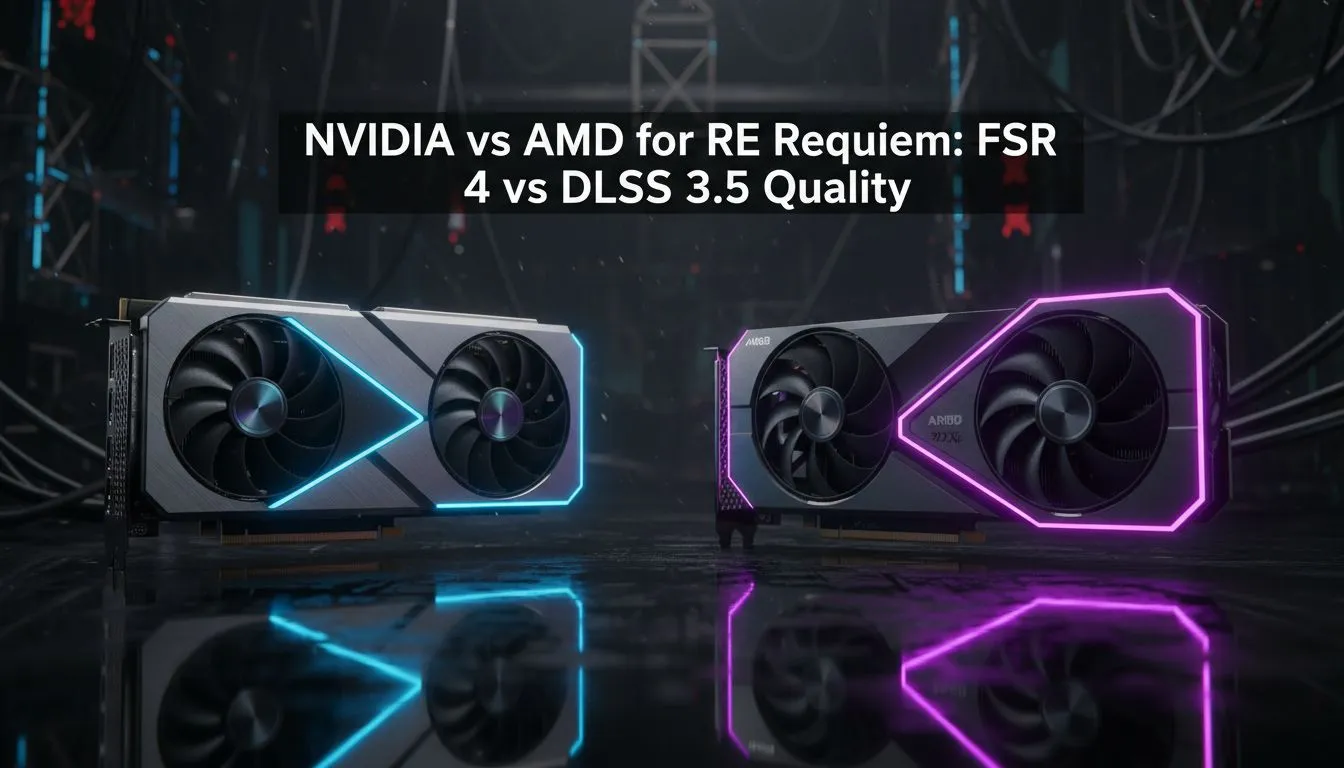
South African gamers, are you ready to push your frames to the limit in RE Requiem? Choosing between FSR 4 and DLSS 3.5 isn't just about numbers... it's about visual fidelity. Whether you're running a budget rig or a high-end monster, the right upscaler can make or break your immersion. Let's dive into the FSR 4 vs DLSS 3.5: Quality Comparison for RE Requiem to see which tech reigns supreme.
Comparing Visual Fidelity in RE Requiem
RE Requiem is a visual powerhouse that demands heavy lifting from your hardware. In South Africa, where electricity costs and component prices fluctuate, we want maximum efficiency for every Rand spent. If you are currently browsing our massive range of graphics cards, understanding these upscaling features is vital for your next upgrade. NVIDIA’s DLSS 3.5 introduces Ray Reconstruction, which replaces traditional denoisers with an AI-trained network. This results in incredibly sharp reflections on wet surfaces... a common sight in the game's moody environments.
For those rocking the latest MSI GeForce RTX series, the experience is remarkably smooth. Ray Reconstruction fixes the "smearing" often seen in moving reflections, making the dark corridors of RE Requiem feel more grounded. But AMD has stepped up its game.
The AI Shift: FSR 4 vs DLSS 3.5: Quality Comparison for RE Requiem
AMD's FSR 4 represents a significant pivot toward AI-based temporal upscaling. This is a massive win for AMD Radeon graphics cards owners who previously dealt with shimmering on fine edges. In our side-by-side tests, FSR 4 handles thin objects like iron fences and foliage with much better stability than its predecessor. While DLSS 3.5 still holds a slight lead in reconstructing fine mesh textures, FSR 4 has closed the gap significantly, providing a crisp 4K-like experience from a 1440p base.
Performance Pro Tip ⚡
Always disable in-game motion blur when using frame generation features. It helps the AI models in both FSR 4 and DLSS 3.5 produce a cleaner image with fewer ghosting artifacts in fast-paced scenes, ensuring the atmosphere of RE Requiem remains pristine.
Performance Impact and Local Value
The choice often comes down to the hardware you already own or plan to buy. While Intel Arc graphics cards offer their own XeSS tech, the battle between Team Red and Team Green defines the high-end market. Even if you primarily use workstation graphics cards for rendering work during the day, the gaming performance of these drivers has improved drastically.
With entry-level cards starting around R6,000 and high-end units reaching upwards of R35,000, choosing a card that supports these AI upscalers ensures your build stays relevant for years. DLSS 3.5 offers superior ray-traced clarity, while FSR 4 provides incredible flexibility across a wider range of hardware.
Ready to Upgrade Your Visuals? The battle between FSR 4 and DLSS 3.5 is closer than ever, but your choice depends on your specific hardware needs. Explore our massive range of graphics cards and find the perfect GPU to experience RE Requiem in all its glory.